Which Emerging Industries Will Receive the Greatest Investors Interest in the 2026 Landscape?
Written By
Gaurav Kumawat
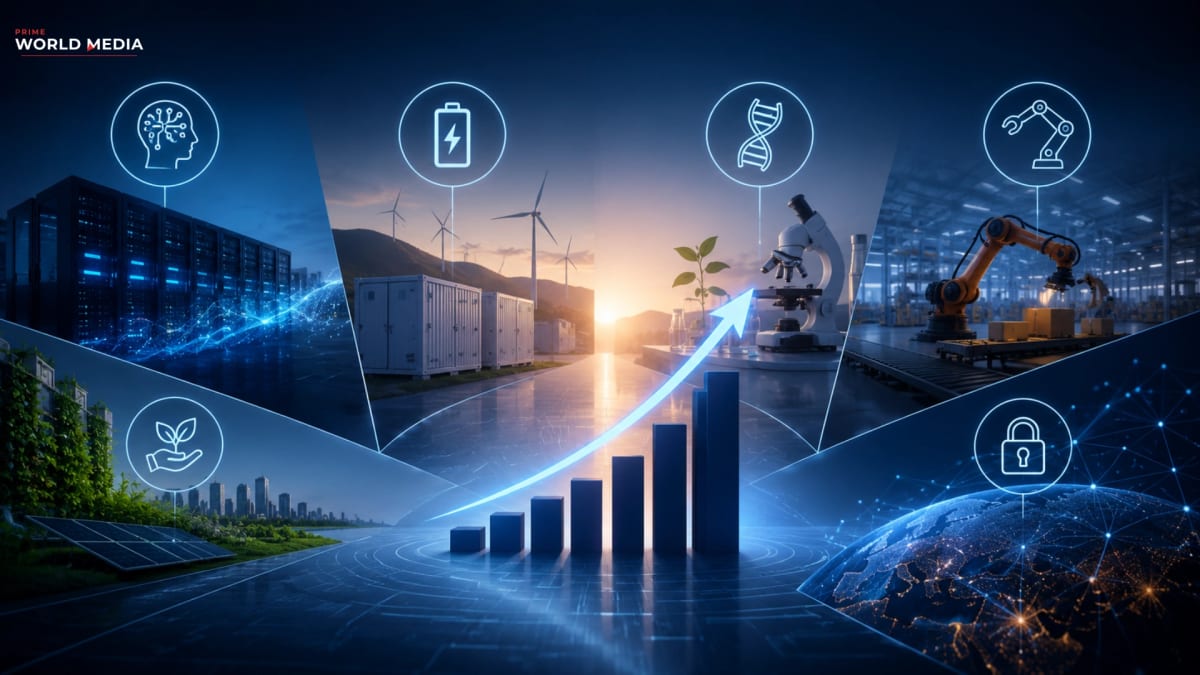
Today’s investment industries are vastly different from what they were two years ago, and the overall investment trend remains approximately the same. Investors have contributed $300 billion of investment toward technology so far in 2026; however, most of this has occurred with smaller amounts and fewer varied forms of technology than traditionally existed within the investment community - thus the overall number of technologies that have received traditional style investment has been limited; As a result, as a way of evaluating and deciding where to invest, investors have become much more cautious in their use of capital and looking for companies that are driving significant transformation either economically, technologically or socially, and will continue to focus on specific areas of technology that will create the greatest amount of transformation going forward and will no longer be investing a large sum of money just simply because it relates relatively broadly to technology.
This is very different from where capital stood in 2021, when social media, e-commerce, and consumer applications were the focus and attracted billions of dollars of capital. Many of these verticals have matured, are hyper-competitive and market leaders in those categories are so entrenched that customer acquisition costs have increased and outsized opportunities can be hard to find, leading investors to look at new verticals to gain substantial returns.
Why the landscape in 2026 is different for investors:
Traditional tech sectors yield lower returns.
- AI infrastructure necessitates entirely new supply chains
- Climate deadlines have driven demand that governments will pay for
- The space economy has become financially feasible
- Biotech breakthroughs rapidly transitioning from lab to market
- Geopolitics is driving reshoring of key manufacturing
- Changing demographics have created new consumer categories
The task is no longer about finding companies with technology; it's about identifying industries where demand, government support and technological innovation are aligned for years to come. The effect of AI on where capital is flowing is just one piece of a larger story of investment being re-centered around a new class of future-facing companies solving urgent problems.
Why Is AI Infrastructure the Hottest Investment of 2026?
The best AI investment is no longer about the applications themselves, but about the underlying infrastructure. Consumers are chasing chatbots, copilots, and generative AI products, while capital flows to the underlying compute and supporting systems. Massive investments are required in chips, data centers, networking, energy and specialized cloud platforms.
Scale demonstrates the trend: companies like OpenAI ($122B valuation), Anthropic ($30B), and xAI ($20B) have infrastructure-intensive operations. With accelerated adoption, the bottleneck shifted to power: "It is no longer about GPUs; it's about getting access to reliable electricity to fuel compute infrastructure for future-generation AI systems." Opportunities emerged for companies operating at different layers of the stack: CoreWeave, Lambda Labs, Crusoe Energy, and Applied Digital.
Drivers of AI infrastructure investment:
- GPU shortages generated secondary markets for compute access
- Data center energy consumption to double between 2023 and 2026
- Specialized clouds (not AWS/Azure) raised over $15B in 2026
- Edge AI to drive decentralized infrastructure over centralized
- Cooling technology now its own investment category
- Nuclear and geothermal power for data centers attracted ESG capital
This investment theme goes well beyond software and into underlying hardware, where investors see substantial value capture. It shows the differentiation of a long-term investment. A market fad and will likely persist through the coming years as AI systems advance.
Why Is Climate Tech Finally Getting Real Investment?
While climate tech is still the most generously funded area in 2026, there has been a major shift. Initial waves of capital were pumped into consumer-facing goods, such as EVs, solar panels and sustainability-focused brands, while investment today is centered around the infrastructure and industries that generate much of the world's largest and most intractable CO 2 emissions.
The policy landscape will continue to provide strong tailwinds. European Carbon Border Adjustment Mechanism, the extension of the U.S.'s IRA and China's increasingly expansive cap-and-trade programs are creating a powerful impetus for businesses to cut emissions, fueling investment in companies such as direct-air capture technology producer Climeworks, low-carbon steel manufacturer H2 Green Steel, and Twelve, which is turning captured CO 2 into industrial products. It is not so much green consumer products, but rather the changing infrastructure and industrial capacity, responsible for vast quantities of CO 2 emissions.
Key climate tech sectors attracting investment:
- Direct air capture: >$2Bn deployed
- Green hydrogen: $8bn in project finance committed
- Sustainable aviation fuel: Airlines to purchase ten-year supply in advance of demand
- Industrial heat: electrifying industries like steel, cement, chemicals
- Carbon accounting software: Compliance needs of enterprises to drive demand
- Climate risk analytics: Insurance and financial services sector requirements to drive demand
Crucially, demand for climate technology will no longer be driven purely by consumer preferences. These will be the drivers increasingly behind investment into the sector, based on regulation, economics and compliance. Companies that can enable sectors to measure, manage and commercialize emissions will benefit from sustained, structurally driven tailwinds and demonstrate the value of sustainability data as a commercial proposition, converting regulation into revenue. As industries are forced to decarbonize, climate tech is poised to continue being a massive flow of global investment.
Why Is the Space Economy Moving From Hype to Revenue?
The modern space economy has evolved beyond rockets and space missions. In 2026, investment is flowing into the idea that space is the next layer of infrastructure – carrying communications, data, manufactured goods and industry. Companies are making fortunes in space, but the key driver is the revenue-generating service, not the symbolic space shot.
Look at the industry now; SpaceX has successfully made satellite internet a business with its multi-billion-dollar Starlink offering, which already makes over 10 billion USD each year. Companies such as Astroscale are building a business to de-orbit space debris, while others like Sierra Space are building infrastructure for the future economy in space. They are all offering a service rather than focusing on exploration alone; the primary drivers of revenue now come from communications, observation of Earth, data services, or advanced manufacturing capabilities within space.
Categories for the space economy:
- Space communications- proving consumers are prepared to pay via Starlink
- Earth Observation- farms, insurers and the military are all buying data
- Space-based manufacturing- the production of materials such as fiber optic cable, pharmaceuticals, and alloys
- Space-debris removal- driven by legislation, it has become a requirement
- Lunar infrastructure- a business based on mining, habitation and energy generation will become a reality in time
- Launch services- re-usability has made launching into space 90% cheaper than 16 years ago.
The most attractive investments for business people are predictable, infrastructure-based business models, rather than expensive, speculative exploratory missions. With recurring subscription income in space communications, valuable data generated by Earth observation companies, or sophisticated materials created in space which are difficult to replicate on Earth's surface, this appears to be the beginning of sustainable services in space. As launch costs decrease, these services can grow as the demand for their use increases.
Why are Non-traditional Investors Moving to Biotech?
Another trend for investment that might explode is biotech in 2026 thanks to AI technology. Tools like AlphaFold that can now predict the 3D structure of proteins are a great illustration of the speed increase of biological investigation, and investors are injecting huge sums of money into companies that are using machine learning for drug discovery, protein design and diagnostics. The investment trend extends far beyond pharma, however. Companies focused on healthspan extension, like NewLimit, Altos Labs and Hevolution, have attracted billions, and tech-focused venture capital firms, previously reluctant to invest in biotech, are making their first entry. This is largely because of the rise of platform biotech companies, which build technologies capable of producing multiple drugs (instead of making bets on single drug candidates) with repeatable scientific platforms, which is more comparable to software investments.
Key biotech investment trends in 2026 include:
- AI drug discovery, which allows companies to reach clinical trials 40% faster, has attracted $5 billion+ of funding
- Healthspan extension-focused companies, including those targeting longevity, raised $4 billion. Gene editing has seen significant advancement, with CRISPR therapies reaching commercialization scale
- Repeatable scientific innovation technologies (platform technologies) are already drawing in venture capital that has been tech-focused heretofore.
- Biomanufacturing is trending from petrochemicals to biology, and diagnostics is trending from one-time tests to ongoing monitors.
The transition from single-product-based biotech to a platform-based system suggests how scientific discoveries are now thought about; the money is flowing not to individual companies with individual drugs, but to systems that have an ongoing set of discoveries. This is the evidence of technology to change an entire industry; make biology scalable and data-driven. As computation, data, and machine learning progress rapidly (at historically never-before-seen rates), biology will continue to be the leading industry for investments for a while.
Why Is Reshoring and Advanced Manufacturing Hot Again?
One of the hottest themes of investment in 2026, the advancement of manufacturing is attracting record-high spending driven by governmental initiatives like the CHIPS Act in the US, the European Chips Act, etc, promoting in-country production capabilities, particularly in semiconductors. Yet, beyond chip fabrication, the opportunities are much broader; batteries, critical minerals processing, automation, robotics and future industrial applications that enhance supply chain robustness have drawn unprecedented investor capital.
As an example, we have the Arizona fabrication plants of TSMC, which indicate a huge push to boost domestic semiconductor capacity; Northvolt as a major battery producer; Redwood Materials, focused on developing battery recycling and supply chain; Figure AI and their humanoid robotics to bring automation to industry. At its heart, the core premise for these companies is a growing conviction that with automation and next-generation technologies, the manufacturing industry can again become cost-competitive in the US and Europe, allowing us to break free from distant supply chains.
What drives the investment thesis in advanced manufacturing?
- Semiconductor fabs: The announcement of new fabs to be constructed by 2026 reached over $200 billion.
- Battery manufacturing: There has been increasing demand for batteries from both EVs and the grid storage markets; the grid storage sector needs capacity to double annually.
- Processing of critical minerals: The US and EU would like lithium, graphite, and rare earths to be processed within their borders.
- Robotics and automation: No longer just a matter of labor cost arbitration.
- Reshoring of defense manufacturing: National security has elevated the importance of secure supply chains.
- Sustainable manufacturing: ESG demand for green steel, cement, chemicals.
In terms of investment, advanced manufacturing gives us exposure to long-term, structural themes driven by government policy, technological innovation, and the demands for economic security. The sector is being viewed more as infrastructure than just an industrial cyclical. The psychology of strategic decision-making, at times, requires an eye for areas which are being positively affected by several overlapping macro-trends. The extremely powerful sector of 2026 is the one of advanced manufacturing, as this brings together, at the same time, automation, eco-friendliness, safety, and reorganization of supply chains.
Why Is the Creator Economy Evolving Into Infrastructure?
Venture capital still exists in the creator economy in 2026, but it has shifted from the influencers and into the tools that allow them to do business. VCs are now interested in platform solutions for audience scale, monetization, community building, and workflow automation, and betting on the technologies which serve the masses of millions of creators, as opposed to individuals. Kajabi, Teachable, Beehiiv and Passionfroot exemplify this; these platforms help creators create and sell courses, newsletters, memberships, sponsorships, and professional services without the need to be techy or an expert coder. In parallel, AI is being leveraged to serve as a new layer of creator infrastructure. Tools that can generate audio at scale, such as ElevenLabs, images such as Midjourney, or music such as Suno, are becoming foundational technologies allowing creators to generate content more efficiently and at greater scale. Investors are beginning to see these types of businesses not as media companies, but as infrastructure players.
Creator Economy Infrastructure Is Playing:
- No-code platforms: enabling anyone to create courses, newsletters, communities
- AI content generation (audio, image, video, music) on scale
- Monetization layers (tipping, subscription, commerce within the creator economy)
- Creators are seeking business tools, not publishing (analytics, CRM)
- Creators will connect with brands via talent marketplace
- IP and Licensing: Creator content becoming training data for AI systems
The most attractive opportunities in the creator economy no longer involve solely audience scale, but revolve around providing the systems needed to help creators run their businesses more effectively as entrepreneurs. This is anything to do with monetization, automation, customer management, or content creation tools. The shift underscores the importance of systems in organizing digital work for creatives and transforms individual creation into a sustainable business. Creator economy infrastructure players stand poised to take up a significant portion of the economy's value moving forward.
How Can Investors and Founders Evaluate These Opportunities?
It’s one thing to find a potentially great industry; it is harder still to determine whether such an industry will be profitable for the long run. Investors in 2026 will increasingly be examining opportunities from three angles: technology risk, market risk and regulatory risk. It’s one thing to develop a paradigm-shifting technology and another to ensure that it will actually be accepted by consumers; an otherwise fantastic market opportunity may very well be unsustainable if it operates under the wrong regulatory conditions. Examining the interaction of such risks when considering a burgeoning industry is therefore critical.
Timing is a major factor as well; generally, infrastructural opportunities emerge first, followed by applications, and then consumer products, which reach mass adoption. Investors in early-stage industries are risking a longer development timeline, while those entering late face higher competition and lower returns. Geography is another complicating factor, since differing regulations, industrial policies and capital markets can create vastly different risks and rewards depending on the sector and geography in question- the US, China and Europe all vary significantly when considering many different industries.
Here is a helpful framework investors can use for evaluation of emerging industries:
- Technology risk: does the core science/tech actually work?
- Market risk: will customers pay before policy dictates?
- Regulatory risk: can the industry survive shifts in politics?
- Talent risk: will there be enough of a workforce specialized in this area?
- Infrastructure risk: does the necessary ecosystem exist?
- Timing risk: is capital being applied too early or too late?
Investors must also decide on an exit strategy before investing capital. Some industries benefit from going public while others should be acquired, with others yielding value in the form of private equity transactions. Examining exit scenarios helps investors ensure that opportunities have a plausible path towards liquidity and scale, and that the potential value will ultimately be realized. Finding and profiting from some of the new industries creating the investment opportunities of the future will hinge on overcoming each of these issues.
FAQs:
1. Where did most growth take place in the AI Industry in 2026?
AI Infrastructure accounted for around $188bn in investments in three core AI firms (OpenAI, Anthropic, xAI) along with the required infrastructure supporting the firms (compute/data centers/utilities).
2. Is climate tech finally profitable?
In some segments. The unit economics for carbon accounting software and sustainable aviation fuel are improving with growing customer demand. Direct air capture remains a technology with great promise, but largely dependent on government support and incentives.
3. Why are tech VCs investing in biotech now?
Platform biotech is starting to more closely resemble software, by being scalable, repeatable and data-driven. The speed with which AI research can cut down research timelines is incredibly attractive to a tech investor in the traditional sense.
4. What makes space investable in 2026?
Revenue. Starlink made a convincing case that the satellite communications space can be a large commercial enterprise. Earth observation services already have paying customers across various sectors (agriculture, insurance, defense), and falling launch costs from reusable rockets add another incentive for investment.
5. Is reshoring just politics or real economics?
Both governments encourage domestic production, but the technology to do so now makes it economical. With automated and robotics production, it can rival the cheapest foreign wage earners without the low-cost labor source.
6. What is creator economy infrastructure?
This refers to the systems that allow the creators to act as businesses instead of individuals. The creator economy infrastructure includes: no-code platform builders, AI creation tools, payment infrastructure, analytics/CRM and creator markets.
7. How do I evaluate timing in emerging industries?
Generally, infrastructure precedes applications and consumer adoption follows. However, early investment is also associated with greater technology risk, while late investment is associated with diminished upside.
8. Which geography leads in 2026?
That's sector-specific. The US is leading in AI and biotech; the EU is a leader in climate tech and industries regulated by policy. China is a global leader in manufacturing and supply chain for battery and industry.
9. Are these sectors overvalued?
Each sector presents unique risks. AI infrastructure has concentration risk. Climate tech is reliant on regulation for some areas. Space has an enthusiasm challenge to match with reality. Biotech still has risk of execution and science.
10. What should founders in these sectors focus on?
Revenue over vision when possible. Infrastructure over applications, when applicable. Partnership over independence. Clarity on regulation over rapid rollout. The truly winning companies are those that have visionary people with feet on the ground.
Gaurav Kumawat
Gaurav Kumawat is a regular contributor and industry expert at Prime World Media, covering market innovations and leadership strategies.