What Happens When a Microsoft VP Watches $2 Trillion Go to Waste and Decides to Fix It Himself?
Written By
PWM creation teams
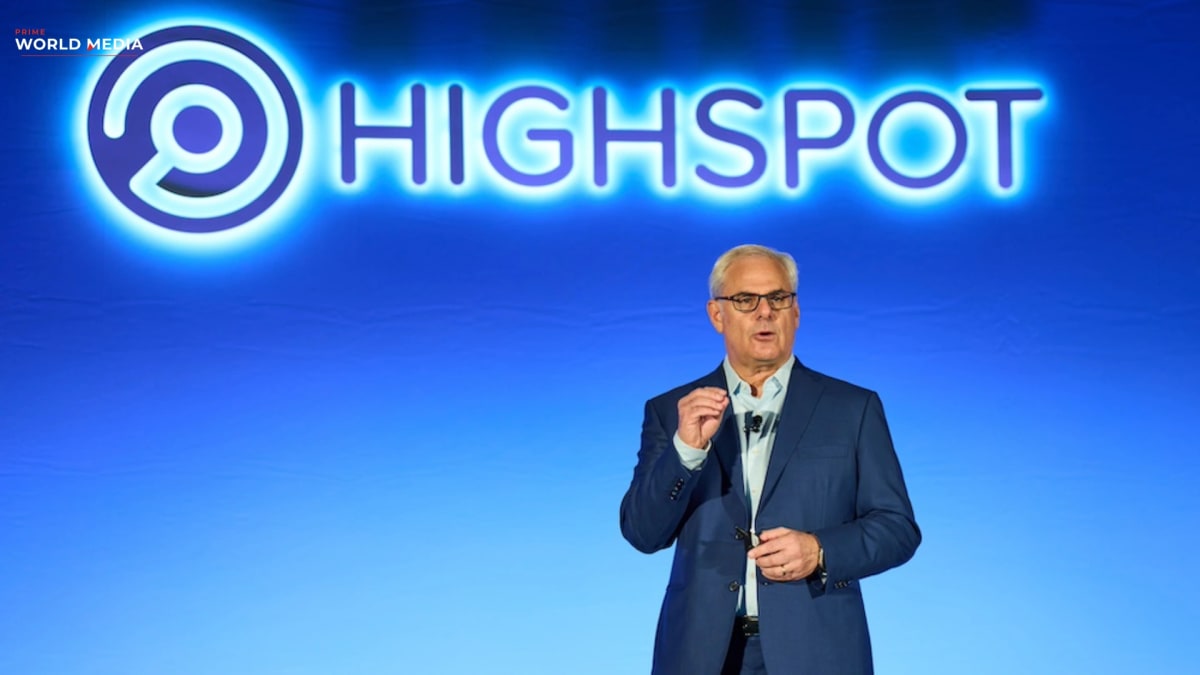
Robert Wahbe saw the problem from inside one of the biggest sales orgs in the world. The waste from unused marketing content created for sales teams was 70%, and, at $2 trillion annually, BCG estimated. He experienced this firsthand at Microsoft for 15 years. Highspot was founded. The sales enablement platform now counts 20MM users, is valued at $3.5BN, and just announced the biggest merger of the category in history.
The Problem Robert Wahbe Watched for 15 Years
Robert Wahbe didn't land on the idea for his startup by accident; it was a long time coming: he'd spent over 15 years as Corporate VP of the Server & Tools division at Microsoft before founding Highspot in 2012. He studied at the University of California, Berkeley, where his interest in scalable platforms and systems took root, and his first startup, Colusa, a cross-language virtual machine that Microsoft bought from him in 1996, placed him inside the Redmond campus just as Microsoft's global sales organization was scaling to tens of thousands of people. What he experienced over the next fifteen years informed all that would come after. "Many times, I'd visit international offices to meet with other teams.
I'd always ask them, 'How is everything that we are building assisting them in achieving effectiveness and efficiency? The answer, about 9 out of 10 times, was I have no idea what you're referring to," Wahbe said. It was the same everywhere: the marketing organization would put out a strategy; sales enablement was tasked with creating content around the strategy; and training developed programs. But none of it was making it to the people. Of all marketing content targeted to sales reps, it's estimated that 70 percent goes completely unused, research Wahbe frequently cited. BCG estimated that the typical global sales and marketing effort could waste $2 trillion in overhead costs and lost revenue opportunities. $2 trillion is hardly negligible, but it's an understandable sum for a strategy trapped in PowerPoints and Word documents that don't make their way to salespeople when they need them. Wahbe left Microsoft in 2012, convinced that technology had finally caught up with the idea. The proliferation of cloud, mobile, and AI was such that a single platform was feasible that could unite strategy and execution at a level not possible in the prior generations of technology.
The Three Founders Who Built It Together
Founded in Seattle in 2012 by three co-founders, the vision was born out of 15 years of observing Robert Wahbe experience the problem as a direct operator; the technical expertise came from Oliver Sharp, who had spent years at Microsoft building large enterprise software systems; the product/go-to-market experience was added from David Wortendyke, who had both operators' and engineering depth. Robert chose not to start Highspot in San Francisco; he instead asked around for appropriate investors when planning the company, and Madrona Venture Group, Seattle's premier technology investors, was unanimously identified by nearly all of Robert's contacts. "Everybody in Seattle pointed to Madrona," Robert remembers. "I knew some of the firms out in the Valley, but everyone pointed me to Madrona." Madrona led the seed round. Highspot was not started in Silicon Valley because Seattle is not as good a place to start a company as the Bay Area; rather, Robert wanted the company to be one that could take its time and focus on real customer value rather than the frenzy of the venture capital industry.
The Founding Insight: Strategy Without Execution Is Noise
The premise on which Highspot is based sounds so simple when put into words, but at the time in 2012, it was quite radical; selling enablement is not a content problem, it is not a training problem, it is not a coaching problem. It is all three simultaneously, and the only reason that none of the existing systems were effective is because they tackled the one thing as separate entities; to prepare a salesperson for an enterprise deal the correct information needs to be present, available at the right time, accompanied by training which covers what their actual deficit of skills is, it requires someone who can observe and correct their play as it happens during a meeting and provide information on what is working and what is not through analytics so that management know what tactics are contributing to revenue and what is not. No single product did these things; Highspot was engineered to do so.
This is how Robert explains their core philosophy: "You need to equip those people with the right resources in the right place. You need to train and practice before you get on the pitch. You need to coach during, and then watch the film afterwards. Analyze what's working and what's not working." A sports analogy, and deliberately so, none of the top sporting teams practice and then go and play; they have a system of preparation, play, and then post-match analysis to assess performance. Highspot brought this concept to enterprise sales for the first time.
First Milestone: Early Traction and the Seed of a Category
Highspot raised its first $400K of seed funding in October of 2013. The initial customers were technology companies that experienced long, complicated sales processes where the outcome depended on the quality of the content and the quality of conversation within the evaluation period. Red Hat, InsideView, and SAP Concur became early reference customers. Each was a validation that the problem Robert identified while at Microsoft was true, common, and very expensive. The initial product was focused on content management and recommendations, allowing salespeople to match the right content with the right conversation. It was simple and elegant. Salespeople searched for what they needed. Highspot surfaced relevant and useful options, based on usage and outcome data, instead of recency of the content.
It seems simple. When it came out, it was totally new. In 2015, Madrona led its series A round of funding. The company was validated enough to be backed by OpenView Venture Partners in subsequent rounds – among the most trusted growth investors in B2B software. By 2017, the platform depth Highspot had developed allowed it to be perceived not simply as a content management tool, but as the emerging category leader in sales enablement. As was written in our story of how Carta is building the operating system for private company ownership, "enterprise software companies that create new categories win instead of compete, and build defensible positions." Highspot was doing just that.
Highspot vs The Competition: The Definitive Comparison
The market for sales enablement and revenue enablement has gotten big, well-funded, and crowded. This is an honest look at some of the big players.
Highspot, formed in Seattle in 2012, has received $654 million in funding through eight different funding rounds. It received an evaluation of $3.5 billion during its 2022 Series F funding. Highspot currently has more than 20 million users and thousands of enterprise customers. Highspot was designated a Leader in the 2025 Gartner Magic Quadrant for Revenue Enablement Platforms, and has the highest rating for sales enablement platform user satisfaction on G2. Highspot's main selling point is its Nexus AI and analytics engine that ties strategy to execution and results, transforming go-to-market intelligence into real-time, role-specific recommendations. For its users, Highspot consistently receives the highest scores for ease-of-use and the ability to easily locate content out of all enterprise sales enablement tools. Its main downside is the cost; enterprise-level pricing makes Highspot inaccessible for smaller teams.
Seismic was founded in San Diego in 2010. Permira has been an investor since 2020. They have much more than $450m in funding. They have just under 2,000 enterprise clients across North America, Europe, Asia, and Australia. The value proposition is that they empower customer-facing teams with the right content, skills, tools, and data. Seismic and Highspot have both been declared Leaders in the 2025 Gartner Magic Quadrant. Seismic's strengths are its breadth of enabling functionality and depth of enterprise coverage, particularly in financial services and insurance. Regarding user experience: Reporting and analytics have better capabilities than their competitors, but are complex to implement and set up, with the enablement teams having to be brought up to speed for longer periods. (Note: As of 12/02/2026, Seismic and Highspot announced their agreement to merge under the Seismic brand.)
Showpad: A Belgian company. Supported by, among others, Insight Partners and Notion Capital. Strong position in Europe and customer base. Buyers are focused on experience as much as seller enablement. Enables the creation of interactive content experiences. Key differentiator: more adept than others at serving firms that sell via partner channels or distributors. UX: buyer-facing content experience is well-received. Seller training and coaching are less advanced than Highspot or Seismic. Recommended for: companies with a strong channel/partner sales process.
Mindtickle Sales readiness & enablement platform on rep performance. Excellent on onboarding, training, and coaching analytics. Top strength: Most detailed readiness scoring & coaching features on the market. UX: Onboarding, training, & coaching features are more developed than Highspot; buyer enablement & content management features are less. It's best for companies where onboarding & rep development is a top priority.
Gong San Francisco. Raised $583M+. Valued at $7.25B. A conversation intelligence platform that records and analyzes sales calls and meetings. "Where it excels: deepest call recording, transcription, and deal intelligence features of anything out there. Disclaimer: Gong and Highspot are adjacent, not direct competitors, but have recently begun overlapping more. Gong is moving into enablement/coaching; Highspot is building deal intelligence features-their trajectories are converging. "User experience: Gong's call analysis is consistently hailed by enterprise sales teams as brilliant. It's addictive once implemented because the insight gained from the tool is dramatically better than listening to calls yourself. Detailed on the Gong founding story, as we detailed in the Gong startup story, Amit Bendov and Eilon Reshef developed a platform to empower sales managers with what they could understand about their team's performance instantly."
Allego Sales enablement platform excels in the area of compliance and regulated industries. Strengths: Most advanced compliance and approval workflow tools on the market. User experience: receives high praise for its compliance features, but is not as flexible for companies outside of regulated industries as Highspot. Great for: Financial Services, Insurance, and any other vertical with stringent compliance standards for content.
The honest verdict: It has been the leader in product and user satisfaction for many years, while Seismic has been the leader in enterprise scale and penetration of the enterprise customer for several years as well. Now it's combining as part of a deal announced in February of 2026 to become the leader on both fronts simultaneously. If any enterprise team is looking at a sales enablement platform in 2026, the merger is the one thing that is top of mind. Both platforms will be supported during the transition, and Seismic will emerge from the deal as the platform with both the largest number of users and the broadest capability. As such, the remaining competitive set of competitors, including Showpad, Mindtickle, Allego, etc., will need to find ways to not compete in the same areas or positions that the new, combined $6B+ organization will occupy.
The Funding Story: $654 Million and a $3.5 Billion Valuation
This decade-long funding story shows consistent category leadership. Seed 2013: $400,000 by Madrona. Series A 2015: Madrona and OpenView led the round. Series B continued on the rounds of the earlier investors and welcomed additional growth investors. Series C-F saw investment from the most prominent growth-focused venture funds, including Tiger Global and Iconiq Capital. Series F Jan 2022: $248 million by Tiger Global and Iconiq Capital at a post-money valuation of $3.5 billion. In total, the company raised $654 million across 8 funding rounds from 16 investors. With a $3.5 billion valuation at the time, Highspot was the most valuable private tech company in Seattle. It was one of the most valuable enterprise software companies in the Pacific Northwest. It raised this Series F at the peak of the software valuation runup.
The pain felt in 2023, the year of two employee reductions, just like many tech companies, was perhaps inevitable, given the contraction in the enterprise software valuations. The $3.5 billion valuation surely was not reached and maintained throughout, at the time of the announcement of this merger in February 2026. Wahbe was clear about the climate, arguing that Highspot delivered a platform to help customers achieve predictable revenue even when the economy struggled. The pitch was correct and measured. As we've written extensively about the increase in private equity's impact in the technology world, the enterprise software companies that will weather this contraction and walk away will be those with customer value and high NRR. This happened to Highspot's customer base.
The Breaking News: The Merger That Changed the Category
On February 12, 2026, Highspot and Seismic declared they had signed a definitive agreement for a merger. This is the biggest deal in the history of the sales enablement category. The new entity will go to market under the Seismic name. Rob Tarkoff will be the CEO of the combined entity. Robert Wahbe will be a board director of the new entity. Permira, a private equity company that has backed Seismic since 2020 and now has a controlling stake, will remain the controlling shareholder upon close. Both platforms will be maintained during the transition process. "Highspot and Seismic share a belief that enablement is at the core of how modern revenue teams operate. Upon closing, we will have the ability to take the revenue enablement category forward with increased innovation, action-oriented insights, and increased confidence around how to drive performance for go-to-market teams." was what Robert had to say in a statement at the announcement. The deal needs to be approved by the relevant regulatory bodies and hasn't closed as of May 2026.
The Controversial Analysis Nobody Else Is Saying
This is the truth of what this Seismic/Highspot merger actually means, which the press releases omit. This is not a merger of equals. Seismic takes Highspot. The CEO of Seismic is the CEO of the merged entity. Permira, the PE firm that holds Seismic, controls the combined entity. Robert Wahbe will be on the board, not in the executive suite. Here is how GTM Buddy puts it, quite plainly: "The product leadership, the roadmap decisions, and the culture will run Seismic-first. Both platforms will be supported, is the official line, and it's likely true for 12 to 18 months. After that, history suggests one platform becomes the system of record, and the other becomes a migration project." For Highspot's customers, this is the most important question: Does the combined roadmap prioritize Highspot's architecture, or does it prioritize Seismic's? Depending on the answer, one of the two will become the main system, and the other a side project that you'll want to migrate from eventually.
This creates a stark decision-making process for all other players. For all of the smaller competitors, this merger makes a clear choice; the Seismic entity will become the dominant enterprise play. It will be incredibly difficult for smaller players, who will struggle to compete against the size of the PE-backed $6 bn+ company, which will hold all of the largest enterprise clients. The logical response is for Showpad, Mindtickle, Allego, and others to carve out defendable niche markets in which Seismic cannot follow easily. It is this same kind of consolidation that we saw with Thought Machine and core banking, in which once the two biggest players merge, everyone else has to reevaluate their business strategy.
What the Numbers Actually Say About the Category
The sales enablement/revenue enablement market is massive, and it is only growing bigger. The sales enablement platform market globally was $2.6Bn in 2020, and is expected to increase to $11Bn in 2027, with a CAGR of 19.7 percent. In fact, only Highspot was catering to 20 million users when it announced its merger. And Highspot's ARR had already seen growth of 935 percent in the three years prior to the period it was most recently reporting numbers for. Backed by equally impressive research as the category, companies with a formal sales enablement program win 49 percent of the time, versus those without that achieve a win rate of 42.5 percent (according to CSO Insights). Sales reps spend 65 percent of their time on tasks that are not selling, per Salesforce research, and revenue enablement technologies were born out of a need to reclaim some of that time.
For enterprise buyers, the ROI case is an absolute no-brainer. Still, for the newly combined Seismic, the question is whether the integration of products will cause it to lose all of its customers and talent that make each company's platform valuable. This is related to what we learned about what makes a founder last, rather than flame out: the most valuable resource a founder of a company that lasts manages is their team's energy and focus, and this is also where the most rapid expenditure happens during the integration process.
What Robert Wahbe Did After the Merger Announcement
In arguably one of the more surprising moves of early 2026, Robert Wahbe assumed the position of CEO of Qualtrics, as he remains on board through the Highspot-Seismic merger transition. Qualtrics is a data analytics platform that provides data in order to make humans feel better about their experience. It's hard to imagine a more interesting career move, from a founder who saw for fifteen years strategy and planning fail to implement itself on the ground, that Robert would find a new opportunity whose mission aligns more directly with what his new role represents – the mission to make the human experience better by turning data about it into actionable strategy. In other words, it is the same problem, just with respect to human performance. And while on board the newly formed Seismic-Highspot board, Robert's continuing responsibilities with Qualtrics demonstrate a strong belief that data and human performance are relevant far beyond the sphere of sales enablement.
User Experience: What Sales Teams Actually Report
When you see Highspot listed as the number one platform on G2, it's not some marketing puff. This is a message that those using the product deliver over and over. Three themes come up whenever sales reps are describing how they use Highspot: search and content discovery; buyer engagement; and, finally, training and coaching. Previously, it would have taken a sales rep 20 minutes of searching through shared drives and e-mails to find the right case study, the right competitive battle card, or the right ROI calculator for a sales call.
On Highspot, it only takes seconds. The AI engine will put the right case study, battle card, or ROI calculator at the top of a sales rep's content suggestions based on the industry of the buyer. What has historically been most effective for the stage of the sales process the prospect is currently in? The buyer engagement features mean that a salesperson no longer has to sit at their desk wondering if a proposal has been received, how long a buyer spent reading it, and if it was forwarded to additional decision makers and stakeholders who are not part of the direct sales conversation. These engagement signals will often impact the flow of sales conversations. The training and coaching features make learning and selling one continuous experience.
A sales rep is presented with relevant training when they are actually engaged in selling something for which it is relevant, instead of taking a separate training course for different types of deals. Areas of consistent criticism regarding Highspot: implementation complexity within the largest organizations with large content management systems already in place, and the pricing of the platform, which makes it inaccessible to companies smaller than a certain size threshold. Both of these are accurate criticisms that have been present for as long as Highspot has been selling products. It is a product built specifically for enterprises willing to make a large investment in the sales team, who possess a large degree of complexity within their organization, and are at the right scale for an investment in sales enablement software. This again reinforces the point that we discussed in our piece on brand building; strong products know who they are for and, crucially, who they are not for.
What Robert Wahbe's Story Teaches Every Founder
From Robert's path creating Highspot, three lessons emerged: One: Patience above all. Robert wasn't looking to bounce from Microsoft into a startup when he was in his 20s. He lived inside the problem he eventually solved for 15 years. That patience generated a type of insight that you cannot fast-track. Highspot's accuracy in addressing the sales enablement problem was only possible through 15 years of immersion. Two: Category definition is the supreme competitive advantage. Highspot wasn't participating in the content management space, or sales training, or coaching; it invented the sales enablement category and defined the concept. You set the rules for how any rival will be evaluated once you define the category.
That is a structural advantage that allows a competitive position to persist, even when specific features can be matched. Three: The right combination at the right time. The combination of Highspot and Seismic will create the overwhelming enterprise leader in an $11B market at near-20% annual growth. It's coming in the era of PE-driven consolidation in enterprise software-it shows an understanding of market dynamics, rather than a distressed divestiture. Robert joins the board. He has another company to run. He's not done building; he is finished building this particular thing at this particular scale. As was clear in our piece on how AI is transforming remote work, those founders who understand when AI is a fundamental shift in the competitive dynamic see consolidation before it is unavoidable.
Where Highspot Stands in 2026
Highspot, while awaiting the completion of the Seismic acquisition, is now operating as a stand-alone business. It is comprised of 1,043 employees (per recent information) and serves 20 million users among thousands of enterprise customers globally. Its Nexus AI engine utilizes its go-to-market signals to analyze the market in real time and offer tailored guidance within seller workflows, including Deal Agent, GTM Agent, guided selling, ongoing learning, and always-on coaching on a single, analytics-powered platform.
The former CEO of Highspot, Robert Wahbe, has already joined the board of the new, combined entity and also assumed the role of CEO of Qualtrics; Oliver Sharp and David Wortendyke remain in their same roles throughout the integration. While it took Highspot 13 years of growth from a seed round of $400k to a $3.5 billion enterprise, which is about to be acquired by its largest competitor, this story has to be among the most complete enterprise software success stories Seattle has seen. It started with a problem viewed from within the largest tech companies in the world and concluded with a solution at a scope in 2025 far beyond imagination in 2012.
FAQ: Highspot Startup Story
Q:What does Highspot do?
Highspot is a revenue enablement platform helping enterprise sales teams find the correct content, follow sales training and coaching instructions, and analyze buyer interactions, all in a single platform driven by data. The company has 20 million users and is listed as a Leader in the Gartner Magic Quadrant for Revenue Enablement Platforms.
Q: Who founded Highspot?
Founded in Seattle in 2012, the founders are Robert Wahbe, Oliver Sharp, and David Wortendyke. All three worked at Microsoft. Robert Wahbe is still the CEO during the transition of the merger and is now simultaneously the CEO of Qualtrics.
Q: Is Highspot merging with Seismic?
Yes. Highspot and Seismic officially agreed to merge on February 12, 2026. They plan to operate as Seismic with Seismic CEO Rob Tarkoff as CEO of the combined company. Robert Wahbe will become a part of the board, and the merger is dependent on regulatory approval.
Q: How much capital has Highspot raised?
To date, the company has raised a total of $654 million from investors such as Madrona Venture Group, OpenView, Tiger Global, and Iconiq Capital. Most recently, the firm was valued at $3.5 billion after its Series F round in January 2022.
Q: How does Highspot compare to Seismic?
Both companies have been recognized as Leaders in the 2025 Gartner Magic Quadrant. However, Highspot is rated higher in terms of user satisfaction and simplicity of use, while Seismic has wider enterprise coverage on a global scale. The companies are to combine Highspot's product quality with Seismic's global reach and are to remain under the same brand.
Q: What is happening to Highspot after the merger announcement?
Following the agreement of merger and pending the regulator approval, both companies are still operating independently. They will continue to be supported post-merger, and throughout the course of the transaction, the future product road map will be developed by the combined leadership and Seismic CEO, Rob Tarkoff.
Q: What is revenue enablement, and why is it important?
Revenue enablement is a discipline of preparing, teaching, and coaching customer-facing workers on the content, skills, and data necessary for the best results on revenue performance. According to a research report on sales enablement by CSO Insights, companies that have a formal sales enablement program have winning rates of 49 percent, whereas companies that do not are only successful 42.5 percent of the time.
PWM creation teams
Editorial Lead at PRIME WORLD MEDIA. Dedicated to delivering precise, high-impact journalism from around the globe.