Why Is a Former Google Engineer Trying to Rebuild Every Bank on the Planet From Scratch?
Written By
Deepak Jha
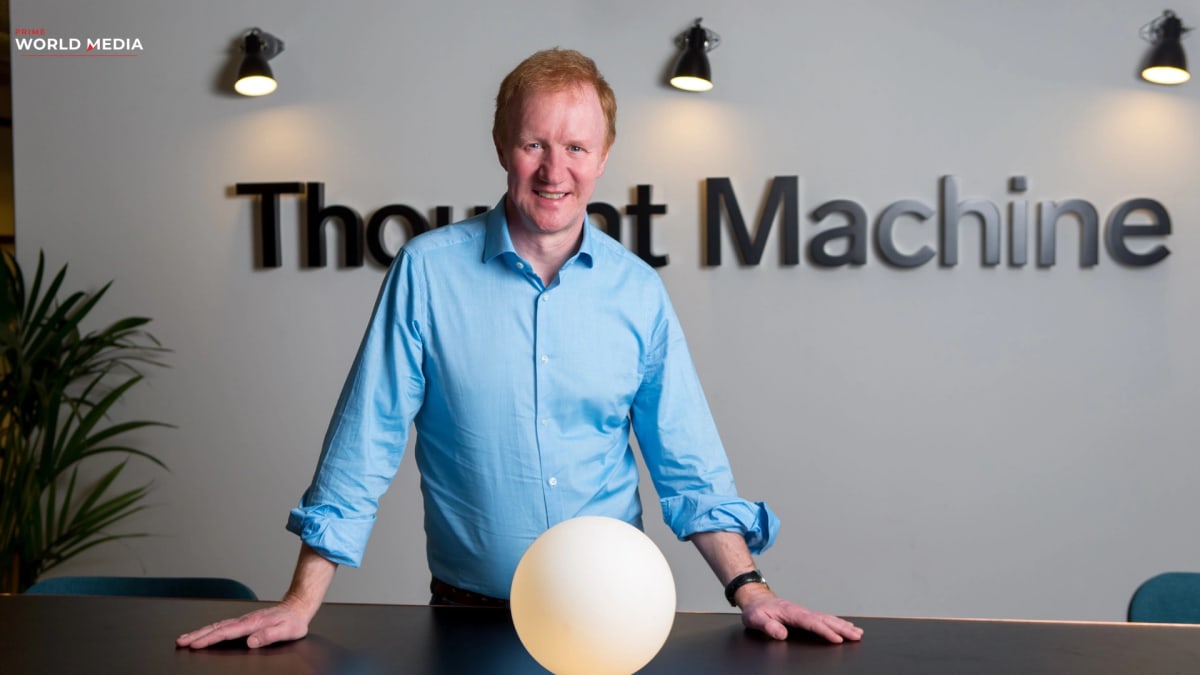
Paul Taylor walked away from Google, where his team created the voice that comes out of Google Maps and Google Now. His new venture was created to tackle an issue in banking that nobody would confess even existed. The problem was banking. Thought Machine, which he founded, has raised $563m to date, and the tech of which is now being used to support some of the biggest banking giants in the world to run their core operations as it's been doing for years.
The Man Who Built Google's Voice and Then Walked Away
Paul isn't your typical fintech entrepreneur, though; in fact, he has a PhD in Speech Technology from the University of Edinburgh. He then did a degree at Cambridge and then went into industry. He was the founder and CEO of a speech technology company called Rhetorical Systems that was sold to Nuance in 2004. Then, he founded Phonetic Arts, a text-to-speech company selling to the games industry, which Google acquired in 2010. After this, from 2010-2013, Paul headed up the text-to-speech team at Google, and if you've ever heard a Google product speak - be it Google Maps voice or a Google Now assistant - that is Paul's team. By 2013, he had sold two companies, had run a team at Google, and had developed the most used audio technology in the world, and yet he was still unsatisfied. He wanted something more; he wanted to build something bigger, something more significant, and he chose banking – but not as one would expect.
The Controversial Truth About Core Banking That Nobody Says Loudly
Here is what makes traditional bankers nervous: Many of the biggest banks in the world run their infrastructure on systems that are older than the Internet. Most modern core banking systems are written in COBOL, a programming language that is the same age as the United States. There are 8,000 employees solely to maintain JPMorgan Chase's legacy technology. Banks around the world spend over $300bn on IT annually – most of which goes into supporting existing systems, not creating new ones. By 2030, McKinsey predicts that 80% of banks will have migrated some form of their core banking platform to the cloud. As we touched upon in our article on Private Equity's burgeoning involvement in technology, historically, it has been the most colossal infrastructure migrations in the financial services sector that have consistently attracted the most patient, deep pockets of capital.
They haven't moved over yet, not because they are unaware of the threat or opportunity, but because of the colossal task of rebuilding a system that processes billions of transactions every day while still maintaining service. In effect, replacing a core banking system while the bank is still operational is sometimes referred to as rebuilding an airplane engine while in flight. This is the problem Paul Taylor set out to solve in 2014. His realization was unequivocal; don't just attempt to patch the existing system, build a new one from the cloud up and coax every bank you work with to throw away their existing infrastructure entirely. It was, at the time, arguably an imprudent stance for any person working in financial services.
From Startup to Vault: What Thought Machine Actually Built
Thought Machine was launched in London in 2014. Its founding principle was the creation of sophisticated ML-driven banking apps, a plan that quickly hit a wall. In their attempts to hook modern apps onto banking infrastructure, they ran into the same problem over and over: the banking cores were so rigid and badly documented that seamless integration proved unfeasible. Paul's reaction was typically direct. If the core banking system is the issue, build a better banking core. Will Montgomery originally wrote the code while Paul served as product manager and architect. The resulting product, launched in 2015, was named Vault and has been renamed Vault Core since. It is a cloud-native core banking platform, a system of record that has been built from scratch using modern architecture. Vault Core doesn't replace existing system components. Instead, it completely replaces legacy core banking systems.
Every product a bank wants to sell, such as saving accounts, current accounts, loans, and mortgages, is modeled using an industry-specific programming language built by Thought Machine, known as Smart Contracts, through which a bank codes the product logic in-house on top of Vault Core's infrastructure. The effect on product development cycles is remarkable. With Vault core, banks can bring products to market in weeks rather than years, change prices or terms without the lengthy eighteen-month change request, and execute vast quantities of transactions thanks to on-demand cloud scalability instead of pre-buying physical servers. It's the core banking revolution Paul Taylor thought was not only inevitable, but entirely feasible, analogous to the insight behind Barney Hussey-Yeo's creation of Cleo: don't build workarounds around the fractured financial system, build on top of it instead.
Thought Machine vs The Competition: An Honest Comparison
The cloud-native core banking space has quickly become a battleground. There are numerous platforms all going for the same banks, so here is a candid comparison of the leading contenders.
- All from scratch, cloud native architecture is used to build Vault Core from scratch at Thought Machine. Uses a proprietary language called Smart Contracts, which helps to model financial products. Current clients: Lloyds Banking Group, JPMorgan Chase, Standard Chartered, Atom Bank, SEB. Lloyd reports having achieved 30% transaction processing efficiencies with Vault Payments. Strengths: Highly configurable; developed specifically for tier 1 banks; Technically advanced. Weaknesses: costly implementation; time-intensive implementation; complex. User feedback: engineering team members mention the power of technical flexibility and depth of technology, whilst implementation team members express that there is a large amount of technical knowledge and a learning curve regarding Thought Machine's Smart Contracts language. Large banks typically take between 18 and 36 months to implement
- Mambu is a cloud banking platform based in the Netherlands. Utilizes a composable, API-driven architecture enabling banks to assemble banking functions out of plug-and-play blocks. Clients include N26, ABN Amro, Raiffeisen Bank, and BancoEstado. In 2021, the company raised $266M at a $5.5B valuation. Pros: speedy deployment, affordable, modular system allows for rapid customization. Cons: can be less suitable for complex Tier 1 banking requirements. User reviews: well-regarded in terms of ease of integration and speed to market. Users at G2 and Peerspot highlight Mambu as easy to implement and laud its excellent API documentation. Positioned as the easiest to get started with when the client is a challenger bank or mid-market lender. Price point is mid-range and is attractive to banks wanting to get out quickly without spending enterprise-level dollars.
- Temenos Transact: a Swiss company is the largest deployed core banking platform worldwide, present at over 1000 banks across 150 countries. A well-established presence in the market, but it seems more like a legacy vendor moving into the cloud era than a "born in the cloud" solution. It is designated as a "Leader" by the IDC 2024 APAC Core Banking MarketScape. Strength of Temenos: Its unparalleled global deployment history, broad feature set spanning retail, corporate, treasury, and wealth. Its limitations: A more difficult cloud migration, as the solution was built on "legacy tech" which was progressively "cloud-enabled" over the years, as opposed to "born in the cloud." Feedback on User experience: Banks that have had Temenos for decades mentioned very high costs to switch, complex upgrades to perform over the years. While for new banks, deployments are quicker, they are not yet at par with Mambu and Thought Machine as pure "cloud-native" vendors.
- FLEXCUBE (Oracle Core Banking): One of the world's largest-selling core banking solutions, widely used in the Middle East & APAC regions. This is the solution that NAB has decided to implement for the NextGen programme. It's a strong solution in the market - strengths lie in its broad functionality set, Oracle's global infrastructure, and comprehensive compliance tools. Its limitations are complex, lengthy implementation timescales, and the solution was traditionally on-premise; cloud offerings have been developed and integrated into the system. The user experience was noted as being enterprise, heavy, and complex. Customization involves deep Oracle know-how.
- Finastra (based in London, but formed from a 2012 merger between Misys and D+H). Offers both core and digital banking platforms in areas such as lending, payments, and universal banking. Revenue estimated in the billions of dollars per annum. Its strengths include a wide product portfolio and a leading position in lending and trade finance. Weaknesses include the perception among many industry analysts as a legacy system trying to get updated rather than as a cloud-native product.
The blunt truth: Mambu comes out on top for speed and accessibility, Thought Machine on technical sophistication and fit for tier 1 banks, and Temenos on proven experience worldwide. Oracle and Finastra remain the default choice where existing relationships and regulation familiarisation outweigh architecture purity. An increasingly hotly debated fintech prediction: by ten years from now, new global core banking deployments will largely be dominated by Mambu and Thought Machine as the contracts at Temenos, Oracle, and Finastra come up for renewal. Sound familiar, as it's the same infrastructure displacement story we saw in the Paddle story, where the two founders reinvented payments infrastructure, which incumbent providers had monopolized for decades.
The Funding Story: From £7 Million to $563 Million
It wasn't until 2018 that Thought Machine received its first significant backing from a formal institution. The firm raised a $25 million in Series A funding from Lloyds Banking Group (one of the largest banks in the UK). For a tier 1 UK bank to both invest and become a client of Thought Machine was the most impressive endorsement. An eight-person firm backed by a Tier 1 UK bank that promised to rip out the core banking system of one of the nation's biggest lenders; the Series B followed, raising $83 million, from Draper Esprit in 2020. Thought Machine then raised $200 million, with a Series C from Nyca Partners and investment from JP Morgan and Temasek in 2021. Having JP Morgan invest in and be a client of Thought Machine in its series C was another of those 'stop the world' moments; to have a Fortune 1 bank invest in the product and deploy it was the ultimate endorsement that can revolutionize every sales interaction that followed (similar to how Adaptive Security landed PayPal, Xerox and Figma in the first year to build enterprise credibility and turn it into a flywheel).
The largest bank in the US backed a London firm with a promise to tear up and rebuild core banking, the Series D in March 2022 from Temasek, raising $160 million with JP Morgan, ING Ventures, and Lloyds Banking Group, now totaling $563 million, and put a valuation on Thought Machine at $2.7 billion, one of the UK's most valuable fintech firms.
The Clients That Changed the Conversation
The single biggest element to Thought Machine's credibility narrative is not the funding round. It's the clients. Tier 1 banks don't bet on an unproven new technology on their core banking systems. The risk is too high. The switching costs are too high. Regulatory eyes are too closely on the data. When Lloyds Banking Group signed a deal to adopt Thought Machine in 2018, many within the industry presumed this was an incremental pilot program. It wasn't. Lloyds has systematically migrated traffic to Vault Core, and its stated benefit of a 30% uplift in transaction processing has caught the attention of all Chief Technology Officers in banking. Standard Chartered – the world's 12th largest international bank operating in more than 50 countries – is a client. JPMorgan Chase, the largest bank in the US, has adopted their core banking technology and invested. SEB, the Swedish bank, is on the platform. Atom Bank, the UK challenger, went live on its platform from Day 1. By 2024, they will have signed a strategic alliance with Mastercard for core banking and payment technology. Each of these client signings is, in its own right, a type of validation that most enterprise software companies have sought for a decade. Thought Machine did this in under six years.
The Controversial Challenge: Is Thought Machine Too Complex for Most Banks?
This is the one criticism I find cropping up constantly when reading about Thought Machine. The platform is amazingly powerful and complex. Deploying Vault Core at a major bank is not going to be a quick project. We are looking at typical enterprise implementation times of 18-36 months, and the Smart Contracts programming language that Thought Machine has devised, while immensely powerful, does require engineers who have undergone specific training in its use. The banks that do not possess the ability to engage with the platform at this level are effectively unsuited to use Vault Core. This is one argument that Paul Taylor would agree with. He has made it quite clear that Thought Machine is not aiming to build a product for every bank.
The idea is that he is building the most technologically advanced cloud-native banking platform that it is possible to build, and he is doing so for banks that are serious enough about technology to use it correctly. The inherent problem is that the banks that have the ability to utilize the capabilities that the Thought Machine platform provides are likely to be the largest, most technically sophisticated organizations with all the existing complex legacy systems, implementation times, and switching costs. The commercial proposition is huge. The execution challenge is correspondingly massive. This is the fundamental paradox of the Thought Machine growth story as it looks in 2026.
Mastercard Partnership and the Road to Payments Dominance
In 2024, Thought Machine declared a strategic partnership with Mastercard. Based on the future of core banking and payments, the collaboration sees Thought Machine marketing Vault Payments as a partner to the global payment network of Mastercard. Vault Payments, which uses the same cloud-native architecture as Vault Core to process multi-scheme and multi-currency transactions, is positioned as an overlay to Mastercard. What this partnership represents in a broader sense is that Thought Machine is not looking to become the de facto core banking system only for challengers or digital lenders, but it's aiming to be the core infrastructure layer for much of worldwide banking. 80 percent of banks are expected to adopt a cloud-based core banking platform by 2030, according to McKinsey.
The worldwide core banking software market is estimated at $16 billion and grows at a compound annual growth rate above nine percent; Thought Machine is competing for a slice of one of the biggest technology transitions in the history of financial services. As we discuss in our piece on how AI is impacting remote work, the firms that get AI and modern infrastructure into their core operations early build compound advantages over their laggard competitors. The infrastructure layer companies that win a big financial services transition tend to be some of the most durable and valuable companies of any technology cycle; that's what Thought Machine is plainly trying to be.
User Experience: What It Is Actually Like to Use Vault Core
For banks and the engineers building and running Vault Core, the experience is far removed from any other core banking platform.
The core of the developer experience is the Smart Contracts language. While engineers said it was precise, very powerful, but had a steep learning curve: "the ability to encode any financial product in code and have it executed in the same way on any node is profoundly powerful." The ability to launch a new financial product in a matter of weeks rather than years was the most significant capability mentioned by bankers who have implemented the platform. The implementation is grueling. Banks we spoke to describe the Thought Machine implementation team as technically brilliant but requiring the bank's own engineering resources to be committed. This is not a product you buy and turn on; it is a platform that necessitates deep engineering from your own IT team. Once live, the operational experience was said to be a major improvement over legacy systems, providing real scale and high levels of uptime. Crucially, updating products was described as happening without scheduled downtime and as a significant operational win.
The verdict from bankers who had already completed the implementation of the core banking platform was: "This is hard to do, but the end product makes it worth it, much in the way we discussed the Tines story, where Eoin Hinchy said it was better to have a well-built and usable tool before scaling than a complex product that only the very skilled could use. Banks that have not yet embarked on this implementation, watch those who are and wonder if the payoff is worth the investment in effort. As a general thesis, those companies that build a solution that solves the hardest problem for a demanding buyer achieve the most defensible markets.
Where Thought Machine Stands in 2026
Thought Machine has offices in London, New York, Singapore, and Sydney. It now employs over 550 people across engineering, product, and commercial roles. Its customers include the largest and most advanced financial institutions on the planet, and Vault Core and Vault Payments have now launched with banks all over the UK, Europe, Asia Pacific, and North America. The Mastercard relationship has opened up the payment infrastructure world for Thought Machine. So far, the company has raised $563 million in funding and is worth $2.7 billion. Paul Taylor remains CEO of the company, and he still frames the mission of Thought Machine as it did in 2014: to introduce modern software technology to banking, and to make the experience genuinely useful for the millions of individuals that interface with it daily. An IPO has not been flagged as having been planned. The company is working towards it. The founders who are right about a material technology shift and patiently build for it tend to get to a place of significant difficulty for anyone to challenge.
What Paul Taylor's Story Teaches Every Founder
We've learned three things from the Thought Machine journey:
First, the courage to disregard the obvious constraint. Paul didn't try to fix the old core banking systems. He decided they were unfixable and decided to build the alternative instead. That's more difficult than it looks. All the incentives were aligned around protecting and perpetuating those legacy systems. He went against that consensus and was right.
Second, use your own experience as product insight. When the Thought Machine team was trying to build banking applications and kept hitting exactly the same brick wall with core banking infrastructure, they didn't view it as a constraint to get over. They viewed it as the product itself. It's the same principle we outlined when writing about what separates founders who stick from those who burn out; founders who maintain a connection with the initial problem they set out to solve, rather than accepting constraints, are the founders who stick around and keep building. See more in what separates founders who stick from those who burn out.
Third, pick your customers as wisely as you pick your investors. Every large customer Thought Machine has signed has been a strategic one. Lloyds, JPMorgan, Standard Chartered – each customer signed made it easier to get the next, and improved the product significantly. An early focus on customers who were serious about truly embracing the platform's complexity meant a slower build, but a far stronger product.
Final Thought: The Riskiest Thing in Banking Is Doing Nothing
Most banks have not swapped their core banking system for a good reason. It is genuinely terrifying to attempt to replace the infrastructure on which millions of transactions occur daily. It is an existential risk if it all goes wrong. But there is another risk which is less obvious and more definite. The risk of working on technology that was born in the 60s, and maintained by teams who retire along with the institutional knowledge they took with them, while your competitors build on a cloud native infrastructure and operate more quickly, more cheaply, and better serve customers. That is a slow-burning and non-sudden risk. Paul Taylor has been arguing it since 2014, and the market is at last acknowledging him. Whether Thought Machine manages to gain the lion's share of a transition that they foresaw rests on their execution, commercial nous, and ability to inspire confidence in the most critical customers anywhere. What there is no doubt about is the validity of their thesis; that the technology they developed works and that the banks that have made the swap are unequivocally better for it. This is a very solid base on which to build further efforts.
FAQ: Thought Machine Startup Story
Q: What is Thought Machine?
Thought Machine was founded by Paul Taylor in 2014. The company, based in London, specializes in providing cloud-native core banking technologies. The ability of the firm's cloud-native core banking platform to replace the legacy infrastructure used by banks means that such institutions would be able to make their financial products available much more quickly than ever before. Thought Machine has two major products – Vault Core and Vault Payments.
Q: Who founded Thought Machine?
Thought Machine was founded by Paul Taylor in 2014. Before establishing Thought Machine, Paul was the leader of the text-to-speech department at Google. In his role as leader of the text-to-speech department, he had moved to Google because of an acquisition deal in which Google had acquired his former company, Phonetic Arts.
Q: How much has Thought Machine raised?
Venture capital raised by such prominent firms as Lloyds Banking Group, JPMorgan Chase, Temasek, Draper Esprit, and ING Ventures totals $563 million through four venture funding rounds. Considering that the company was valued at $2.7 billion following its Series D funding round in March 2022, the acquisition could very well be substantial.
Q: What is Vault Core?
Vault Core is the cloud-based core banking solution by Thought Machine that allows banks to create financial products through its own Smart Contracts programming language that can be executed in today's cloud environment, replacing the legacy systems that have been around for decades.
Q: How does Thought Machine compare to Mambu?
Mambu can be deployed faster and at a lower cost compared to Thought Machine for challenger and mid-tier banks. At the same time, Thought Machine provides a technically superior platform that is better suited to the needs of Tier 1 banks. Mambu is fast and inexpensive to deploy, while Thought Machine is technically advanced and suited to larger banks.
Q: Which banks use Thought Machine?
Thought Machine collaborates with clients like Lloyds Banking Group, J.P. Morgan Chase, Standard Chartered, Atom Bank, SEB, Zopa, and Shawbrook and has a partnership with Mastercard to create the foundation for its bank technology.
Q: Is Thought Machine planning an IPO?
The comment of an IPO from Thought Machine is not present, but one rumor is circulating that an IPO could occur after growth with enterprise clients.
Deepak Jha
Deepak Jha is a regular contributor and industry expert at Prime World Media, covering market innovations and leadership strategies.