SearchingForSingles.org Review 2026: Real Connections or a Credits Trap?
Written By
PWM creation teams
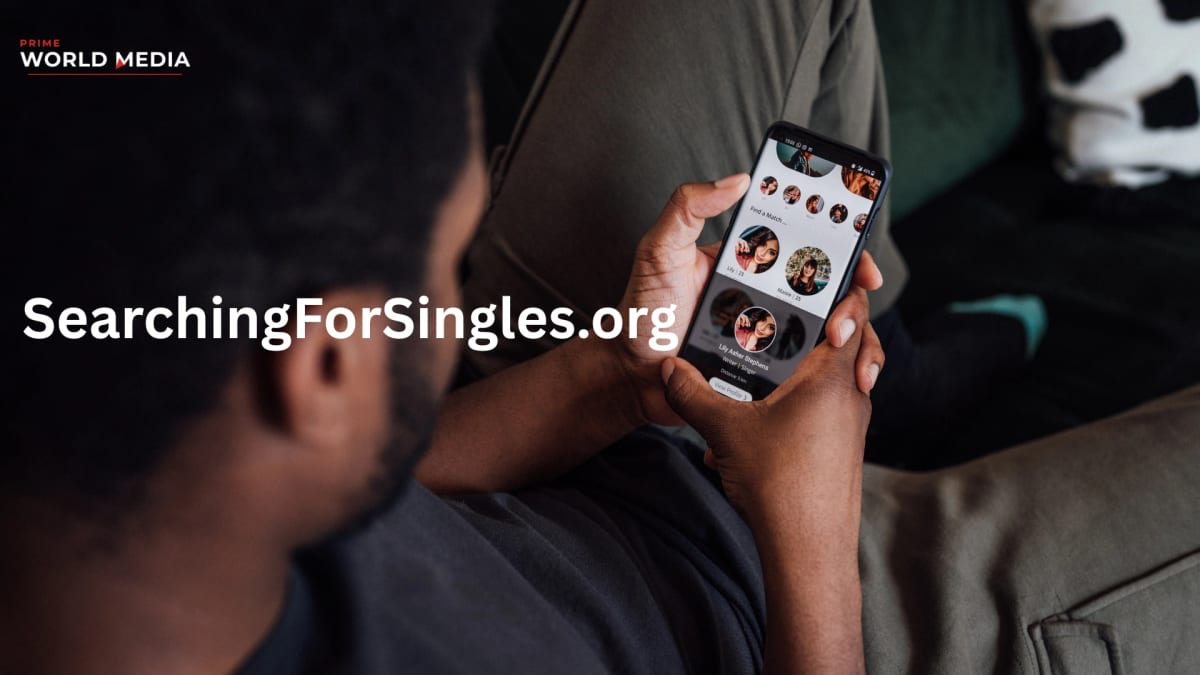
Online dating has become one of the most crowded and least regulated corners of the internet. With hundreds of millions of people globally turning to digital platforms to find companionship, romance, or simply meaningful conversation, the incentive to build platforms that look legitimate while prioritizing profit over genuine connection has never been stronger. SearchingForSingles.org has been operating in this space since 2003 — long enough to have built a history and a reputation, both of which deserve scrutiny before you hand over your personal details or your credit card number.
This review provides a complete overview of what SearchingForSingles.org is, how it really operates to make money, what the evidence says about how real its user base is, what real users say after signing up, and what more intelligent options look like if a real connection is what you want.
The Credit System: Where the Real Problems Begin
Understanding the monetization model of SearchingForSingles.org is the most important thing you can do before deciding whether to join, because the credit system is where the platform's most significant user experience problems originate.
SearchingForSingles.org operates on a pay-per-message credit model — a system that has become increasingly rare on reputable modern platforms precisely because of the structural problems it creates. The mechanics are straightforward: you register for free, you begin receiving messages and profile views almost immediately, and then you discover that actually reading or responding to those messages requires purchasing credits. The platform collects payment before you have any reliable information about whether the people you'd be spending those credits on are real, responsive, or interested.
The incentive structure this creates is deeply misaligned with what users actually want. A platform that earns revenue each time a credit is consumed has a financial interest in generating situations that consume credits — whether or not those situations lead to a genuine connection. Unlimited messaging after matching, the model that reputable modern platforms have largely adopted, creates the opposite incentive: the platform earns when users are satisfied enough to renew subscriptions, which aligns platform success with user success.
Users ranting about SearchingForSingles.org on forums and blogs are all complaining about the same thing: a seeming spike in activity and interest during the free registration phase, and then users suddenly stop sending messages in droves right after credits are purchased.
Messages that appeared responsive become cookie-cutter. Dialogues that seemed to be taking off come to an inexplicable standstill. There is a similar sort of deflation, albeit how can you recreate that up-hype feeling after you have already spent money? Whether this is intentional or a consequence of a mostly inactive user base, the suffering paid members endure is the same: credits are spent, and meaningful connections aren't made.
Users in the reviews say the refund policies are vague, and there seems to be no transparent customer support system to resolve issues. That combination — you have to prepay, refunds aren't guaranteed, and support is invisible — introduces a financial risk that users on other platforms don't need to consider.
Does SearchingForSingles.org Use Fake Profiles? What the Evidence Shows
The question of profile authenticity is the one that generates the most concern among people considering SearchingForSingles.org, and the evidence that exists — from user reports, independent auditors, and behavioral pattern analysis — points in a consistent direction.
The behavioral fingerprints most commonly associated with bot-driven or artificially inflated user bases are evident across user accounts on the SearchingForSingles.org experience. The immediate post-registration surge in profile views and messages — arriving faster than any organic community of real users could produce — is the most recognized signal. Automated systems routinely generate this kind of activity to create the impression of a lively, populated platform and to trigger the curiosity that drives credit purchases.
The quality and content of the early messages from users of SearchingForSingles.org quoted in these reports only reinforce this worry. Standard greeting messages that could have been sent to anyone, copy or near-copy opening lines sent from multiple allegedly different profiles, and exchanges that adhere to formulaic patterns before ending completely are all traits of scripted or semi-automated communication rather than real human interaction.
Independent dating site auditors and trust-scoring services have ranked SearchingForSingles.org as a low-trust site. These relate to the number of active profiles compared to inactive ones, how the platform verifies, and patterns of behavior observed in the user base. While none of this is conclusive evidence of intentional deception, it's an image hard to square with a platform that is sincerely focused on fostering real connections.
The practical con for the user: If you decide to pay for credits to spend on SearchingForSingles.org, there is no telling whether the profiles you message are real, live people, or just posing as you.
Safety and Transparency: The Trust Gap That Can't Be Ignored
In addition to credit system and profile authenticity issues, SearchingForSingles.org faces an even larger transparency problem that digital security experts regularly note. It seems the platform doesn't have a verifiable SSL certificate or a publicly documented, independently audited security infrastructure. As a service provider that handles users' personal and financial information, a lack of clearly defined security measures is a major issue. Trusted dating sites display their security certifications and data management procedures, along with their privacy policy, in a clear, user-friendly manner. The vague manner in which SearchingForSingles.org approaches these disclosures fails to meet the reasonable standard for users who share sensitive personal data.
Corporate ownership and accountability are equally nonexistent. Those looking to discover who runs SearchingForSingles.org, which jurisdiction governs it, and what legal remedies might be available in the event of disputes are hard-pressed to find fact-based information. Such opacity is not necessarily evidence of malicious activity. Still, it means users have few avenues to determine the platform's accountability or to seek redress when problems do arise. Unclear privacy policies, undocumented security practices, and no corporate transparency add up to what the reviews accurately call a trust hole — the site asks for personal information and financial payment. Still, it offers almost no verifiable evidence that either will be handled responsibly.
The Initial User Experience: Engineered Impressions
SearchingForSingles.org launched in 2003, a period when the basic infrastructure of online dating was still being established and when inclusive design — welcoming LGBTQ+ members and people seeking relationships of different types and intentions — was less common than it has since become. This early positioning gave the platform a genuine early-adopter advantage in communities that larger mainstream platforms weren't yet serving well.
The whole history is built into the interface. It has the look and feel of early 2010s dating apps — recognizable enough to make it easy for first-time users, yet antiquated enough to stand out from the packaging of current competitors. For those who think all the newer dating apps are just too much, well, this familiarity can actually be quite attractive. The relationship-intention filters, which let users indicate whether they are looking for friendship, a casual hookup, or a romantic relationship, work and are worth having.
Sign-up is meant to be seamless — swift registration, minimal information needed, instant updates on profile views, and a quick stream of clear interest from other users. For new online daters, this creates an honestly exciting first impression: the site feels alive, responsive, and brimming with potential matches. It is this resemblance that SearchingForSingles.org most successfully peddles, and viewing it as a commodity rather than a natural condition is the biggest reframing for potential users.
What Real Users Actually Report
The review history of SearchingForSingles.org users on various review websites is quite uniform, which is a statement in itself. When different users describe the same processes in their own words on a similar platform, that consistency is telling evidence of what you, as the platform, actually deliver.
The most frequently reported arc runs as follows: registration is easy and immediately generates excitement through apparent interest from other members. The paywall moment arrives — reading or sending messages requires credits — and the user purchases a credit package. Following the purchase, responsiveness from other members drops markedly. Messages that did arrive became shorter, more generic, and less personalized. Conversations that seemed to be developing reach dead ends without explanation. The user ends up spending money on an experience that did not deliver on what the initial free phase appeared to promise.
The feeling tone of these narratives is interesting. Reviewers are not only outlining the numerical letdown—they are calculating the emotional frustration of having invested hope and energy in what turned out to be a manufactured experience. Real vulnerability is at play in dating, and sites that exploit it through manufactured engagement do damage far more extensive than the monetary value of the credits spent. Here's one review that is representative of the feeling: the sign-up process gives you hope, the credit purchase is the tipping point, and then everything that comes afterwards feels designed to disappoint you in a way that makes it difficult to challenge or seek recourse.
Smarter Alternatives Worth Considering
If a real connection is the objective, the blunt takeaway is that, despite numerous reports on SearchingForSingles.org, its fundamental structure of incentives and user experience makes it not worth spending either your money or your emotional energy. Several competitors are routinely rated far higher in terms of trust and positive user outcomes.
| Platform | Primary Strength | Verification Approach | Trust Rating |
| eHarmony | Deep personality-based matching | Verified ID + Compatibility Quiz: Cross-references government IDs in select regions and requires a 15-minute diagnostic. | 9.1 / 10 |
| Hinge | Quality over quantity conversation design | "Selfie Authenticity": Uses AI to compare live motion-video "selfies" against uploaded profile photos to kill "catfishing." | 8.8 / 10 |
| Bumble | Women-first messaging & safety control | Social + Photo Authentication: Combines LinkedIn/Instagram API data with a "pose-matching" photo check. | 8.6 / 10 |
| Match | Mature, serious relationship seekers | Robust Vetting: Profiles are manually reviewed; includes "Vibe Check" (live video dating before meeting). | 8.5 / 10 |
| SeniorMatch | Safety for older adults ($50+$) | Live Camera Verification: Mandatory live camera check during setup to ensure the person matches their images. | 8.4 / 10 |
The architecture of these sites and SearchingForSingles.org is more than just skin deep. The three companies also use subscription or freemium business models rather than charging per-message fees. They all have profile verification processes that significantly reduce the number of inactive or scripted profiles. They all have transparent corporate identity, a customer support infrastructure that works, and documented security policies. The divide in trust that plagues SearchingForSingles.org is absent amongst these options – and that is what makes them consistently beat it in user satisfaction.
Frequently Asked Questions About SearchingForSingles.org
Is SearchingForSingles.org a legitimate platform?
The platform has been operational since 2003, so it is not a complete fabrication. However, independent watchdog services, including ScamAdviser, have assigned it low trust scores based on transparency concerns, behavioral pattern analysis, and user-reported experiences. Operational and trustworthy are not the same thing.
Does SearchingForSingles.org cost money to use?
Registration is free, but meaningful engagement — reading messages, sending responses, viewing certain profile content — requires purchasing credits. The total cost depends on how many credits you purchase and consume, with no guarantee that those credits will produce responsive or genuine interactions.
Are the profiles on SearchingForSingles.org real people?
Some profiles appear to represent real users. However, multiple independent indicators — including the pattern of immediate post-registration engagement followed by post-purchase disengagement, generic message content, and independent auditor assessments of the user base — suggest a significant proportion of activity may be automated or represent inactive accounts.
Is my personal data safe on SearchingForSingles.org?
There doesn't seem to be any third-party security certification for the platform, nor an openly available data protection policy. Users are advised to be cautious when disclosing personal information and to read any available privacy policy before signing up.
What happens if I want a refund?
User comments suggest that refund policies are vague and hard to implement. There are no clear instructions on how to contact support, which makes the dispute resolution process even more difficult.
The Bottom Line: Presentation Over Substance
SearchingForSingles.org is a master class in how well a site can create the illusion of possibility in the free registration stage. It's early commitment to inclusive design — which included being LGBTQ+ friendly and supporting multiple relationship-intention categories — was genuinely forward-thinking in 2003, and a bit of that spirit still has hold in the platform's filtering options. But inclusive marketing language cannot make up for a monetization system that creates misaligned platform incentives with users' interests, an identity that has in the past raised authenticity concerns, and opacity far greater than users should really expect when handing over personal and financial information.
The uniform experience reported from all corners — initial delight, purchase of credits, decline in engagement — is less about an individual series of unfortunate events than a structural outcome. When similar stories accumulate in enough independent reporting, the prudent assumption is that the incident and the pattern it represents are illustrative examples of the platform's function by design rather than by accident.
In an era of online dating where trust is truly hard to come by and emotional vulnerability is at an all-time high, SearchingForSingles.org demands that you give both without offering quite as much in return. For those users who are really looking for a real human connection, not just its simulation, that's not a trade you want to make.
PWM creation teams
Editorial Lead at PRIME WORLD MEDIA. Dedicated to delivering precise, high-impact journalism from around the globe.