Cleveland Guardians vs Los Angeles Dodgers: Player Stats That Tell the Real Story
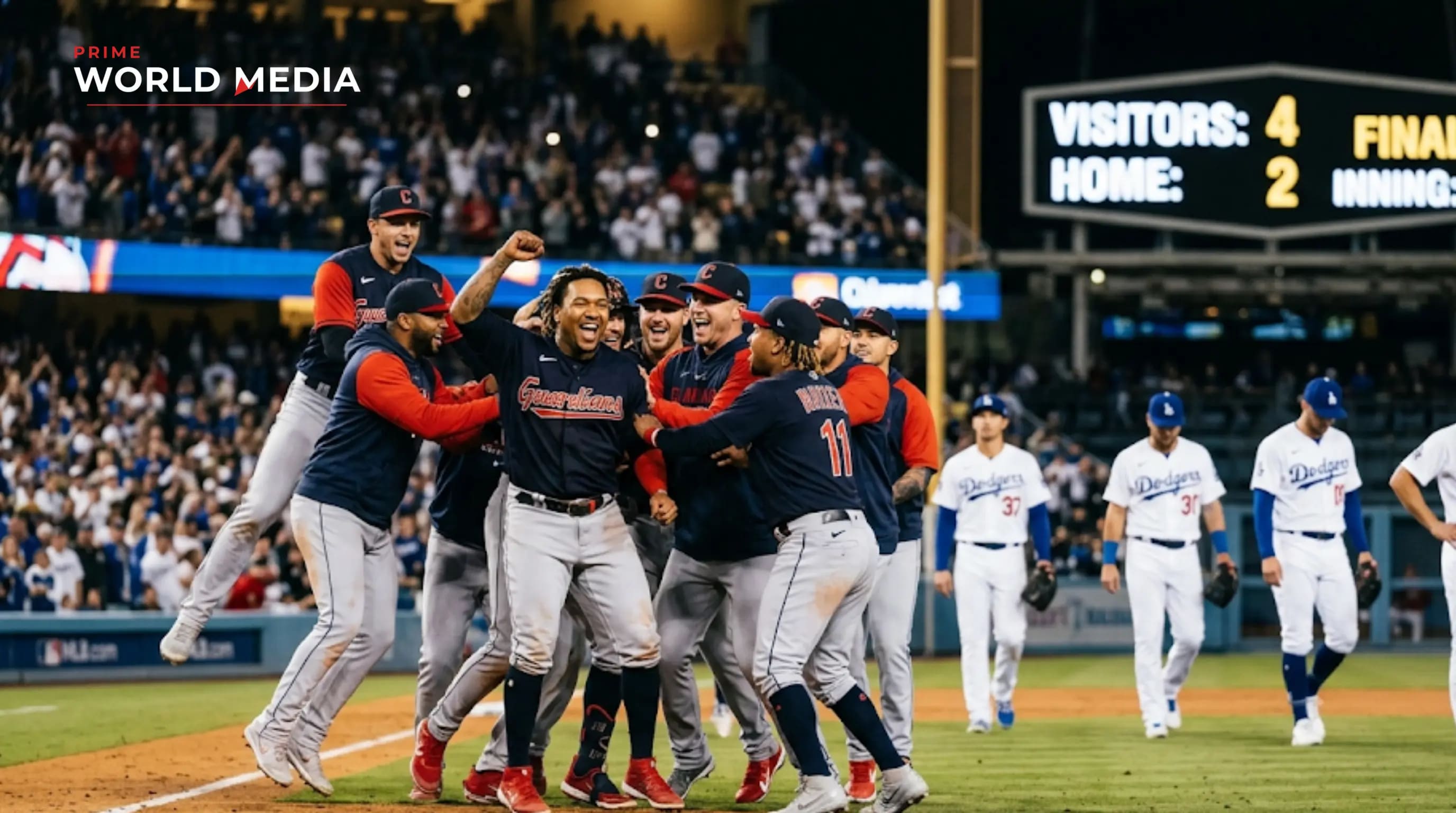
Most people watching the Cleveland Guardians beat the Los Angeles Dodgers 4-2 on March 31, 2026 saw a surprising result. Not because the Guardians are a weak team — they are not — but because nobody expected them to shut down one of the most star-studded lineups in baseball at Dodger Stadium on opening week.
The difference between a Dodgers lineup that scores 9 runs and one that scores 2 with those same 9 hits is almost entirely in the moments that matter — runners left on base, pitching decisions under pressure, and which players show up when the game is on the line. The talent exists in that Dodgers dugout. The gap on this night was in execution.
This breakdown covers everything — the pitching performances that decided the game, the individual batting stats across both rosters, the turning point innings, and the numbers quietly telling a bigger story than the final scoreline. Whether you follow the Guardians, support the Dodgers, or just want to understand what actually happened at Chavez Ravine on Tuesday night, the information here applies directly.
Why the Dodgers Lost a Game They Had the Hits to Win
Before getting into the numbers that matter, it is worth understanding precisely why Los Angeles lost despite matching Cleveland hit for hit.
Equal hits produce unequal results when one team clusters their hits and the other scatters them. The Dodgers finished with 9 hits across 9 innings — and scored 2 runs. The Guardians also finished with 9 hits — and scored 4. The difference was not talent or contact quality. It was timing, sequencing, and one catastrophic middle-inning stretch that the Dodgers pitching staff could not contain.
One pattern that stands out consistently across the Guardians' half-innings is this: damage in bunches beats individual brilliance. Cleveland's 3-run 7th inning was built on a double from Austin Hedges, a 2-RBI double from Daniel Schneemann, and Steven Kwan driving in another run — three consecutive contributors, not one superhero moment. The Dodgers' best hitters, by contrast, went 1-for-4, 0-for-4, and 1-for-4 across a lineup that cost more to assemble than most franchises spend in a decade.
The second problem was pitching sequencing. Roki Sasaki took the loss despite posting a 2.25 ERA across 4 innings — because the damage happened after he left. Justin Wrobleski gave up 3 earned runs across his 4 innings at a 6.75 ERA, and that is where the game was genuinely lost. The starter was not the issue. The handoff was.
The Anatomy of Cleveland's Winning Performance
Every convincing road win contains the same elements, in roughly this order.
The first is a starter who keeps the game close long enough for the offence to build a lead. Parker Messick did exactly that — 6 shutout innings, 5 strikeouts, 76 pitches, zero earned runs. He faced 33 batters and gave the Dodgers nothing to work with through two-thirds of the game. That is not a lucky performance. That is a pitcher executing a game plan.
The second is at least one player who beats the expected contribution from their lineup position. Steven Kwan, batting in the lower-middle of the order, went 3-for-5 with a double, an RBI, and a run scored. In a game where the Guardians scored 4 runs, Kwan was personally involved in 2 of them — half the team's output from a single bat.
The third is a catcher who does more than catch. Austin Hedges went 2-for-4 with 2 runs scored and a double, contributing at the plate in a way catchers rarely do in a tight road game. His offensive contribution in the 7th inning was the ignition point for the 3-run burst that broke the game open.
The fourth is relief pitching that protects the lead without drama. Erik Sabrowski threw 1.1 innings of shutout work on 20 pitches. Shawn Armstrong added 0.2 innings without allowing a run. The only blemish was Cade Smith's 9th — 2 earned runs allowed — but by then Cleveland had the margin to absorb it.
The fifth is leaving Dodger Stadium with a win on a night when Shohei Ohtani went 1-for-4 and Freddie Freeman went 0-for-4. That does not happen by accident.
Cleveland Guardians — Full Batting Breakdown
Batting is where Cleveland's depth showed most clearly against a Dodgers pitching staff that was supposed to contain them.
Steven Kwan was the standout of the night. Five at-bats, three hits, one double, one RBI, one run scored. In a game decided by two runs, Kwan's contribution was not supplementary — it was structural. He reached base more times than any Dodger hitter and did it against pitchers who had been dominant in their previous outings.
Austin Hedges at catcher went 2-for-4 with a double and 2 runs scored — the kind of performance that wins games quietly. Neither of his runs came from a solo home run. Both came from teammates driving him in after he reached base, which means Hedges did the hardest part of productive offence: he got on base when it counted.
Daniel Schneemann at second base went 1-for-4 but his single hit was a 2-RBI double in the 7th inning — the most valuable hit of the game by run production. Context matters more than slash lines, and Schneemann's context was perfect.
Angel Martínez in centre field went 2-for-4 with a run scored. He did not drive in runs but he created opportunities, and in a low-scoring game, runners on base are the prerequisite for every run that follows.
José Ramírez at third base went 1-for-5 — below his standard — but the Guardians did not need him to carry the offence on this night. That is what depth looks like in practice.
Rhys Hoskins at first base went 0-for-2 at the plate but drew a walk and drove in a run. His OBP contribution on a night when his bat was quiet was the mark of a professional hitter adjusting to what the game needed.
Cleveland Guardians — Full Pitching Breakdown
Parker Messick was the story of the game. Six innings pitched. Five hits allowed. Zero earned runs. Five strikeouts. Seventy-six pitches, which means he was efficient enough to go deep into the game without taxing the bullpen. His ERA on the night: 0.00. The Dodgers lineup — which includes Ohtani, Betts, Freeman, and Tucker — did not score off him once.
Erik Sabrowski came out of the bullpen and added 1.1 innings of clean relief on just 20 pitches, with one strikeout and no hits allowed. He did exactly what a middle reliever needs to do: bridge the gap between the starter and the closer without creating problems.
Shawn Armstrong threw 0.2 innings, allowed 2 hits, but gave up zero runs. His ERA held at 0.00 for the night despite the contact allowed.
Cade Smith pitched the 9th and allowed the 2 Dodgers runs on 2 hits across 29 pitches — an ERA of 18.00 for his outing. The Guardians absorbed it because they had the lead to spare.
Los Angeles Dodgers — Full Batting Breakdown
The Dodgers hit the ball. They just did not hit it when it mattered.
Andy Pages in centre field led the team with 2 hits in 4 at-bats. Neither converted into a run. That is the summary of the Dodgers' night — individual contact without collective damage.
Mookie Betts went 1-for-4 with a double, one RBI, and one run scored. His was the only extra-base hit of consequence for Los Angeles. He drove in and scored runs — but as a lone bright spot in a lineup that was supposed to be collectively unstoppable.
Shohei Ohtani went 1-for-4 as designated hitter. No RBIs. No runs scored. For a player of his calibre and contract, this was the quiet night that will dominate the post-game discussion. One hit in four at-bats against a Cleveland pitching staff that came in as heavy underdogs.
Freddie Freeman at first base went 0-for-4 with one RBI — meaning he drove in a run without getting a hit, which requires a sacrifice fly or a walk. His batting average on the night: .000. His contribution to the run total: one. That is a bad night from the heart of the order.
Kyle Tucker in right field went 1-for-4 with one run scored. No RBIs in his first game in a Dodgers uniform at home — not the statement debut the Dodgers needed from their off-season acquisition.
Miguel Rojas, Max Muncy, Teoscar Hernández, and Dalton Rushing each managed one hit without contributing a run. Four players, four hits, zero runs produced. That is 44 percent of the team's hit total generating zero of their run output.
Los Angeles Dodgers — Full Pitching Breakdown
Roki Sasaki took the official loss but does not deserve the blame. Four innings, 4 strikeouts, 78 pitches, 1 earned run allowed. His ERA of 2.25 on the night was the best pitching performance either team got from a starter. The loss next to his name is a function of the team's offence failing to score while he was in the game — not a reflection of how he pitched.
Justin Wrobleski is where the game was genuinely surrendered. Four innings, 2 strikeouts, 4 hits allowed, 3 earned runs, ERA of 6.75. He came in to keep Cleveland contained in the middle of the game and instead gave up the 3-run 7th inning that made the result irretrievable. In a game the Dodgers lost by 2 runs, those 3 runs were the entire margin.
Tanner Scott closed out the 9th with 1 inning, 2 strikeouts, and zero runs allowed. His outing was the Dodgers' most efficient pitching of the night — and it came when the game was already decided.
The Numbers Behind the Turning Point
The 7th inning is where this game was won and lost, and the player stats explain exactly why.
Cleveland entered the 7th trailing by nothing — 1-0 in their favour — and left it with a 4-0 lead. Hedges doubled. Schneemann drove in 2 with a double of his own. Kwan added an RBI. Three consecutive contributors, 3 runs, 7th inning, Justin Wrobleski on the mound. That is the sequence that decided the outcome.
The Dodgers answered with 2 runs in the 9th against Cade Smith — too little, too late, against a team that had already pocketed the lead it needed.
Common Patterns in How Upsets Like This Happen
The first and most consistent factor in road upsets at Dodger Stadium is starting pitching that outperforms expectations. Parker Messick was not supposed to shut down this lineup for 6 innings. He did it anyway, and the entire Cleveland game plan depended on him doing it.
The second is the high-leverage plate appearances going the wrong way for the favourites. Ohtani, Freeman, and Tucker combined for 3 hits in 12 at-bats with zero RBIs between them in their first opportunities with men on base. That is not a systemic failure — it is a bad night. But one bad night is all it takes.
The third is bullpen sequencing. The Dodgers brought Wrobleski in to eat innings in the middle of the game, and he gave up the decisive runs. Decisions about who pitches in the 6th and 7th inning of a 1-0 game matter more than decisions about the closer, and the Dodgers got that call wrong.
The fourth is not panicking when the box score looks even. Nine hits each. Equal contact. The Guardians won by two runs and it was not particularly close after the 7th. Box scores mislead when you read them without context.
The fifth is accepting that Cleveland is genuinely good. This was not a fluke. Parker Messick threw a dominant game. Steven Kwan was the best hitter on the field. The Guardians play in Los Angeles two more times this week, on April 1 and April 2, and they will arrive with confidence that this performance was repeatable.
What the Stats Tell Us About the Series Ahead
The Guardians and Dodgers meet again at Dodger Stadium on April 1 and April 2. The statistical picture from this game carries direct implications for both.
Los Angeles needs Ohtani, Freeman, and Tucker to perform simultaneously in the same game — not sequentially, not individually. The three highest-profile bats in their lineup combined for 2 hits and 0 RBIs on Tuesday. If that continues, the Dodgers' run production will continue to underperform their talent level regardless of how many singles Andy Pages collects.
Cleveland needs Parker Messick's performance to represent a real baseline, not an outlier. If it does — if the Guardians can regularly put 6 quality innings on the board from their rotation — they will win series against teams with bigger payrolls all season long. Tuesday night showed they are capable of it.
The gap between what most people expected from this matchup and what actually happened at Dodger Stadium is the most interesting story of the opening week. The information in these stats explains most of that gap. The rest plays out on Wednesday night.