Dallas Mavericks vs Los Angeles Lakers: Player Stats, Highlights and What the Numbers Really Tell Us
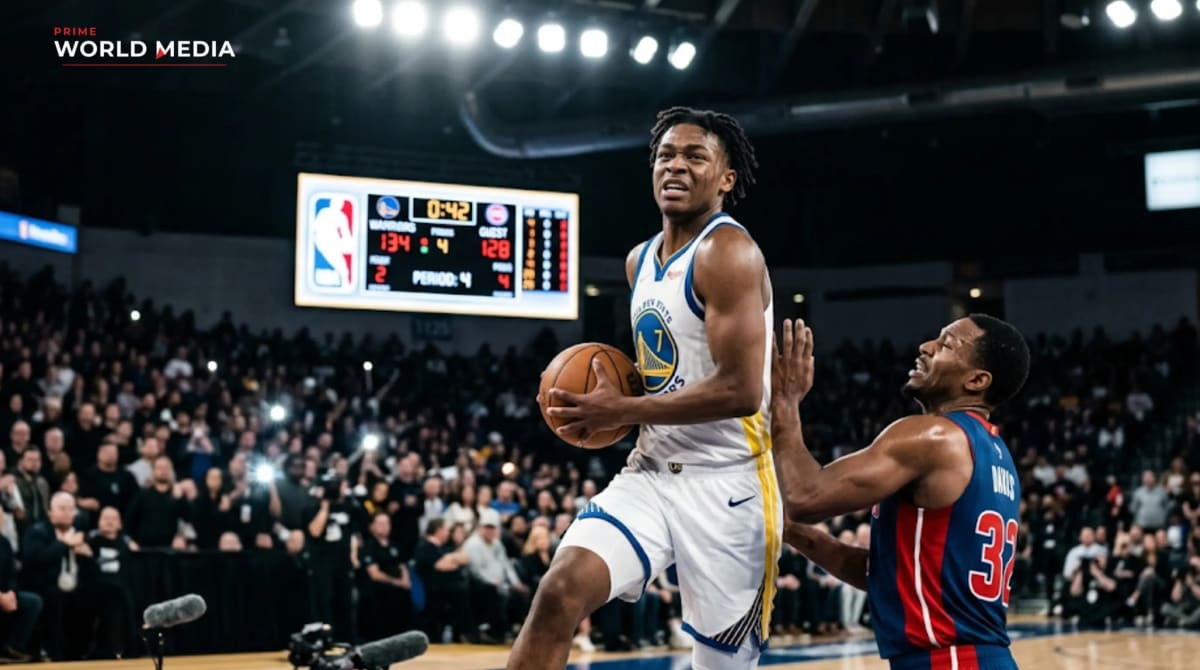
Most people watching the Dallas Mavericks beat the Los Angeles Lakers 134-128 on April 5, 2026, saw an upset on the scoreboard. Not because the Lakers are a weak team—they are not—but because the numbers behind the result tell a story that the final score alone does not capture.
The difference between a Lakers performance that wins this game and one that falls six points short is almost entirely in one column—three-point shooting. The Lakers shot 29.6 percent from three. The Mavericks shot 43.8 percent. In a game decided by six points, that gap in perimeter efficiency was the margin. Everything else—paint scoring, free throws, and rebounds—was competitive. The three-point line was where this game was won and lost.
This breakdown covers every player, every key stat, and every turning point. Whether you follow LeBron James, are tracking Cooper Flagg's rookie season, or simply want to understand what actually happened at American Airlines Center on Sunday night, the information here applies directly.
Final Score and Quarter-by-Quarter Breakdown
| Team | Q1 | Q2 | Q3 | Q4 | Total |
| Dallas Mavericks | 41 | 26 | 40 | 27 | 134 |
| Los Angeles Lakers | 30 | 31 | 36 | 31 | 128 |
Dallas dominated the first quarter by 11 points — and that early lead was the foundation the Mavericks built the entire game on. The Lakers won three of the four quarters but could never fully close the gap the first period created. Dallas's biggest lead of the night was 22 points. The Lakers' biggest lead was 1.
The Stat That Decided the Game
Before getting into individual players, one number explains the result more clearly than any other.
Dallas made 14 three-pointers on 32 attempts—43.8 percent. The Lakers made 8 three-pointers on 27 attempts — 29.6 percent. The difference in three-point production alone accounts for 18 points. The Lakers lost by 6. If both teams shoot equally from three, the Lakers win this game by double digits.
Dallas also scored 46 bench points to the Lakers' 35—another area where depth made a tangible difference on the night.
Cooper Flagg — The Rookie Putting the NBA on Notice
Cooper Flagg was the best player on the floor by a distance. The numbers are not close.
45 points. 8 rebounds. 9 assists. 2 steals. 1 block.
Flagg shot 14-of-27 from the field, 2-of-4 from three, and 15-of-17 from the free throw line—a true shooting percentage of 65.3 percent on heavy volume. He drew 10 fouls. He had a 4.5 assist-to-turnover ratio. His efficiency rating of 56 was the highest on the floor by a massive margin.
For a rookie to produce a 45-point, 9-assist performance against a LeBron James-led Lakers team is not a fluke. It is a statement. Flagg finished with a plus-11 on the night—the best plus-minus of any starter on either team. Every time he was on the floor, Dallas won that stretch of the game.
The 45 points came in every way possible — mid-range pull-ups, drives to the rim at 64.3 percent efficiency inside, three-pointers, and 15 free throws earned through aggressive attacking. Dallas did not have a second player reach 20 points. They did not need one.
LeBron James—30 Points and 15 Assists But the Loss Is His Anyway
LeBron James did everything a 40-year-old with a case for the greatest player in NBA history is supposed to do—and the Lakers still lost.
30 points. 9 rebounds. 15 assists. 1 steal.
James shot 12 of 22 from the field, including 1 of 6 from three—the three-point inefficiency that defined the Lakers' night concentrated in their best player's line. His free throw shooting was 5-of-9, below his usual standard. He had 4 turnovers.
The 15 assists are the headline number alongside the points. LeBron had more assists than any player on either team—but a double-double built on assists requires teammates to finish those opportunities, and on a night when the Lakers shot 29.6 percent from three, too many of those assisted looks did not convert.
His plus-minus of plus-1 is the most generous reading of his night—the game was effectively even when he was on the floor, and the damage happened in stretches when the supporting cast could not maintain the standard he set.
Dallas Mavericks — Full Player Breakdown
Cooper Flagg | F | 45 PTS | 8 REB | 9 AST The complete performance. Efficient, aggressive, and clutch in every quarter. The best individual game of any player in this matchup by a significant margin.
P.J. Washington | F | 15 PTS | 6 REB Shot 60 percent from the field and 50 percent from three on six attempts. Quiet but efficient—exactly the complementary scoring the Mavericks needed alongside Flagg's volume.
Naji Marshall | G | 13 PTS | 6 REB | 7 AST Seven assists with only 2 turnovers—a 3.5 assist-to-turnover ratio that kept Dallas's offense flowing in the stretches Flagg rested. His defensive activity added 2 steals.
Khris Middleton | F | 8 PTS Shot 66.7 percent from three on 3 attempts—an efficient cameo contribution that added perimeter spacing Dallas used to create Flagg's driving lanes.
Max Christie | G | 8 PTS | 2 AST | 2 STL Made 2-of-6 from three and was active defensively with 2 steals. His energy off the bench contributed to Dallas's 46-point bench total.
Daniel Gafford | C | 7 PTS | 7 REB | 2 STL | 2 BLK Plus-19 on the night — the best plus-minus of any player in the game. Gafford's defensive presence at the rim disrupted the Lakers' interior attack, and his 5 second-chance points reflected his offensive rebounding aggression.
John Poulakidas | G | 5 PTS Made 1-of-3 from three in limited minutes. Added 2 fast-break points as Dallas pushed the tempo in transition.
Los Angeles Lakers — Full Player Breakdown
LeBron James | F | 30 PTS | 9 REB | 15 AST The stat line demands respect. The result demands better from the supporting cast.
Jaxson Hayes | C-F | 23 PTS | 4 REB Shot 80 percent from the field—8-of-10—and 87.5 percent from the free throw line. A true shooting percentage of 85.1 is elite efficiency. Hayes was the Lakers' most efficient scorer on the night and the player most capable of matching Flagg's interior dominance. He was not on the floor enough in the moments that mattered most.
Jake LaRavia | G | 14 PTS | 5 REB | 2 STL Shot 27.3 percent from the field—the cold shooting night the Lakers could not afford from a rotation piece. Drew 5 fouls and got to the line 8 times, but his 6 personal fouls in return fouled him out and disrupted rotation continuity at a critical point in the game.
Deandre Ayton | C | 13 PTS | 4 REB Shot 55.6 percent from the field and contributed in the paint. His 13 points were efficient but came without the defensive impact that would have slowed Flagg's interior damage.
Maxi Kleber | F | 2 PTS | 1 REB | 3 AST | 1 STL Quiet offensively but contributed three assists and played a plus-4 in his minutes. His three-point attempt going unmade was the story of the Lakers' perimeter night in miniature.
Jarred Vanderbilt | F | 5 PTS Shot 100 percent on his limited attempts but finished at minus-19—the worst plus-minus of any rotation player on either team. His stretches coincided with Dallas's most damaging runs.
Team Stats Head to Head
| Stat | Dallas | Lakers |
| Points | 134 | 128 |
| FG% | 52.3% | 51.6% |
| 3P% | 43.8% | 29.6% |
| FT% | 77.8% | 78.8% |
| Rebounds | 43 | 58 |
| Assists | 27 | 36 |
| Steals | 11 | 6 |
| Turnovers | 7 | 12 |
| Points in Paint | 54 | 66 |
| Bench Points | 46 | 35 |
| Fast Break Points | 24 | 14 |
The Lakers dominated in rebounds, assists, and points in the paint. Dallas dominated in three-point shooting, steals, turnovers, bench points, and fast-break points. Those four Dallas advantages built 6 points of separation across 48 minutes.
The Turning Points
The first quarter was where the game was decided in structure. Dallas scored 41 points—the highest single-quarter output of the night—against a Lakers defense that could not contain Flagg's early aggression. Going into the second quarter down 11 meant every subsequent Lakers momentum run was recovery, not domination.
The turnover column compounded the problem. Dallas turned the ball over 7 times. The Lakers turned it over 12 times. Dallas scored 21 points off Lakers turnovers. The Lakers scored 9 off Dallas turnovers. That 12-point swing in points off turnovers is effectively the entire margin of the game.
Dallas's fast-break offense added 24 points—10 more than the Lakers managed in transition. In a game where the half-court offense was broadly even on field goal percentage, the edge Dallas built in transition scoring was decisive.
What This Result Means for Both Teams
For Dallas, this performance answers a question the season had left open — can Cooper Flagg carry this team against genuine playoff-level opposition? On Sunday night, against LeBron James and the Lakers, the answer was an emphatic yes. A 45-point, 9-assist rookie performance against this opponent is not something that happens by accident.
For the Lakers, the result continues a pattern of perimeter inconsistency that a playoff opponent will exploit if it is not resolved before the postseason. Losing this game while outrebounding Dallas by 15, out-assisting them by 9, and scoring more points in the paint is the statistical definition of beating yourself. The Lakers had the interior advantage and the playmaking advantage. They lost because they could not make threes.
Both teams have significant games ahead—the Lakers host Oklahoma City on April 8 in a matchup that will define their seeding position. Dallas continues building around Flagg with a roster that increasingly looks like a genuine playoff threat.
Key Takeaways
The Mavericks beat a LeBron James-led Lakers team, with one player—Cooper Flagg—accounting for 45 of their 134 points. The Lakers out-rebounded Dallas by 15 and still lost. Three-point shooting was the deciding factor. Dallas's 46 bench points were the structural advantage that LeBron's 30-point, 15-assist night could not overcome alone.
Cooper Flagg is real. The rookie conversation is over.