Peso Pluma Dad: Who Is Hassan Kabande Toledo and How He Shaped a Global Star
Written By
PWM creation teams
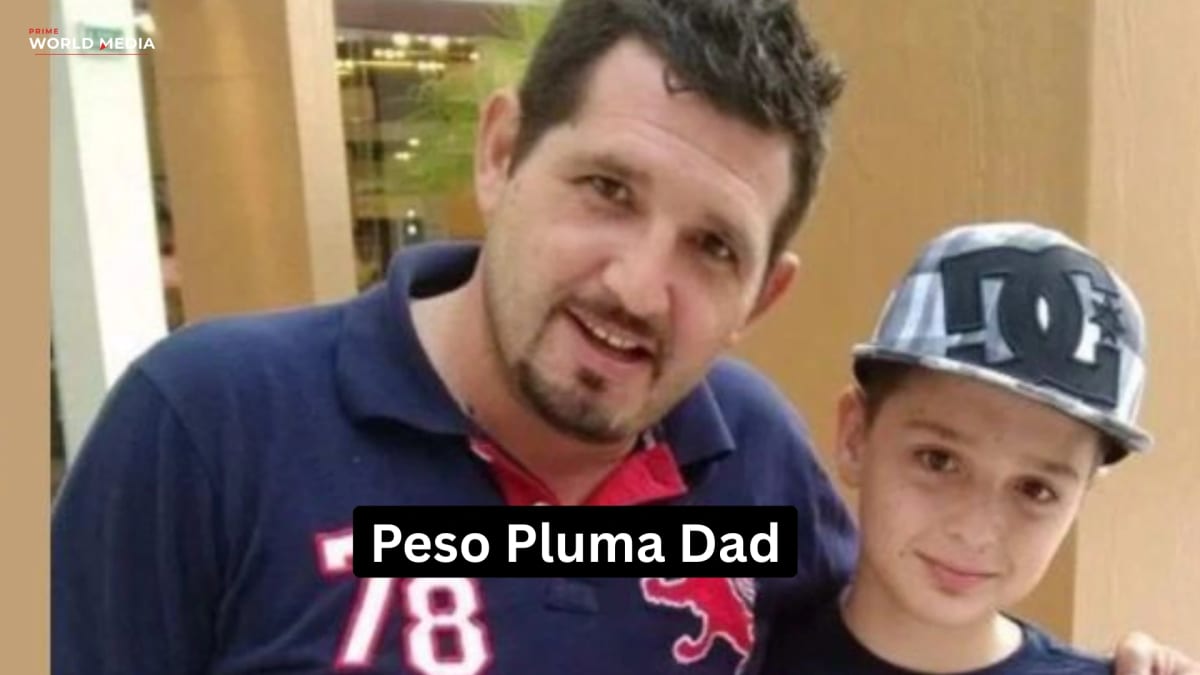
If you have been following Latin music over the last two years, you already know Peso Pluma.
The corridos tumbados artist from Guadalajara has become one of the most-streamed musicians on the planet. He has sold out arenas, topped Billboard charts, launched his own record label, and brought regional Mexican music to audiences who had never given the genre a second thought.
But behind all of that is a family story that most people do not know. And at the center of it is a quiet, private man named Hassan Kabande Toledo.
This article covers everything we know about Peso Pluma's dad, why his background matters, and how a low-profile father from Chiapas helped shape one of Mexico's biggest cultural exports.
Who Is Peso Pluma's Dad?
Peso Pluma's father is Hassan Kabande Toledo.
He is not a celebrity. He is not in the music industry. He does not have a public profile on any platform. His name only comes up because his son became one of the most talked-about artists of his generation.
Hassan was born in the southern Mexican state of Chiapas. He is of Lebanese and Palestinian origin, with family roots said to go back to Bethlehem. That background makes Peso Pluma's background authentically multicultural, unlike when it comes to talk of Mexican regional music.
His profession has never been publicly confirmed. Some unverified reports suggest the Kabande family has business interests in the hospitality sector, but nothing has been officially stated. Hassan has never given an interview and has no known social media presence.
He lives a private life. That much is clear.
Peso Pluma's Real Name and What It Tells You
Peso Pluma's real name is Hassan Emilio Kabande Laija.
He was born on June 15, 1999, in Zapopan, Jalisco, Mexico. He is 26 years old as of 2026.
The name tells you a lot. Hassan is an Arabic name, taken from his father's heritage. Kabande is the paternal surname. Laija comes from his mother's side.
His stage name, Peso Pluma, means "featherweight" in Spanish, a nod to his lean frame and perhaps also to the lightness and agility he brings to a genre that can feel heavy with machismo.
Growing up in Zapopan, on the outskirts of Guadalajara, he was surrounded by the sounds of regional Mexican music from an early age. But thanks to his father's background, he was also exposed to Middle Eastern musical traditions, Arabic rhythms and melodies, that most kids in Jalisco never encountered at home.
That exposure would eventually shape everything about how he makes music.
Hassan Kabande Toledo: The Man Behind the Mystery
Multiple sources describe Hassan Kabande Toledo as a relaxed, easy-going presence in his son's life.
He was not as strict as Peso Pluma's mother, Rubi. He did not hover or push. He gave his son room to explore, to make mistakes, and to figure things out on his own terms.
Barrio magazine and Toronto Latinos both describe a dynamic in which Hassan provided emotional stability and a sense of freedom. In contrast, Rubi Laija Diaz, Peso's mother from Sinaloa, provided structure and discipline.
That combination is not unusual in families that produce creative people. One parent holds the boundaries. The other holds the space. Between them, a kid gets both permission and direction.
Hassan also shared his love of soccer with his son, which became one of the most enduring parts of their relationship.
The Football Rivalry That Defines Their Bond
If you want to understand the relationship between Peso Pluma and his dad, start with soccer.
Hassan Kabande is a supporter of C.D. Guadalajara, known as Chivas. One of the most iconic clubs in Mexican football history, the team of the working man in Jalisco, is a symbol of regional identity and pride.
Peso Pluma supports Atlas F.C., Chivas' local rival.
The two clubs are separated by the same city and decades of fierce competition. Supporters on both sides take it seriously.
According to multiple sources, father and son regularly bet on the outcome of matches between their two teams. It is a playful dynamic, the kind of rivalry that brings people closer rather than pushing them apart.
It is also one of the few personal details Peso has shared publicly about his father, which makes it significant. In a world where he keeps his family life tightly guarded, this football story keeps coming up. It clearly means something to him.
The Lebanese Heritage and What It Means for the Music
This is where Peso Pluma's dad story becomes genuinely interesting for music fans.
Hassan Kabande Toledo's Lebanese ancestry introduced his son to a completely different musical tradition. Arabic musical scales, rhythmic patterns, and melodic structures are distinct from anything in the Mexican regional canon.
Crispme.net and Briefly.co.za both cite this dual influence as a key factor in the development of Peso Pluma's sound. The blending of corridos and ranchera traditions from his mother's Sinaloan heritage with the more complex melodic thinking of Arabic music created something unusual.
Corridos tumbados as a genre already pushes against tradition by mixing corridos with trap and urban sounds. Peso Pluma takes it further. His ear for melody, the way his songs move between sections, and the emotional register he works in all suggest someone who grew up hearing music that most of his Mexican contemporaries did not.
His father gave him that.
Peso Pluma's Mother: Rubi Laija Diaz
No discussion of Peso Pluma's dad is complete without acknowledging the other half of the equation.
Rubi Laija Diaz is from Badiraguato, Sinaloa. She worked as a makeup artist, which meant travel and long hours. When she was home, she maintained high standards. She was the disciplinarian in a household where her husband tended toward the laid-back.
Sinaloa is the birthplace of some of the most important corridos in Mexican music history. The genre is woven into the culture there in a way it simply is not in Jalisco. Rubi gave her son deep roots in that tradition.
In an emotional interview, Peso Pluma said: "I love you, Mom, everything is for you." He was in tears. When asked about his father, he said nothing. That silence has been interpreted differently by various sources.
His 2023 album Genesis includes a song called "Nueva Vida." In it, he sings about his parents giving him a good life and references "the old man in heaven" who must always guide him. Multiple sources suggest this could mean his father has passed away. Peso Pluma has never publicly confirmed this.
It remains one of the more sensitive and unresolved aspects of the story.
The Rumor About Valentin Elizalde
You cannot write about Peso Pluma's dad without addressing the widely circulating rumor.
Several people, including commenters on social media and some blogs, claimed that Peso Pluma's birth father was the late singer Valentin Elizalde, known as El Gallo de Oro, who was murdered in 2006.
There is no verifiable evidence to substantiate this statement.
The real name of Peso Pluma is Hassan Emilio Kabande Laija, which clearly indicates that his paternal name is Kabande and his maternal name is Laija. Several media outlets have noted that he looks like his father. The Valentin Elizalde narrative seems to be internet gossip that took off because of the physical resemblances some fans think they see between Peso Pluma and the deceased vocalist.
It is worth flagging because it comes up in searches. But it should not be treated as credible.
Growing Up Between Two Worlds
Peso Pluma did not grow up in a single, static environment.
He was born in Zapopan, Jalisco. His family later moved to San Antonio, Texas, during his teenage years. This experience of living between Mexico and the United States gave him a perspective that many of his contemporaries in regional Mexican music lack.
He speaks fluent English. He understands American pop culture from the inside. He knows how the US music industry works because he grew up partially within it.
This cross-border upbringing is reflected in his music. Corridos tumbados have always played with the identity of the Mexican who exists between two countries, two languages, and two sets of expectations. Peso Pluma lives that identity. He did not manufacture it for marketing purposes.
His father's multicultural heritage and his own bicultural upbringing gave him the tools to navigate that space authentically.
How He Taught Himself to Play Guitar
One of the more grounded details in the Peso Pluma story is how he learned to play guitar.
He was around 15 years old. He did not have a teacher. He went on YouTube and figured it out himself.
That level of self-direction at a young age suggests the kind of encouragement he received at home. Parents who foster that kind of independent problem-solving do not get enough credit. Hassan and Rubi gave their son the confidence to try things without waiting for permission or formal instruction.
He began singing at tiny bars and local events in Guadalajara, slowly making a name for himself. With hits such as "Ella Baila Sola" by Eslabón Armado, which exploded into a global viral moment in 2022 and introduced corridos tumbados to tens of millions of new ears, he was making his breakthrough.
Peso Pluma in 2026: How Far He Has Come
Understanding Peso Pluma's dad matters more when you understand how far the son has gone.
His Exodo Tour in 2023 grossed approximately $71 million. He co-founded Double P Records in 2023 with George Prajin, giving him creative and financial control over his own output and the ability to develop other artists, including Jasiel Nunez, Tito Double P, and Raul Vega.
In December 2025, he released a joint album with his cousin, Tito, titled Dinastia, through Double P Records. It debuted at number 6 on the Billboard 200 and number 1 on Latin Albums.
He was the first Mexican artist to serve as an ambassador for the Council of Fashion Designers of America at New York Fashion Week in 2025.
His net worth as of 2026 is estimated between $20 million and $25 million.
He has spoken publicly about wanting to give back to his parents everything they gave him. That sentiment, repeated across multiple interviews and in his lyrics, suggests a man who has not forgotten where he came from or who helped him get started.
What Hassan Kabande Toledo Actually Gave His Son
It is worth being direct about this because it gets lost in the celebrity coverage.
Hassan Kabande Toledo gave his son a heritage unlike anything else in Guadalajara. Lebanese ancestry, Middle Eastern musical influences, a multicultural identity in a country that can be suspicious of difference.
He gave him a relaxed model of fatherhood that provided room to grow without pressure to perform.
He gave him a love of football and the experience of a playful rivalry that has clearly stayed with Peso into adulthood.
And he may have given him the experience of loss, if the references in Nueva Vida are to be taken literally, which has deepened the emotional register of his songwriting in ways that pure technical skill cannot replicate.
Not bad for a man who has never given a single interview.
PWM creation teams
Editorial Lead at PRIME WORLD MEDIA. Dedicated to delivering precise, high-impact journalism from around the globe.