Taylor Breesey: How a Faceless Creator Built Millions of Followers on Pure Mystery
Written By
PWM creation teams
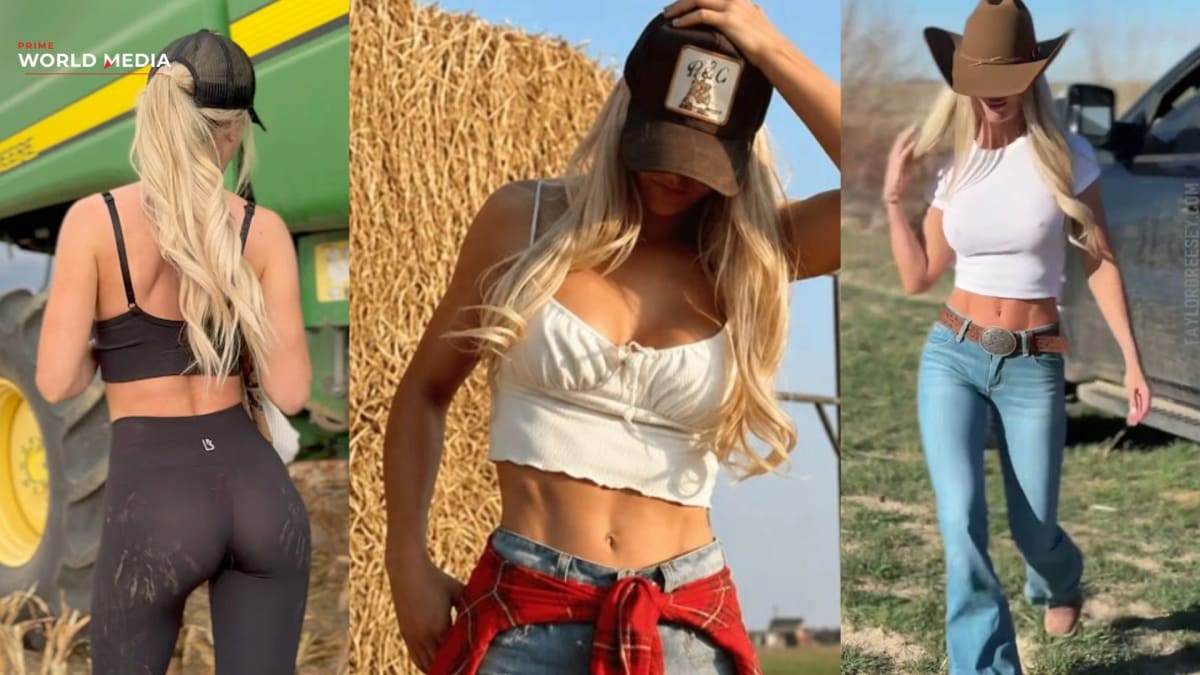
Social media runs on faces. Profile pictures, selfies, face-to-camera videos, carefully lit portraits — the visual economy of influence has always been built on personal visibility. Taylor Breesey has dismantled that assumption entirely. With over 1.5 million followers on TikTok and a growing presence across multiple platforms, she has built one of the more remarkable digital careers of her generation without ever showing her face. Not once. Not accidentally. Not even in a glimpse.
Taylor Breesey's story is not just an oddity about one creator's personal choices. It's a real education in branding and psychology and audience engagement, and even the surprising power of restraint in a medium founded on all exposure.
The Psychology That Makes Taylor Breesey Work
Before exploring her content or business model, it is worth understanding why the Taylor Breesey approach elicits the response it does — because the psychological mechanisms at work are specific and well-documented.
The human brain has a powerful drive to complete patterns. When information is incomplete, cognition does not simply accept the gap and move on — it fills it, speculates about it, and returns to it repeatedly in search of resolution. Taylor Breesey's hidden face presents an unsolved puzzle that operates on exactly this principle. Every piece of content she publishes is simultaneously satisfying — in its quality, its personality, its authentic storytelling — and frustrating, in the best possible sense, because the central question remains open.
This is what attention and engagement researchers call a curiosity gap: the difference between what an audience knows and what it wants to know. Taylor Breesey has effectively made her entire brand a prolonged curiosity gap, and the result is a level of engagement that traditional visual influencers can't really duplicate. Her followers don't just consume content and move on. They talk, theorise, and come back.
There is a second psychological layer worth mentioning: projection. With no physical presence to define her identity, readers make up their own versions of Taylor Breesey based on the clues they glean — her voice, her personality, her aesthetic, her country way of life, her humour. This projected identity is more likely to be something the viewer personally identifies with than any static visual representation could be, as it is influenced, at least in part, by the viewer's imagination. The bond they form is, paradoxically, often deeper than that of a visible influencer.
Who Taylor Breesey Is — What We Actually Know
Taylor Breesey was born in 1999, which places her in her mid-twenties. She is American, and the content she creates is grounded in a rural, farm-based lifestyle that serves as both her authentic backdrop and a consistent aesthetic. Animals, seasonal farm activities, countryside landscapes, and a distinctive "modern cowgirl" sensibility define her visual world.
"Taylor Breesey" is generally accepted as a pen name rather than her real name, in line with her broader insistence on separating her public face from her private one. Her real name has never been officially confirmed, and Taylor Breesey has never given it.
What is known, however, is her platform footprint: 1.5 million+ followers on TikTok and 100k+ on Instagram, with a body of work that includes short-form video, aesthetic photography, and lifestyle storytelling. Without the visual glue that most growth strategies rely on, these figures are the clearest sign that her method is indeed working.
The Content Strategy: Constraint as Creative Fuel
The most technically fascinating element of Taylor Breesey's career is how she addresses the practical issue of being anonymous. Hiding your face while still making interesting visual material across multiple platforms isn't easy. It takes ongoing creative problem-solving.
Taylor Breesey's answer is a masterclass in limitation. Camera angles have been selected to omit her face without rendering the absence clumsy or self-conscious – the cropping feels natural, even artful, rather than avoidant. Editing is used to establish a visual rhythm and vitality that helps hold the viewer's attention, rather than relying on facial expressions as the main emotional cue. Storytelling and voiceover perform the tasks a face-to-camera setup would; they convey personality and engage the audience through sound and story rather than image.
The content themes — farm life, animal care, rural seasons, lifestyle — are well-chosen for this approach because they are inherently visually rich. A landscape, a barn, a horse, a field at golden hour: these carry aesthetic and emotional weight that does not require a face in the frame. Taylor Breesey has essentially built her content strategy around subjects that look compelling without any human presence at all, then layered her personality over the top through audio and storytelling.
The result is content that is genuinely distinctive in its aesthetic — recognisable as Taylor Breesey's work before a single identifying detail appears.
Building a Business Without a Face
The financial dimension of Taylor Breesey's operation challenges a widespread assumption in influencer marketing: that brand partnerships require personal visibility. The conventional logic holds that brands pay for access to an influencer's face, personality, and aspirational identity — and that concealing the face undermines the deal.
Taylor Breesey's career demonstrates that this logic is incomplete. Brands working with her gain access to something arguably more valuable in certain contexts: an unusually engaged, loyal audience that has self-selected around content quality and personality rather than aesthetics or celebrity. Her engagement rates — the ratio of active audience interaction to follower count — are reported to exceed those of many conventionally visible influencers with comparable or larger followings.
She earns her income from platform revenue on the TikTok Creator Fund and Instagram Reels bonuses; branded content partnerships (mainly in agriculture, lifestyle, and fashion); affiliate marketing via product recommendation links; branded merchandise; and digital products. She makes more money from platform revenue through the TikTok Creator Fund and Instagram Reels bonuses, brand deals (primarily in farming, lifestyle, and fashion), affiliate marketing using product recommendation links, merchandise branding, and digital products. So while the figures put her net worth in the ballpark of $1 to $5 million, that's a range that reflects both how much money her model genuinely makes and how vague the concept of income from multiple digital revenue streams can be. The companies that appear most drawn to Taylor Breesey are those that serve a rural way of life, genuine beliefs, and consumers skeptical of high-gloss, excessive commercialization. In this case, her anonymity is not an obstacle to working together but a badge of authenticity.
Why Anonymity Resonates Right Now
Taylor Breesey's emergence and growth did not happen in a vacuum. The specific moment at which her approach found its audience is worth examining.
Influencer fatigue is real and growing. Years of heavily filtered, aspirationally perfect, commercially saturated content have produced audiences that are simultaneously addicted to social media and increasingly cynical about its authenticity. The standard influencer format — face-to-camera, perfect lighting, a sponsored segment smoothly integrated into lifestyle content — has become so familiar as to be almost invisible.
Taylor Breesey is a structural break from that mold. She's not just doing the same thing with better content, or a more likeable personality. But she works from a wholly different assumption, which critiques the visibility-soaked model by showing that authentic connection and financial success can be found outside it.
Security costs billions of dollars, and every smartphone user knows there's a safety and privacy perspective that speaks to their followers. The online abuse of highly visible women creators is well-documented and endemic. Taylor Breesey's anonymity shields her from a form of harm that many of her peers face every day. For an audience that includes a fair number of women who have occasionally worried about their own digital security, a message like hers has resonance beyond the usual branding strategy.
The Question of a Face Reveal
No discussion of Taylor Breesey is complete without addressing the question that dominates her comment sections: Will she ever show her face?
The strategic case for maintaining anonymity is strong. Her hidden identity is the central differentiating feature of her brand — the thing that makes her immediately recognisable and generates the sustained curiosity that drives her engagement. A face reveal would be a one-time event, producing a spike of attention followed by the gradual normalisation of her into just another visible creator. The mystery, once resolved, cannot be recreated.
The case for a reveal is also real. A carefully planned face reveal would likely generate significant media coverage and could open doors to opportunities — television appearances, live events, mainstream brand partnerships — that currently require physical presence. Some segment of her audience would likely feel a deepened connection upon seeing the person behind the content.
Taylor Breesey has not signaled any intentions one way or the other. This quiet is very much in keeping with her approach: to allow the question mark looming over the audience to do the work of engagement, while she concentrates on crafting work that can function outside the reveal question.
What Other Creators Can Learn
Taylor Breesey's career offers lessons that extend well beyond the specific tactic of hiding one's face.
The most fundamental lesson is that constraint, handled creatively, is not a limitation — it is a differentiator. In a medium where most creators are doing the same things with slight variations, choosing a structural rule for your content and executing it with excellence creates immediate distinction.
The second lesson is about boundaries and sustainability. Breesey maintains a strict divide between her public persona and her real life. It hasn't crippled her career-wise — it has defined it. Creators who set boundaries around what they are willing to share seem to have lower burnout rates and more enduring relationships with their audiences than those who feel compelled to be open about everything.
The third lesson is audience trust. Followers of Taylor Breesey know exactly what the deal is — they are interacting with a persona whose visual identity is intentionally hidden. That candor about the nature of the relationship, paradoxically, engenders more trust than the manufactured transparency of creators who offer highly curated content as raw access.
Conclusion
Taylor Breesey has done something genuinely unusual: built a multi-million-follower digital career by refusing to do the thing that most people assume is essential. Her success does not prove that anonymity is the right strategy for everyone. It proves that a strategy executed with consistency, creativity, and genuine understanding of the audience will work — even if that strategy contradicts every conventional piece of advice about how social media is supposed to work.
In a medium obsessed with showing more, Taylor Breesey chose to show less. The audience, as it turns out, found that irresistible.
PWM creation teams
Editorial Lead at PRIME WORLD MEDIA. Dedicated to delivering precise, high-impact journalism from around the globe.