Quote of the day by Elon Musk: “Don't confuse schooling with education. I didn't go to Harvard but the people that work for me did”
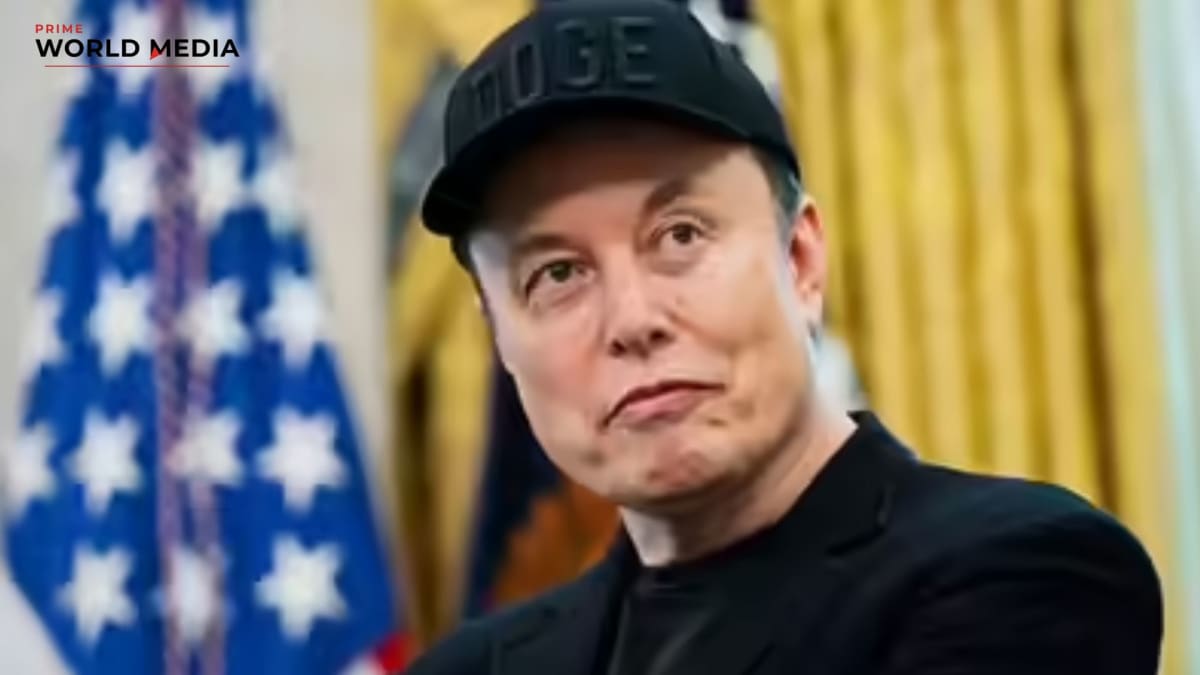
Few quotes about success land with the quiet confidence this one carries. There is no bitterness in it, no resentment toward elite institutions, and no anti-intellectual posturing. It is a precise, measured observation about the difference between two things that the world has spent decades treating as identical — and a reminder, delivered with remarkable economy, that the map is not the territory.
Elon Musk did not invent this idea. Thinkers, philosophers, and self-made individuals have been drawing the distinction between formal schooling and genuine education for centuries. What Musk did was give it a contemporary frame — grounding it in the specific reality of Silicon Valley, where credential hierarchies and actual capability have never been more visibly misaligned.
This piece unpacks what the quote actually means, why it resonates so widely, and what the practical lessons are for anyone navigating their own relationship between formal education and real-world growth.
What the Quote Actually Says — And What It Does Not
The first thing worth establishing is what this quote is not saying. It is not saying that Harvard is worthless. It is not saying that formal education is a waste of time. It is not saying that credentials do not matter or that dropping out is the path to success.
What it is saying is more specific and more interesting — that schooling and education are not the same thing, and that conflating them leads to a fundamental misunderstanding of what actually drives capability, achievement, and value creation.
Schooling is a system — a structured institution with defined curricula, credential outputs, and social signalling functions. Education is a process — the actual acquisition of knowledge, skills, judgment, and the capacity to apply them in the real world. The two overlap significantly in the best cases. In many cases they diverge — producing people who have completed schooling without completing much education, or people who have educated themselves thoroughly outside any formal institutional framework.
Musk's point is that he belongs to the second category — and that many of the people who work for him, despite their Harvard credentials, belong to the first category as employers of his vision rather than architects of it. The credential hierarchy and the capability hierarchy do not map onto each other as neatly as institutions would like us to believe.
Why This Resonates So Widely in 2026
The quote has always had resonance. In 2026 it has particular force because the credential-to-outcome relationship that justified the cost and time investment of elite education has become harder to defend with a straight face.
Student debt in the United States has crossed levels that make the financial case for many degree programmes genuinely difficult to make. Graduate outcomes data increasingly shows that what a person does with their time and attention matters more than which institution issued their degree. Hiring practices at leading technology companies — including several of Musk's own ventures — have moved away from degree requirements toward demonstrated capability assessment.
The world that made elite credentials the reliable ticket to elite outcomes has shifted. The alternative path — self-directed learning, demonstrated output, real-world application of genuine skills — has become more viable, more visible, and more credible than it was a generation ago. Musk's quote captures a transition that many people are living through without having the language for it.
The Distinction That Actually Matters
Breaking the quote down to its essential components surfaces three ideas worth sitting with separately.
Schooling as signalling versus education as substance
Schooling serves a signalling function — a Harvard degree tells the world something about the holder's ability to gain admission to Harvard, complete Harvard's curriculum, and navigate Harvard's social environment. These are real signals of real qualities — intellectual baseline, work ethic, social capital. They are not nothing.
But they are not the same as the substantive question of whether this person can identify a real problem, develop a solution, execute under uncertainty, and create something that did not exist before. Education in the genuine sense is what produces that capability — and it can be acquired inside or outside formal institutions, often more effectively outside them for people with the discipline and direction to pursue it deliberately.
The employment relationship as evidence
The second half of the quote is the part that makes people stop. It is not just a philosophical claim about education — it is an empirical observation about a specific employment relationship. Harvard graduates working for someone who did not attend Harvard is not an unusual arrangement in practice, but it punctures the credential hierarchy's implicit claim that elite schooling is the primary determinant of who leads and who follows.
What it illustrates is that the qualities that make someone a founder — vision, risk tolerance, drive, the capacity to operate in conditions of radical uncertainty — are not reliably produced by elite schooling and are not measurably correlated with elite credentials. The people Musk employs are genuinely talented. Their Harvard credentials are genuinely valuable. And neither of those facts changes who built the companies they work for.
Self-education as active choice
The implicit third element of the quote is that genuine education is available to anyone willing to pursue it deliberately. Musk is a well-documented self-educator — he has described reading extensively across physics, engineering, economics, and history, applying what he learned directly to the problems he was trying to solve. His education was real, rigorous, and consequential. It just did not happen inside an institution that issued him a credential for it.
This is the most actionable part of the quote for most people. The question it poses is not whether Harvard is worth attending — it is whether you are actively pursuing education regardless of what institutional framework you are or are not inside. Schooling happens to you. Education is something you do.
What This Means for Students and Entrepreneurs
For students currently inside formal education
The quote is not an invitation to disengage from formal education. It is an invitation to take responsibility for your own education within and beyond whatever institutional framework you are operating in. A university education that you treat as active self-development — pursuing curiosity beyond the curriculum, applying ideas to real problems, building skills through practice rather than just completing assignments — is genuinely educational. The same university education treated as credential acquisition produces schooling without education.
The distinction is not about which institution you attend. It is about what you do with the time and attention you have.
For entrepreneurs and self-directed learners
The quote is permission — clear, credible permission from someone who has built some of the most consequential companies of the current era — to take your own education seriously without waiting for an institution to validate it. The knowledge is available. The tools for self-directed learning have never been more accessible. The outcomes for people who educate themselves genuinely and apply what they learn effectively have never been more visible.
What self-directed education requires is the discipline that formal schooling provides externally — structure, accountability, deliberate practice, and the willingness to pursue understanding rather than just information. Those are qualities you either cultivate or you do not, regardless of where you are studying.
For hiring managers and organisations
The quote is also a challenge to hiring frameworks built around credential filtering. The most capable people in any field are not uniformly distributed across elite institutional alumni networks. Hiring processes that treat credentials as the primary sorting mechanism systematically exclude capable people who educated themselves outside those networks — and systematically include people whose credentials reflect institutional access more than genuine capability.
The organisations building the most effective teams in 2026 are the ones that have moved toward capability assessment — evaluating what people can actually do rather than where they studied — and discovering that the talent pool expands significantly when the credential filter is replaced with a more direct measure of what matters.
The Broader Truth the Quote Points To
Behind the specific observation about Harvard graduates and employment relationships sits a broader truth about how capability actually develops.
Genuine expertise — the kind that solves real problems, creates real value, and produces real outcomes — is built through deliberate engagement with difficult material, applied to real problems, over extended time. Formal education at its best creates conditions for this to happen. At its worst it substitutes for it — producing credential holders who have passed the assessments required to exit the system without developing the genuine capability the system was supposed to build.
The people who succeed most consistently — inside and outside formal educational institutions — are the ones who treat education as something they are responsible for rather than something that is being done to them. They read beyond the curriculum. They apply ideas to real problems before they are required to. They seek feedback on their actual work rather than just their assessed performance. They are genuinely curious rather than strategically compliant.
That orientation — toward genuine education rather than credential acquisition — is what Musk's quote is really pointing to. And it is available to everyone, regardless of which institution they are attending or not attending.
The Verdict — A Quote Worth Taking Seriously
The best quotes do not just sound good — they change how you look at something you thought you already understood. This one does that. It reframes the relationship between schooling and education in a way that is simple enough to remember and specific enough to be genuinely useful.
Do not confuse schooling with education. The credential is not the capability. The institution is not the knowledge. The degree is not the development.
Wherever you are in your own educational journey — inside a formal institution or outside one, early in your career or well into it — the question the quote poses is the right one. Are you acquiring genuine education, or are you completing schooling? The answer determines a great deal more than which side of the employment relationship you end up on.