Coyyn Rare Coins: The Complete Guide to Digital and Physical Coin Collecting in 2026
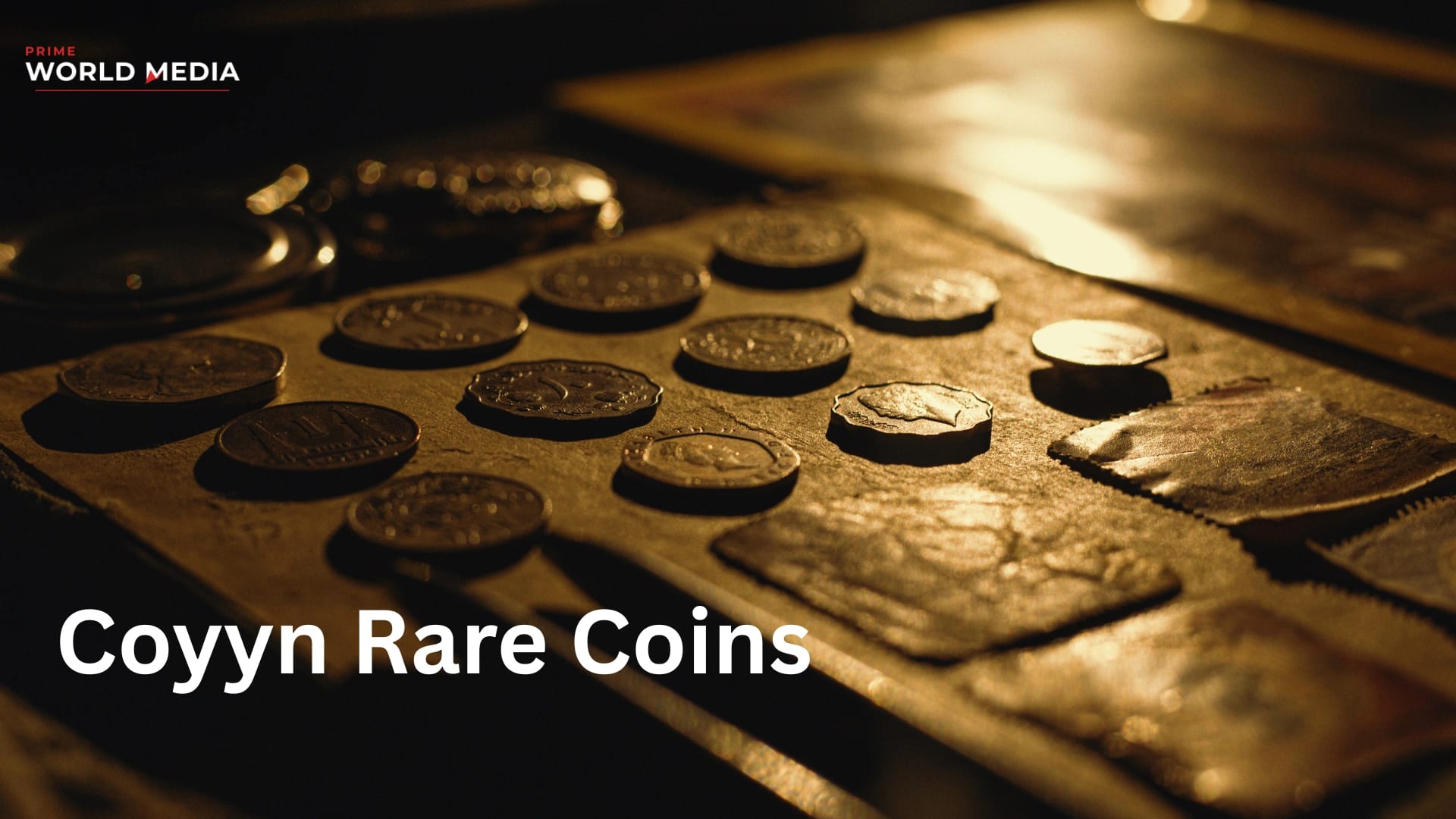
The hobby of rare coin collection is something that looks easy until you dig deeper.
A coin is a piece of metal. However, a rare coin is not just that. It is a representation of the economic and political conditions of the time during which it was minted. For rare coin collectors, such a combination of rarity, significance, and beauty is highly intriguing. On the other hand, this combination gives rise to a unique class of assets that maintains its value over long periods of economic cycles.
Coyyn has established its niche between the old world of rare coins and the new world of digital finance. Here, we provide a brief overview of what exactly rare coins by Coyyn entail, how they benefit collectors and investors, and which rare coin investments are in 2026.
What Coyyn Actually Is
Before getting into the coins specifically, the platform itself needs to be understood clearly.
Coyyn.com is a digital finance education and marketplace platform. It covers cryptocurrency, digital banking, gig-economy finance, rare coins, and investment education across all of these areas. The core mission, consistent across multiple sources, is to make complex financial topics accessible to people who want to understand digital capital without a finance degree.
Rare Coins is another aspect of the website, Coyyn, which fits into the wider picture. The platform provides details on why coins have value, identifies which coins to collect, explains how the rare-coin market works, and outlines the impact that modern technologies, such as blockchain authentication, can have on the industry.
Coyyn isn't a rare-coin auction house like specialized numismatic auction houses; it is more focused on rare coins as an asset class, which should be considered when discussing building wealth from diversified assets.
This is quite helpful because, rather than looking at rare coins only from the angle of collecting them as a hobby, one will view them from the perspective of investing.

Why Rare Coins Matter as an Asset Class in 2026
The rare coin market has been growing steadily for years, and 2026 is no exception.
According to the Professional Numismatists Guild, certain coins have sold at auction for tens of thousands to millions of dollars. The market has attracted serious investor attention alongside the traditional collector community, and the two groups increasingly overlap.
The reasons rare coins hold value are structural rather than arbitrary.
Rarity is the most fundamental driver. A coin produced in limited numbers in 1794 cannot be reproduced. Its supply is permanently fixed. As time passes and coins are lost, damaged, or absorbed into permanent collections, the effective supply continues to decrease. Rising demand against a shrinking supply produces the price appreciation that characterizes the best rare coin investments.
Historical relevance commands a premium that cannot be gauged by looking at the numbers alone. The value of coins that signify important economic, political, or cultural events exceeds the value of the metal itself. The reason is that a coin's meaning has financial value to collectors, who consider it a link to history.
The coin's condition is critical to its value. A perfectly preserved coin will be worth ten times as much as one that has been worn down. The Professional Coin Grading Service and Numismatic Guaranty Company have established grading standards for coin condition. This has increased transparency in the market.
Metal content is the minimum threshold of a coin's value. The intrinsic value of gold and silver coins makes them valuable even without any other considerations. While the precious-metal value of coins acts as a bottom threshold, it doesn't mean the value cannot exceed that amount.
The Coins Coyyn Highlights as Worth Knowing About
Several Coyyn sources cite specific coins as the sweet spot for true rarity, historical significance, and proven market value. They are each interesting in their own right.
The 1794 Flowing Hair Silver Dollar is consistently cited as one of the most significant coins in American numismatic history. It was among the first silver dollars struck by the United States Mint. Its historical position as an early American monetary artifact, combined with extreme rarity given the small number originally produced and the even smaller number that survive in good condition, has made it one of the most valuable American coins. One example sold at auction for over $10 million.
The 1933 Saint-Gaudens Double Eagle carries one of the more unusual histories in American coin collecting. The coin was minted but almost entirely melted down following President Roosevelt's gold recall order. A small number escaped destruction through various means. The legal status of these coins was contested for decades. Those that have been officially sanctioned for private ownership have sold for extraordinary sums. One example sold for over $18 million.
The 1909-S VDB Lincoln Penny is considered the most famous of all Lincoln Penny errors. It is truly scarce but obtainable for those with a bit deeper pockets, not just for the super-rich. The coin was produced at the San Francisco Mint in 1909, the first year of Lincoln cents, and features the designer's initials (Victor David Brenner) on the reverse. The initials were removed amid public criticism near the end of the production run, and the original version with the VDB initials is somewhat scarce. In the end, they bring hundreds to thousands of dollars.
The 1916-D Mercury Dime provides yet another easy way into the serious world of rare coins. Very few of these dimes were minted in the year 1916 by the Denver Mint. It is worth owning for its rarity among sought-after coins.
The 1804 Silver Dollar is considered by some as the King of American Coins. None of these dollars were actually minted in the year 1804, but later on, in smaller quantities as commemorative coins. Fifteen specimens are known to exist today, and when any are put up for sale, the bids are extraordinary.

How Digital Tools Are Changing Rare Coin Collecting
This is where Coyyn's specific contribution to the rare coin world becomes clearest.
Historically, rare coin collecting required physical expertise, personal relationships with dealers, and significant time investment in research that was only available through specialist publications and in-person networks. Identifying a valuable coin required either personal knowledge or access to knowledgeable people. Authenticating a coin required trusted specialists. Tracking market values required monitoring auction results through dedicated channels.
Each of the criteria listed has been significantly affected by digital platforms.
Research accessibility is by far the most important shift. Detailed information on the type of coin, the number produced, its historic significance, and known auction results is available to anyone with internet access. The contribution to this democratization of information has come through Coyyn and its counterparts.
Price tracking has become genuinely sophisticated. The PCGS Price Guide and similar tools track values using real auction data rather than estimates. Collectors can monitor how a specific coin's grade and type have performed at auction over time, which produces much better-informed buying and selling decisions than the previous generation of collectors had access to.
Authentication technology is continuously advancing. As noted by Coyyn, blockchain technology provides an immutable record of a coin's history and origin. In other words, every authentic coin receives a digital footprint on a blockchain. This greatly reduces the risk of fraudulent coins entering circulation, providing the buyer with assurance about the nature of their purchase.
Marketplace access is much easier now. Although traditional coin shows and coin dealers still play an important role, online marketplaces have increased the pool of prospective buyers and sellers of any coin. This increase in liquidity benefits both sides, since sellers will have easier access to buyers. In contrast, buyers will have access to a larger selection than can be found at any physical venue.
Physical Coins versus Digital Collectibles: Understanding Both
Coyyn's take on rare coins makes clear that they cover both physical numismatic coins and digital collectibles that have become more popular recently. Even when operating on the same platform for ease of use, separating these two is worth noting. Traditional collectors bought physical rare coins and sold them for profit, just as they have for centuries. Metal coins, produced in limited editions, are authenticated by professional grading companies, encapsulated to protect their condition, and accompanied by a report on the grade. These are assets you can touch with a market history stretching back for hundreds of years.
NF-based collectibles and digital rare coins are a brand-new thing. They are completely based on blockchain networks. They can be described as digital versions of historical coins, brand new digital designs with inherently limited availability using smart contracts or blockchain certificates of ownership linked to physical coins held in safe vaults.
Different kinds of users flock to these two classes. Collectors of physical coins are drawn by their tactile links to history, the artistry of the piece itself, and the solidity of metal as a store of value. Digital collectibles appeal to individuals who are more familiar with blockchain-based ownership, more interested in the technology itself, and more comfortable holding assets that exist only as verified digital records.
Neither is inherently superior. They represent different relationships to the concept of scarcity and value. Understanding which one you are actually interested in before exploring either market saves considerable time and potential confusion.
How to Start Collecting Rare Coins Responsibly
If you are getting into rare coins as a hobby, an investment, or both, there are a few universal guidelines that set successful collectors apart from those who simply shell out cash.
Start with education before spending anything. A person with some knowledge of grading, what factors have the most influence on value, and how to interpret auction records will be able to make more informed decisions than hection prey to the seller's overly optimistic descriptions or their own instincts alone. Coyyn's guide is a good place to start. They are both very detailed and go more in-depth.
Understand grading before buying graded coins. Coin grading uses a 70-point numerical scale, with 1 representing the poorest and 70 the perfect mint state. Price variance can be hundreds of percent between a coin graded MS-63 and MS-65 of the same date and mint mark. You get the best bang for your buck by buying coins in professional slabs from PCGS or NGC, because you get third-party verification of the grade, which is the safest way to buy until you are confident enough to grade coins on your own.
Specialize rather than accumulate broadly. The most lucrative collecting focuses on specific series, eras, or coin types rather than whatever may catch the eye. Through this practice, you will develop knowledge in a particular area, and you can properly assess prices for items in that area.
Buy the coin, not the holder. The slab and grading of your coins are critical; however, it's always the coin itself that counts. Two coins of the same grade can vary considerably in eye appeal, struck state, and surface condition. It does take time to learn these nuances, but it pays off much more often than looking only for the grade.
Keep records of everything. Purchase prices, provenance documentation, authenticity certificates, and storage records all matter for insurance, tax purposes, and eventual sale. Digital portfolio tracking tools, several of which are highlighted by Coyyn, make this considerably easier than the paper records that previous generations of collectors maintained.
The Risk Landscape: What to Know Before Investing
Collecting and investing in rare coins is certainly doable, but it comes with risks that require candid disclosure.
Counterfeiting is a genuine and ongoing issue, especially for high-value coins. The most prevalent security measure is purchasing coins in authenticated slabs from PCGS or NGC. Buying raw, ungraded coins is something you need to gain some experience before doing that. Purchasing slabbed coins eliminates most of this risk until expertise is developed.
Market liquidity is strongly dependent on the type of coin. Common date coins from popular series also sell quickly because there are so many buyers. Peculiar types or very limited issues can be harder to sell at a reasonable price because there will be fewer potential buyers, and they may take much more time. The liquidity of what you are buying is particularly important if you may need to cash out of the investment on short notice.
Condition sensitivity: Shrinking condition gaps can produce price swings. And a coin that looks uncirculated and uncleaned to an untrained eye may actually have been cleaned or altered in ways that experienced collectors detect immediately and cause significant value loss. Again, professional grading can offer the best protection against overpaying for coins that turn out not to be in the condition you expected.
Storage and insurance are ongoing expenses that new collectors frequently overlook. Rare coins must be stored properly to maintain their condition, and their value means you should have sufficient insurance coverage. These costs should be included in any investment computation.
Why Coyyn's Approach to Rare Coins Makes Sense
The combination of traditional rare coin collecting, digital finance education, and blockchain authentication tools that Coyyn represents is not an arbitrary pairing.
In both cases, scarcity is the primary factor determining value. In both cases, a grasp of markets and of authenticity is required, as well as the ability to distinguish true rarity from artificial creation.
Coyyn's approach to bridging both worlds through straightforward education and the right tools caters to collectors and investors who understand that having a complete view of value-driving assets, from hundreds of years old silver coins to blockchain-based digital assets, is far more helpful than considering each market segment alone.
Accessibility is the platform's real contribution. Rare-coin collecting has long been an insular world, with the best information passing through specialist networks that outsiders struggled to penetrate. Digital platforms that clarify and demystify the market reduce those barriers, benefiting both new participants and the market as a whole.