How Did Two Entrepreneurs Build a $2.3 Billion Bank After Every High Street Lender Said No?
Written By
PWM creation teams
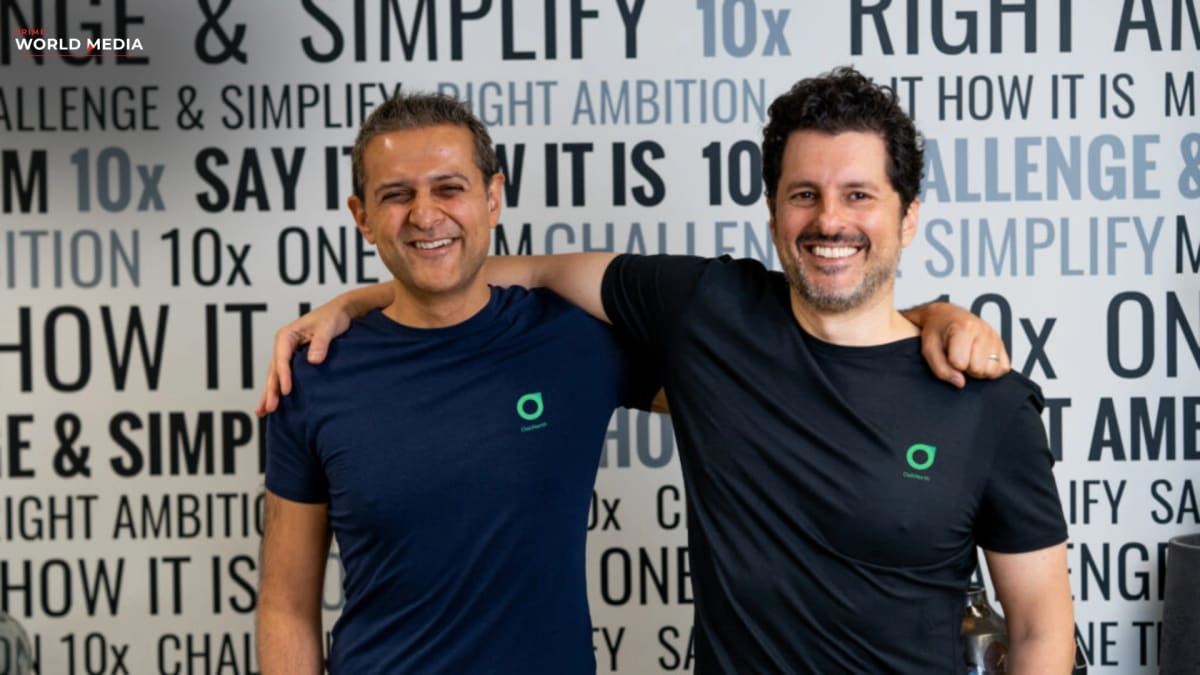
Rishi Khosla and Joel Perlman built a 3,000-employee data analytics company, sold it to Moody's, and when they asked for a loan for their new venture, all the top banks in the UK said no. So, they built their own bank. It's called OakNorth. It has already lent businesses more than $17 billion dollars and has created over 61,000 jobs, 36,000+ houses, and was last valued at $2.3 billion after a £440m investment from the SoftBank Vision Fund. This is how two entrepreneurs turned no into one of the most valuable fintech banks in Europe.
Rishi Khosla: The Entrepreneur Who Started Renting VHS Tapes at Age Six
Rishi Khosla understood entrepreneurship before he could even say the word. Aged six or seven, he began renting out VHS Tapes brought back by his parents on holidays. His parents bought the tapes; he rented them to his teachers, got the cost of them back in two days of rental, then every subsequent pound was his own profit. He charged his friends late fees.
By the age of ten, he had moved on to teaching other children how to use a computer, how to program a computer, and charging less for younger students, as he believed they had less pocket money. He began dynamic pricing before he had reached the age of ten. He also began selling stationery and small toys he'd sourced from his friend's corner shop during break time at school, and would piece together broken pens into complete ones that he would then sell to the school's student body.
He went on to study economics at University College London, and was awarded a master's degree in accounting and finance at the London School of Economics. Post studies, he was then employed by ABN AMRO before working at GE Capital, where he was given the responsibility of setting up an in-house early-stage venture capital function. He was then employed by Lakshmi Mittal, once the sixth wealthiest man in the world (an Indian steel magnate), to manage a portfolio of fintech businesses and began dividing his time between London, India and Silicon Valley.
During this time, Khosla made a rather well-documented early investment in the now widely recognised e-commerce firm PayPal following just one meeting with Elon Musk; and the more you're doing early-stage investing, the more it comes down to the entrepreneur, Khosla has said. With Musk, he said, "you had this immense focus and drive." He also stated, "you could see this was someone on a mission."
Joel Perlman: The McKinsey Consultant Who Bet $60,000 on a Friendship
Joel Perlman hails from Bogota, Colombia. He started as a consultant at McKinsey & Company and has graduated from both the London School of Economics and Georgetown University. During his time at LSE, he met Rishi Khosla. Although opposites personality-wise, they worked well together academically and spent long nights at Maroush, a Lebanese restaurant on campus. "We were opposites when we met, and we are still pretty different", Khosla remembered in a later interview. "However, we always learnt from each other and felt our personalities had a very complementary and balancing effect. There was undoubtedly synergy there which we took and ran with."
Khosla and Perlman launched Copal Partners in 2002 with just $60,000 to begin with, a bootstrap strategy that we see repeatedly with entrepreneurs who do not wish to give up too much of their company, and which was a key element of our Guide to Scaling Without Losing Control.
They moved in with their respective partners and worked 20-hour days to establish an institutional investment research and data analytics firm. The early years were grueling, and they took 3 years to recoup their original investment. However, while the likely resale price will gain more attention, the reality was blood, sweat, and tears.
After twelve years, they grew Copal Partners to around 3000 employees across thirteen markets. In 2011, Moody's acquired a majority stake in Copal Partners, and in 2013 combined Copal with Amba Investment Services under the name Copal Amba. Moody's finalized its acquisition of the remainder of Copal Amba shares in September 2014 for terms that were not disclosed, yielding seed investors over 200x their original investment.
The Rejection That Started a Bank
With Copal Amba sold, Khosla and Perlman were inspired to found another company. When they tried to obtain debt finance from the big UK banks, the computer said no. They had the same computer from the same bank across every major UK bank, and it was broken. It did not make sense that businesses with healthy cash flow, existing customers, profitability, and commercial success would not get a loan from any of the big banks because the algorithm was stuck looking backward and did not understand growth companies. This was the founding thought: What if there were a bank founded by entrepreneurs, for entrepreneurs? A bank that enables savers to put their money to work supporting job-creating businesses in their communities? A bank where forward-looking potential, not past financials, drove lending decisions. In September 2015, Khosla and Perlman founded OakNorth Bank in London.
They took a radically different approach from the outset, where other fintechs were trying to operate at the edges of regulation, OakNorth sought out a full banking license from day one. 'We did not undertake any regulatory arbitrage,' Khosla said. 'We have a banking licence from day one and tried to sort out our stuff.' This made OakNorth an outlier to much of the fintech sector, where Revolut, one of Europe's largest fintechs, spent years seeking a UK banking license and could not see the end. OakNorth got it before they made their first loan. This approach to building trust through compliance, not seeking to circumvent it, echoes how we view sustainable growth vs a quick exit for other founder-led businesses.
The Missing Middle: A Market Everyone Else Ignored
The target market for OakNorth, in the terms of Khosla and Perlman, was the "missing middle" - companies with revenues of $5 million to $100 million. These were businesses that no longer qualified for small-business loans but were also too small to meet the requirements of large corporate banking groups. For years, these businesses had been the engine of economies worldwide but remained hidden from view within the banking sector.
The platform integrated rich credit expertise with cutting-edge technology and huge data sets, including unique and novel data, to model the forward-looking picture of a business's financial circumstances in light of benchmarks, macroeconomic factors, and scenarios tailored to the specific business. Loans designed for each borrower were made in days and weeks, not months.
For the borrower, the ability to expand revenues and grow the business much more rapidly. For the bank, originating and credit teams were able to perform many times the volume of deals each year. For savers, the opportunity to invest money in local jobs and local housing. This kind of focus on niche customer bases with highly tailored products is also akin to the niche that Paddle discovered in SaaS payment processing and addressed with a merchant-of-record model overlooked by established players.
The Growth: From Zero to $17 Billion in Loans
OakNorth followed a slow and steady growth strategy. "From day one, we stayed really true to the vision from the beginning. If you pull our business plan from ten-odd years ago and what we were setting out to do, it remained totally on mission," Khosla told me. "If you plot out our metrics all the way back from 2015, they've been pretty steady."
In September 2018, the firm raised $100 million, reaching a $2.3 billion valuation (up from $1.4 billion in 2017) before raising a further $440 million from SoftBank's Vision Fund in 2019, which solidified its position as one of Europe's most highly valued fintechs.
By 2024, the bank made a pre-tax profit of £215m, an increase of 15% year-on-year, and a revenue of £309.9m. It had a staff of 278 and has directly facilitated over $17 billion in business lending in the UK and US and directly facilitated the creation of over 61,000 jobs and nearly 40,000 new social and affordable homes.
The US Expansion: Crossing the Atlantic
The bank, which in July 2023 began lending to US firms from the UK, received regulatory approval from the Federal Reserve and New York Department of Financial Services in August 2024 to set up a representative office in New York. By May 2025, OakNorth had lent more than $1 billion to US businesses.
The US strategy was supported by ONCI, a sister business, which had extensive experience of the US commercial lending market. The same technological platform, credit expertise, and target market of the missing middle were employed for American businesses. The representative office does not perform any general banking transactions or accept deposits; it holds minimum electronic and professional data required to ensure the security and ease of communication to the UK home office.
The Culture: Move Fast and Break Things, Except Where You Cannot
Therein lies the paradoxical culture at OakNorth. One minute, it's all the frantic pace of tech startups and experimentation; the next, it's an almost iron-clad pledge to stick to the rules. "You can move fast and break things in one domain, but in another, you have this bipolar attitude, where you don't take any risks," Khosla said. "If you are not moving fast and breaking things in some ways, then you cannot be a dynamic organization. But you must also know where you don't do that."
It has become the organizing principle of OakNorth. The team hired people who knew tech along with people who knew complex legislation well. "Combining those gives you a more rounded perspective for how you build businesses such as ours," Khosla said.
It is hard to find the paradox in Khosla when he is wearing his standard OakNorth hoodie, jeans and sneakers; in the office daily, bantering with colleagues, choosing a treadmill desk over a glass office. He loves music and can even bust a move on the dance floor at Christmas parties. His anthem as an entrepreneur is 'My Shot' from Hamilton, which he plays aloud from his phone while he's discussing the correlation to his life: "I am not throwing away my shot."
The Controversial Angle: Tall Poppy Syndrome and Hidden Success
Khosla is unashamed about his success; he's a multimillionaire and is reported to have a net worth of 650 million, but he argues that European founders and the press should do more to celebrate entrepreneurship openly.
If you are a successful entrepreneur in the UK, then typically you hide your success, said Khosla in an interview in 2025. And instead you should think: actually, if I have been successful, perhaps I can inspire others, something he describes as tall poppy syndrome, a tendency in entrepreneur culture that damages both founders and future generations for lacking role models. If you are successful for any other reason in this country, it is often held against you unless you are a footballer.
It's controversial to raise this point when our society often views commercial success with cynicism. Nevertheless, Khosla's commitment to front his brand and his mission, not behind the corporate veil, speaks more to the truth of what actually builds business trust when consumers can so easily spot insincerity. Khosla's argument, however, is practical. You need to provide aspiration to young people and role models who are not afraid to reveal the lows with the highs. Others don't understand pain, Khosla says; the outsider rarely gets to know the heartbreaks and highs. Your journey is a number of ups and downs, and to some extent, you have to dull yourself to the pain of the lows to continue, which may impact how you feel the highs. This sentiment about how success is achieved really connects with the research findings of why business leaders tend to burn out and how those who survive behave differently.
The Philanthropy: Beyond Banking
Khosla funds efforts to foster agency, creativity and curiosity in early childhood through the Rishi & Milan Khosla Foundation. The Foundation also supports medical research on rare diseases, initiatives in female empowerment and entrepreneurship in disadvantaged areas.
He founded the Mentorpreneurship Programme at OakNorth in collaboration with the London School of Economics, and the company also works with Founders4Schools to assist 100,000 secondary school children, 40,000 of them from underprivileged communities, with mathematics, mentoring and career aspiration.
The Founder Lessons: What Khosla and Perlman Teach Every Entrepreneur
The first lesson is that rejection is information, not fate. Every bank told Khosla and Perlman no. They used those noes to find an untapped market and to start a business that would eventually be worth $2.3 billion. The noes that an early-stage founder encounters are not personal - it's a piece of data. Thinking of rejection as a way to gather intelligence, rather than a failure, is one mindset shift that distinguishes founders who go on to build lasting companies and founders who give up at the first hurdle.
The second lesson is that regulation can be a source of competitive advantage, rather than a burden. While many other companies would spend years in pursuit of their banking license, OakNorth already had one from day one. This permitted them to secure customers and a reputation with regulators while other businesses would be slogging through legal paperwork. The benefits of the slow approach for regulated entrepreneurs compound rapidly, but cannot be reaped by fast followers.
The third lesson is that complementarity is far more important than similarity in co-founder selection. Khosla and Perlman are opposites. The two of them have launched two businesses over 23 years together and still have each other's back. That initial chemistry, established in a corner booth at Maroush restaurant, close to LSE, became the Foundation of two substantial businesses. Finding a co-founder whose deficiencies balance your strengths is arguably the most overlooked decision of a startup's formation process. This dynamic of co-founders possessing complementary strengths has become a defining feature of many great teams, such as that between Deel's Alex Bouaziz and Shuo Wang, and the Airtable founding team of three.
The fourth lesson is that patience compounds. It took 3 years to earn back the initial capital in Copal. It took 10 years to build OakNorth into a $2.3 billion bank. Khosla's advice to himself would have been to work harder, but working harder does not mean faster – it means longer than anyone would reasonably expect. This perspective is so rare in an industry that emphasizes rapid scaling; however, this prolonged approach builds sustainable businesses.
FAQs:
1.Who founded OakNorth Bank?
OakNorth Bank was founded by Rishi Khosla and Joel Perlman in September 2015. They had previously co-founded Copal Partners in 2002, grown it to 3,000 employees across thirteen markets, and then sold it to Moody's Corporation in 2014.
2.What is the valuation of OakNorth Bank?
OakNorth was valued at $2.3 billion in September 2018 following a $100 million funding round. In 2019, SoftBank's Vision Fund invested $440 million into the company, but no more recent valuation has been publicly released.
3.How much has OakNorth lent to businesses?
OakNorth has lent $17 billion+ to businesses in the UK and US, having directly supported the creation of over 61,000 new jobs and almost 40,000 new social and affordable homes.
4.What is the middle of banking missing?
The missing middle comprises businesses with turnover between $5 million and $100 million. They have outgrown support from SME banks, but they do not meet the criteria for corporate banking. OakNorth was designed specifically to address this gap in banking services.
5.How does OakNorth's lending technology work?
OakNorth's platform combines machine learning with decades of credit knowledge and huge data sets (including unusual and inaccessible data sources). This allows it to build an 'outlook' on a borrower's financial health using an analysis based on industry standards, macroeconomic drivers, and scenario testing tailored to the specific business.
6.Is OakNorth regulated?
Yes, OakNorth has held a full UK banking licence since 2015. It has also been approved by the Federal Reserve and New York Department of Financial Services for a US representative office, which was granted regulatory approval in August 2024.
7.What is Rishi Khosla's net worth?
Rishi Khosla's net worth is estimated at $650 million. He is a multimillionaire as a result of selling Copal Amba to Moody's Corporation and holding a share in OakNorth Bank.
8.What is the Mentorpreneurship Programme?
This is an OakNorth program run in partnership with the London School of Economics to mentor, educate and inspire young entrepreneurs. OakNorth also runs Founders4Schools to support 100,000 secondary students, 40,000 of whom are from disadvantaged backgrounds.
9.Is OakNorth moving into the US?
Yes, OakNorth began US lending operations in July 2023 and will have a US representative office by August 2024 in New York. By May 2025, lending to US businesses had surpassed $1 billion.
10.What sets OakNorth apart from other fintech banks?
OakNorth stands out from its peers in that it was created by founders who previously struggled to scale a business with inadequate banking support. The founders' authenticity and the fact that the brand is inseparable from them provide a strong trust signal, which converts customers into brand advocates. This principle was touched upon when analysing how customers can be transformed into brand advocates. It also has a unique combination of significant credit expertise and innovative technology. In contrast, most fintech banks only have regulatory permission; OakNorth has a full banking license, and its approach is specifically targeted to the 'missing middle' segment of the market.
PWM creation teams
Editorial Lead at PRIME WORLD MEDIA. Dedicated to delivering precise, high-impact journalism from around the globe.