Liquid Death: How Mike Cessario Built a Billion-Dollar Brand From "The Dumbest Name" in the Beverage Industry
Written By
Alexander Wright
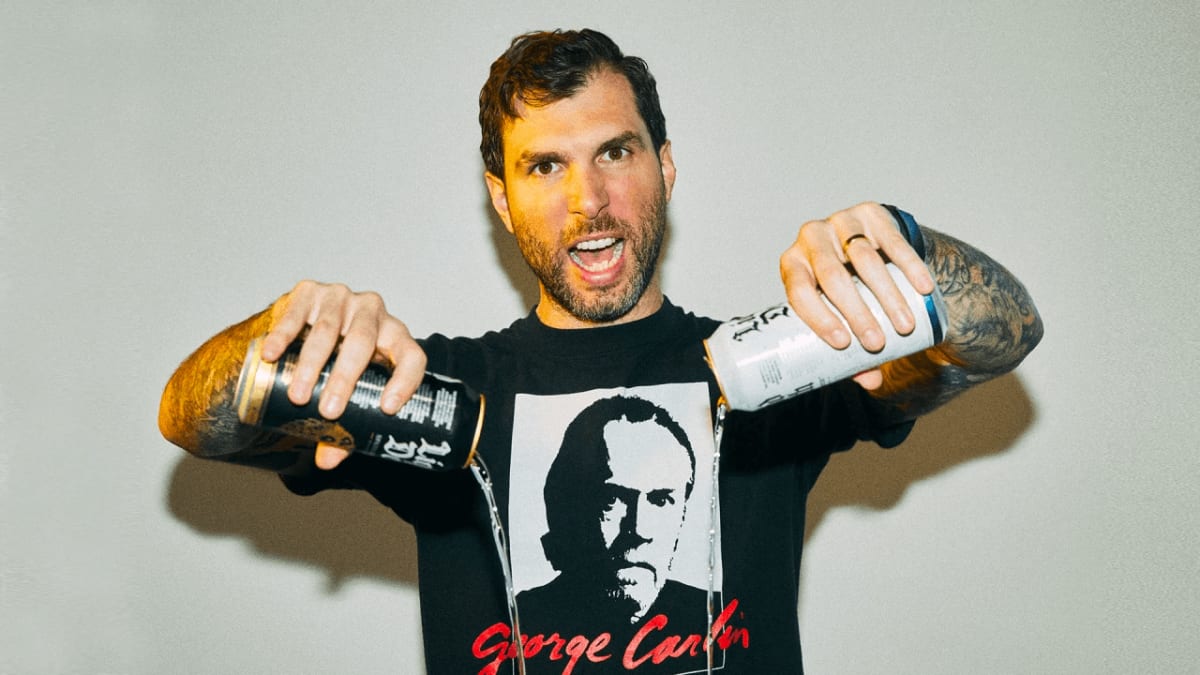
In a market saturated with predictable labels, idyllic waterfall images, and plastic bottles promising purity, one brand emerged that didn't just sell water — it challenged the very notion of how a beverage should look, feel, and be talked about. That brand is Liquid Death, and the person behind its meteoric rise is founder and CEO Mike Cessario — a creative visionary who turned a simple insight into a global phenomenon.
Liquid Death is now a staple among young consumers, famous for its tallboy cans adorned with skull graphics and its defiant slogan, "Murder Your Thirst." But behind this unconventional product lies a story of strategic disruption, bold creativity, and relentless belief in an idea that many initially dismissed as absurd.
The Man Behind the Brand: Mike Cessario
Mike Cessario does not fit the 'typical' description of a beverage entrepreneur. He did not grow up in the food science labs of large, packaged product companies; Mike Cessario originates from advertising and creative direction. Having crafted campaigns for major clients — including work connected to Netflix and other top brands — Cessario had a deep understanding of how culture and communication shape consumer behavior.
Educated with a creative mindset and immersed in design, skate culture, and the punk music scene, Cessario had always viewed marketing not as a way to sell products but as a platform for entertainment and engagement. This perspective would become the beating heart of Liquid Death's identity.
The Origin Idea: Why Water Needed to Be Cool
The inception of Liquid Death can be traced back to 2009 at the Vans Warped Tour — a music festival where punk and alternative culture thrived. Cessario observed musicians hydrating from Monster Energy cans, choosing to fill them with water instead. This simple image — water inside a can associated with energy and rebellion — sparked a profound question: Why is healthy water marketed so boringly? In contrast, soda and energy drinks get all the cool branding.
The question lingered for years. Cessario saw that big beverage companies often stuck with traditional messages about purity and nature, often appealing to older or middle-aged consumers. Meanwhile, younger generations — Millennials and Gen Z — were drawn to brands that spoke with irreverence, humor, and personality.
He wondered, why couldn't water — the healthiest drink on the planet — have the same rebellious, edgy appeal that craft beers, energy drinks, and rock culture embraced? That insight became the seed for Liquid Death.
Naming the Brand: Choosing "Liquid Death"
One of the most pivotal moments in Liquid Death's history came when Cessario asked himself a counterintuitive question: What is the dumbest possible name for a brand built around water? The answer he landed on Liquid Death- was shocking, provocative, unconventional, and impossible to ignore.
Cessario recognized right away that for his brand to be successful, it had to have a way of going viral naturally (i.e., without spending money on advertising). The name of the product had to be something so funny, confusing, or shocking that people would want to tell others about it through social media. All of this shock value became the most important element of Liquid Death's marketing strategy.
Most industry experts warned him against it, predicting that retailers and consumers would reject a product with "death" in the name. But Cessario stuck to his vision — he wanted people talking about it.
From Concept to Reality: Early Struggles and Breakthroughs
Turning an idea into a real business wasn't easy. Cessario faced several challenges:
- Lack of Industry Experience
Cessario, unlike other entrepreneurs who have previously worked in the food and beverage industry or possess expertise in either beverage science or supply chain management, is mainly a designer rather than either of these two types of professionals. Therefore, Cessario had no knowledge about bottling, distributing, sourcing water, or any of the logistics related to producing a beverage before starting this venture.
- Limited Funding
Without a track record in the beverage industry, securing investment was tough. Many investors didn't take the idea seriously because the name was unconventional and because aluminum cans are more expensive than plastic bottles.
Creating Proof Before Product
Cessario didn't even have a manufactured can when he first introduced the idea to the public. Instead, he spent about $1,500 producing a low-budget but edgy commercial and around $3,000 on Facebook ads. This ad featured CGI art and humorous visuals that aligned with the brand's irreverent tone.
To his surprise, the video went viral — garnering millions of views and tens of thousands of followers on Liquid Death's social media pages before a single can hit the market. That traction became vital proof for investors that there was genuine interest.
Scaling the Brand: Growth, Distribution, and Culture
After proving the concept online, Cessario secured $1.6 million in seed funding led by Science Ventures and other early-stage investors. With that capital, Liquid Death officially launched on its website in January 2019.
From there, growth was explosive:
Direct-to-Consumer Launch
Liquid Death began by selling directly to customers online, giving the company control over branding, narrative, and pricing — bypassing traditional retail barriers.
Retail Expansion
As demand grew, Liquid Death expanded into grocery and convenience store chains, including Whole Foods, Target, and 7-Eleven. By combining humor-driven campaigns with traditional retail presence, the brand reached millions of customers nationwide.
Product Diversification
What began as pure mountain spring water has now become sparkling, flavored iced teas and even more innovative merchandising products that can satisfy consumers' tastes while also meeting their lifestyle needs.
Environmental Focus
Cessario made sustainability a core part of the brand's ethos. Liquid Death's water comes in aluminum cans — a packaging choice that is infinitely recyclable, sustainable, and often more eco-friendly than single-use plastic bottles. This commitment resonated with younger consumers who value environmental responsibility.
Marketing Genius: Entertainment Before Hydration
One of Liquid Death's most impressive achievements is its entertainment-first marketing. Rather than presenting water as a health choice, the brand markets it as a cultural statement — part humor, part rebellion, and entirely attention-worthy.
Cessario often says that traditional advertising brands want people to think about lifestyle and purity. The goal of Liquid Death is for everyone to enjoy, pass around, and engage with their drinks, and to have fun doing so. Here’s how they do this via some of their unique tactics:
- Viral social content that mocks traditional beverage ads
- Collaborations with celebrities and pop culture figures
- Edgy product extensions and merch
- Social campaigns that feel more like entertainment than marketing
This strategy worked brilliantly: Liquid Death's social media following grew exponentially, making it one of the most talked-about beverage brands — despite selling the simplest product on the planet: water.
Valuation, Achievements, and Cultural Impact
Liquid Death's growth trajectory has been nothing short of remarkable:
Valuation Growth
From its humble launch in 2019, the company was valued at around $700 million by 2022 and reached approximately $1.4 billion by 2024, effectively achieving unicorn status.
Strong Financial Performance
Sales have grown year over year, with revenue climbing from a few million in early years to hundreds of millions as retail and product diversification expanded.
Brand Recognition
Today, Liquid Death has evolved into one of the best-known brands of canned water worldwide, breaking beverage-marketing conventions to win customers through creativity and boldness.
Cultural Influence
Liquid Death's influence goes beyond beverages. It has become a cultural reference point — whether through memes, merchandise, or its iconoclastic marketing voice — showing that branding can be as powerful as product utility.
The Legacy of Mike Cessario
Mike Cessario's journey offers a blueprint for modern entrepreneurship in the digital age:
- Creative disruption can succeed even in conservative markets
- Risk-taking marketing can outperform traditional campaigns
- Brand identity can be more valuable than product features
- Community and culture can fuel growth faster than logos alone
Liquid Death demonstrates how a common product - just plain water - can be transformed into something special by having a clear vision, being in the right place, right time, and being bold in your branding. Cessario not only createdDeath'sverage brand, but he also created a lifestyle brand.
Conclusion
Liquid Death achieved meteoric growth into a billion-dollar brand from one man’s outrageous idea. Mike Cessario took one of Earth’s most ubiquitous drinks (water). He turned it into a cultural phenomenon through a combination of humor, irreverence, and an intimate understanding of today’s consumer desires for entertainment.
His journey is a reminder that disruption doesn’t always come from creating something new — sometimes it comes from seeing something ordinary in a new way.
Alexander Wright
Alexander Wright is the Senior Editorial Lead at Prime World Media. Dedicated to delivering precise, high-impact investigative journalism and executive-level business insights from around the globe.