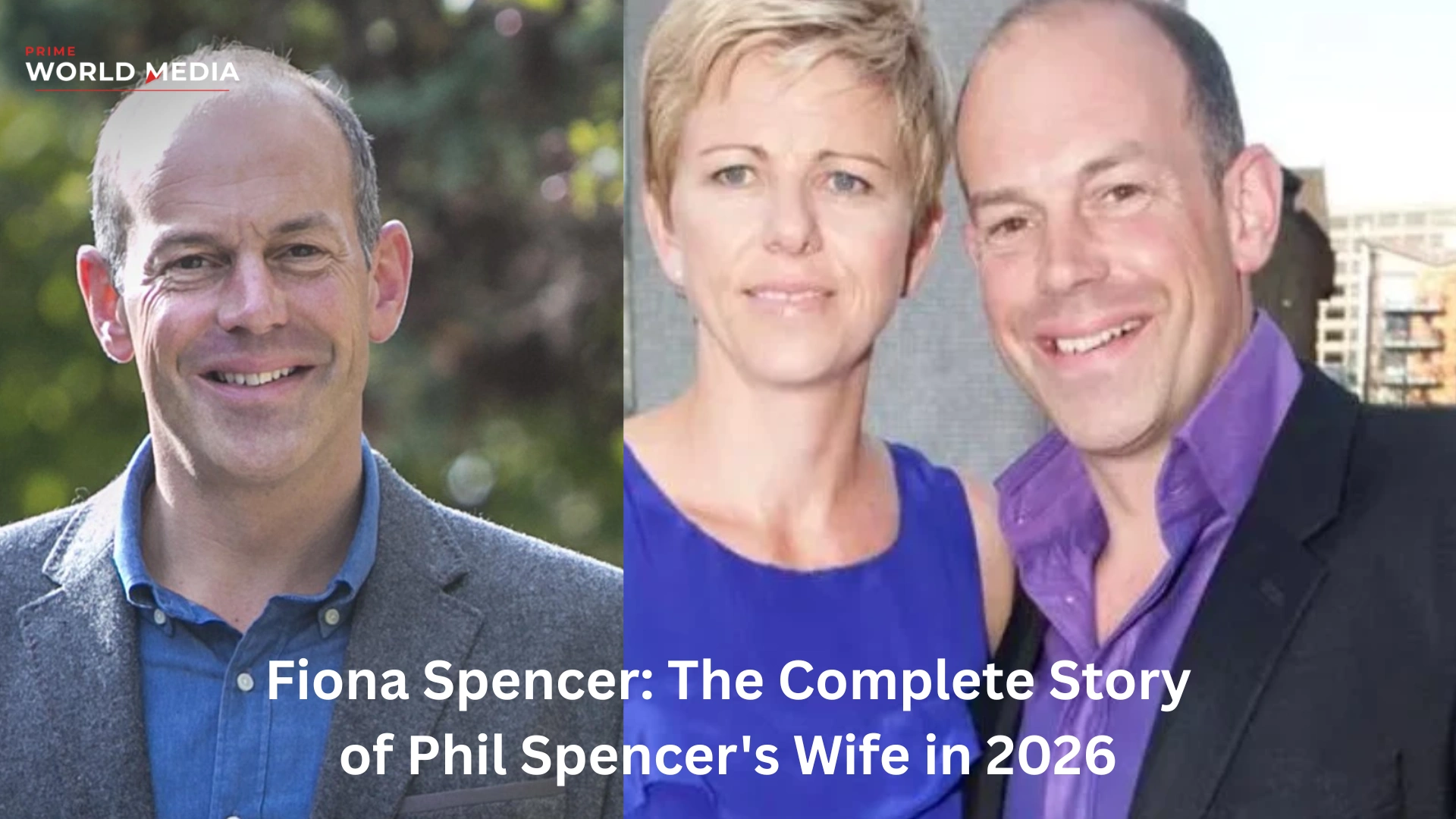
Henry Zeffman Wife, Career and Personal Life: Everything Known About the BBC's Chief Political Correspondent

If you entered "Henry Zeffman's wife "into the search bar and got here, you will find both a short and an extended answer.
The short one is that Henry Zeffman has not officially revealed anything about his wife or any other woman he is married to. There is neither her name, pictures, nor any statements on the matter.
But there is also an extended answer, which is rather interesting because the person asking the question is undoubtedly one of the most successful political journalists of recent years.
The Honest Position on Henry Zeffman's Wife
Start here because it counts, and because some sites have been more than a little dishonest about it.
Many of Henry Zeffman's wife's articles describe a partner who is a best friend, detailing their life stories and their relationship. This is not corroborated by any credible source. Wide Magazine explains: There is no credible public information suggesting that Henry Zeffman has a wife or any children. So too, Actvid, based on the evidence: he has no verified public record of whether he is married or has a long-term partner.
Some sources say he is married and that his wife is a quiet support to his demanding career. Perhaps this is true. But it is not substantiated by anything he's said publicly or by any trustworthy journalism.
Buzz Weekly is the correct take. Until Zeffman chooses to announce details of a partner or spouse, readers will have to make do with the assumption that his romantic life is a subject he chooses to keep out of the record. That purposeful privacy is consistent with everything else about his public persona. He's not a commentator — he's a reporter. I could go on, but his life outside the story is not the story he tells about himself.
Who is Henry Zeffman
Henry Zeffman was born in 1994 in London, England. Henry is 32 years old as of 2026.
Henry got lucky enough to grow up in an intellectually stimulating and cultured family setting. His mother is a musician proficient in playing the violin and piano. Henry's brother is named Oliver Zeffman, a conductor, while his sister is a law school alumna. One significant musician in Henry's family tree is Solomon Cutner, who was a renowned British classical pianist in the last century.
Thus, that is the kind of background Henry comes from, a mix of brilliance and cultured excellence in the world of serious music. On one side, there is intellectual stimulation. On the other hand, there is cultural education, like that. And Henry does both in his reporting.
He attended Highgate School, a highly respected independent day school in North London, known not only for its academic excellence but also for the distinguished career paths of its graduates.
He then studied Philosophy, Politics and Economics at Brasenose College, Oxford. PPE at Oxford is the degree most closely associated with British politicians, senior civil servants, and political journalists. It combines the analytical tools of philosophy with the institutional understanding of politics and the economic literacy required by policy coverage. During his time at Oxford, he was elected president of the junior common room in 2014, his first taste of institutional leadership.
The Awards That Launched His Career
Two awards in particular define Henry Zeffman's early professional identity and explain why he was taken seriously so quickly.
In 2015, at the age of 21, he won the Anthony Howard Award for Young Journalists. This is one of the most prestigious prizes available to early-career political journalists in Britain. It is named after Anthony Howard, the distinguished political journalist and editor who shaped British political reporting for decades. Winning it at 21 is a meaningful signal that someone is not merely promising but genuinely ready.
In 2019, he won Young Journalist of the Year at the National Press Awards. The National Press Awards are the major annual recognition of excellence in British journalism across all disciplines. Young Journalist of the Year identifies the standout emerging talent across the entire industry, not just within political reporting. Winning it placed him among the most significant young journalists in the country.
Two major awards before the age of 30, in a competitive field, from institutions that do not distribute recognition lightly. The trajectory was clear well before he joined the BBC.
The Times: Building the Foundation
Henry Zeffman's professional career began in print journalism at The Times, one of Britain's oldest and most respected newspapers.
He joined as a political reporter and worked his way through several significant roles. He covered Westminster politics in depth, developing the deep institutional knowledge of how the British government actually functions that distinguishes political journalists who truly understand the system from those who simply report its surface.
One of the most formative periods of his career at The Times was his time as Washington Correspondent. Covering American politics from inside Washington exposes a journalist to a completely different political culture, different institutional structures, and a different relationship between media and government. It also requires the ability to explain the complexities of another country's political system to a domestic audience that is interested but not expert. That skill, making complex foreign political systems comprehensible to general readers, transfers directly to explaining complex domestic politics to general television viewers.
He advanced to the position of Associate Political Editor at the Times, a senior editorial role that reflects both his writing prowess and his institutional standing within the paper.
After several years at The Times, in 2023, he took the step that brought him the most public attention.
Joining the BBC: Chief Political Correspondent
Henry Zeffman is the Chief Political Correspondent at BBC News, having joined the network in August 2023. It is no small step. It is by far the most popular and trusted news source in the United Kingdom. The Chief Political Correspondent position is second only to a bureau chief in a news organization. It is situated right at the front line of how the major public broadcaster explains politics to the nation. And that means making the rounds on BBC Breakfast, the Six O'Clock News, the Ten O'Clock News, and on rolling coverage of political milestones on the BBC. General elections, leadership contests, Budget statements, parliamentary crises, and policy U-turns. 'When it counts, the face of politics: The Chief Political Correspondent.' When it really matters, the face of politics is the Chief Political Correspondent.
Zeffman was appointed chief political correspondent of The Times, where he specialized in stories related to Brexit. It was the "fallen weeks of political instability, the challenges that confronted a new 2024 Labor administration, and the never-ending complexities of British economic and foreign policy" that kept producing, well, "thoughtful reportorial glee." He's been at the center of it ever since.
Changing pace from print to broadcast was a move up in class. There is space in print journalism for layered argument and extended analysis.

BBC
The Reporting Style That Defines Him
Understanding Henry Zeffman requires understanding what makes him distinctive as a journalist, because his professional character is what generates public interest in everything else about him.
He is consistently described across multiple sources as calm, measured, and analytical. In an era when political journalism has in many quarters become polarised and emotionally driven, his approach is deliberately different. He explains rather than advocates. He contextualizes rather than sensationalizes. He gives audiences the information they need to understand what is happening rather than telling them how to feel about it.
The Moments Mag captures this nicely and cleanly. He prefers dispassionate analysis to showy spectacle. When he reports on the intricacies of political negotiations, he explains rival groups, historical precedents, and potential outcomes in straightforward terms. This two-way functionality – summarising quickly in breaking news situations and going deep in longer analytical pieces – has enhanced his reputation at the BBC.
He refrains from overt opinions even in politically charged arenas. This is not a passive attribute. In today's environment, to remain genuinely impartial, you have to be active and relentless. It means resisting the drift toward the dramatic framing that drives engagement, and lingering with the more accurate framing that serves understanding.
With his PPE background from Oxford and his reporting on both British and American politics, he approaches the craft of political journalism with a broader institutional understanding than many political journalists today. He places breaking news within longer historical stories, and that is one reason audiences say his reporting is useful, not just informative.
His Family Background: Music, Law, and Culture
It is informative to know a little about Zeffman's family because it gives you some idea of where he's coming from in terms of his qualities.
His mother is a musician: a violinist and pianist. Specific to this childhood, connected to widely practiced music making, are certain attributes: the capacity to perceive structure and pattern, the recognition that expertise is a product of prolonged, disciplined effort, and contact with an activity that rewards fineness rather than coarseness.
His brother, Oliver Zeffman, is also a conductor. The music of conducting is a particularly demanding form of musical leadership, involving knowledge of each instrument's part, the means of communicating intricate formal ideas nonverbally, and the ability to keep an ensemble unified over an extended period of concentration. Oliver is now established as a prominent figure in British musical life.
His sister studied law. His father is said to be from a legal or academic background. With this family, you are dealing with the elite of the elite in serious artwork, the legal mind, and the intellectual rigor of academia.
The most celebrated family connection on the musical side is Solomon Cutner, known professionally as Solomon, who was one of the outstanding British classical pianists of the twentieth century. He performed the Beethoven and Brahms piano concertos with major orchestras until a stroke ended his career in 1956 at the height of his powers. He is still considered one of the great interpreters of the Romantic piano repertoire.
Henry himself played the organ at Oxford, a fact Hove Magazine said was in keeping with the family's musical tradition. Music and journalism have more in common than one might first think. Both demand that one be able to simultaneously concentrate on intricate structures while focusing on immediate details . Both pay off by punishing the opponent effectively and approximating the correct play.
His Personal Life: What Is and Is Not Known
The personal life questions that generate the most search interest about Henry Zeffman are those with the least verified information.
Marriage and partner. As established at the outset of this article, no confirmed public information exists about Henry Zeffman's wife or partner. Some sources suggest he is married. None has verified this through reliable reporting. He has not discussed his relationship status in interviews.
Children. No confirmed public information about children exists. Wide Magazine states this directly. Actvid confirms the same. Until he chooses to share this information, it remains private.
Social media. His X account, @hzeffman, focuses entirely on political journalism and professional work. There are no personal disclosures, no relationship references, no family photographs. His social media presence is a professional tool rather than a personal one.
Religion. His religious upbringing has not been publicly discussed. Multiple sources state that it is subject to question whether he is Jewish or not, due to his family name and origins. He hasn't spoken to this publicly, and it shouldn't be pieced together without his own confirmation.
Sexual orientation. There are no known statements regarding his sexual preferences. In fact, multiple sources have highlighted the fact that this has been a popular topic in search queries, but the fact of the matter is that there is no relevant information on the Internet either way.
In each of these topics, one common pattern remains. He has successfully drawn a distinction between his professional and personal lives.
Net Worth: What Can Be Estimated
Henry Zeffman's specific income is not publicly disclosed. BBC journalist salaries are not individually published.
Senior BBC editorial roles at the Chief Political Correspondent level are well compensated, reflecting the experience, responsibility, and public significance of the role. Before joining the BBC, he was paid at a senior editorial level by The Times, one of the higher-paying British newspapers, for experienced political staff.
He has won prestigious industry awards. He has built one of the more significant profiles in British political journalism. The commercial value of that profile, in terms of speaking engagements, writing opportunities, and broader media work, adds to the picture.
Individual net worth estimates from such sources are speculative. The truthful statement is that he earns a high professional income from a senior BBC post, based on a well-paid journalism career spanning over a decade, and that detailed figures are not publicly available.
Why His Privacy Is Worth Respecting
The popularity of Henry Zeffman's wife search is not all that surprising. He is a trusted and familiar figure in those moments when our national politics matter most. Audiences can develop parasocial relationships with trusted journalists on broadcast networks and increasingly wonder about their private lives.
But the true reading of his attitude to private life is that it is conscious, authored, and consistent. There's nothing problematic he's covering up. Rightly or wrongly, he is separating our public, professional relationship from his body's private existence, and that is his prerogative.
He is a newsperson, not an entertainer. A journalist's public persona depends on the quality of their journalism, not on the degree of their personal disclosure. The ones who gain the most from his work are those who read what he does, rather than guess at what he keeps to himself.
The line he has drawn is one that BBC political journalism, for very good reasons, has traditionally not crossed. Political correspondents who achieve celebrity status in their own right risk undermining the institutional trust that lends their reporting credibility. Having a private life is also a decision about the kind of journalist he wants to be.