Is Your Business Spending Money on Marketing While Ignoring the Goldmine Already Inside Your CRM?
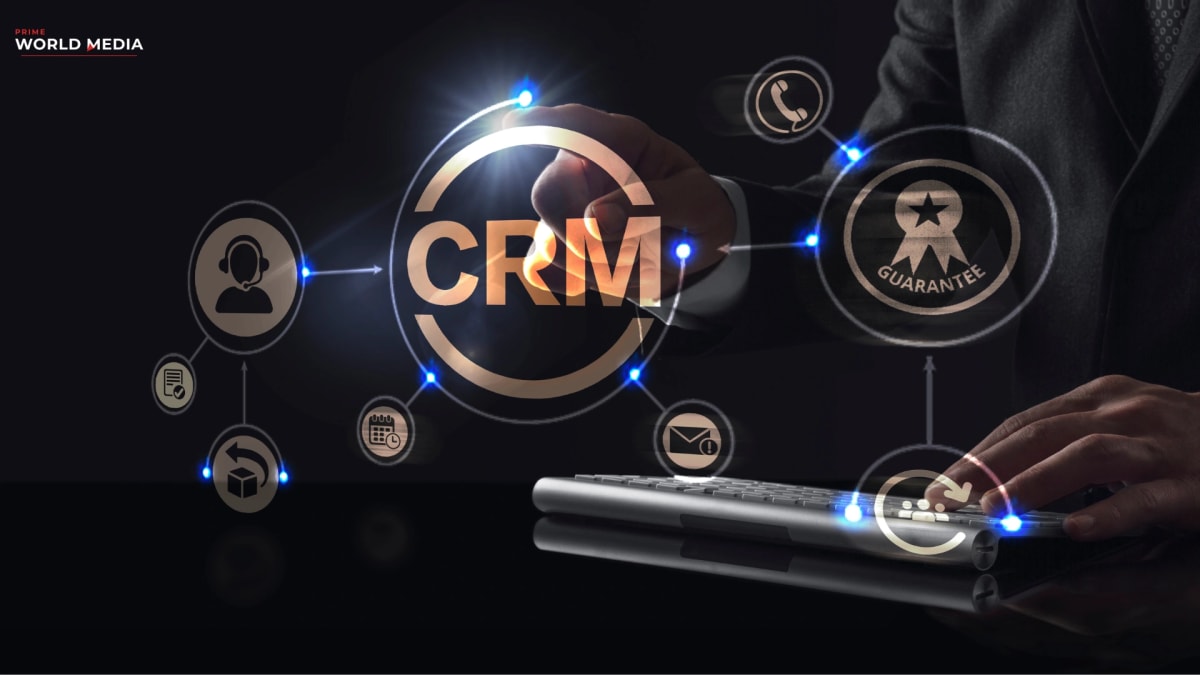
The default way most businesses operate marketing and CRM is that one is the system used to acquire customers, and the other is the system used to house those customers. Somewhere in the middle of those two functions, millions of pounds of lost potential are just... Slipping away. The businesses getting it right with CRM marketing really getting it, are doing it differently. They are using the data they already have to acquire more precisely, retain better, and do it more cheaply than anyone else. This guide has the information you need to understand CRM marketing in 2026, the systems that do it right, the stats that present an irrefutable business case, and the frank comparison no one else will provide you.
What Is CRM Marketing and Why Does It Actually Matter?
CRM marketing involves using the customer data inside your Customer Relationship Management system to plan, personalize, and automate your marketing campaigns. Instead of shouting the same message at everyone, CRM marketing involves talking to individuals with the relevant messages for those individuals based on what that individual has done, purchased, or said. A customer who has visited your pricing page 3 times in the last 7 days sees a different message than a customer who has purchased from you in the last 18 months. A lead who just downloaded a white paper sees a different follow-up than a lead who just abandoned their shopping cart.
It is not a new concept-what's new about it in 2026 is the granularity of the targeting, the automation of this targeting, and the AI that allows companies to do this without a team of fifty analysts in order to do this. It looks less like mass mailings and more like personal conversation. And conversation sells. CRM systems achieve an average ROI of $8.71 for every $1 spent (Nucleus Research), a 29% increase in sales, a 34% increase in sales productivity, and a 42% increase in sales forecast accuracy. This is a remarkable benefit, but that's the tip of the iceberg.
The Controversial Reality Most Marketers Will Not Admit
Here's the sentence that most marketers feel squirmy about. Most CRM data is never used. Companies buy CRM platforms, fill them up with contact data, transaction data, interaction data, behavioral data, and other customer signals, and keep sending the same generic, broad marketing emails to the masses as they were before purchasing CRM systems. They bought a hyper-segmentation machine and are now using it as a contact spreadsheet. The Gartner 2024 report shows that 87% of the CRM initiatives have failed to meet objectives. Not because the technology is flawed.
The strategy behind the technology is flawed; business processes are not extracting value from their CRM marketing; in fact, those who generate the most ROI from CRM marketing are not using more CRM features. Instead, they are using fewer features, but doing so with clear strategies that link the customer data to desired commercial results. The research also indicates that 65% of businesses are utilizing AI-driven CRM tools in their marketing, and this approach makes those businesses 83% more likely to hit sales targets, according to a study in 2026. So, it's not technology but the strategy that is the key. As we discussed in our blog on "Why Businesses are Failing at Customer Retention," there is already existing data, but what is lacking is actionable and purposeful effort using them.
How CRM Marketing Actually Works: The Technical Reality
Once you know what CRM marketing does under the covers, it changes the way you think about using it. A marketing CRM links together four functions which, as it stands, nearly all businesses do separately.
Data centralisation.
Each touchpoint a customer has with your business - visiting a web page, opening a support ticket, making a purchase, opening an email, etc - is logged in one central location. This is foundational; without it you are flying blind. One true source of customer activity ensures that marketing, sales, and service all have visibility into exactly the same data set and serve the customer correctly.
Audience segmentation.
Once we have all this information, this data is the fuel for our segmentation. When we're talking about segmentation in a CRM, it's not about demographics; it's about behavior. A customer who purchased in the last 30 days, a lead who visited our pricing page and didn't convert, a customer who didn't do a certain level of engagement, an enterprise-level customer who wasn't touched for 60 days. Each one of these segments will have its own individual message, its own individual offer, its own individual pace of communication. CRM-driven behavioral segmentation improves lead conversion rates by 30-40% higher than solely demographic segmentation.
Marketing automation.
This is where CRM marketing turns proactive. When a prospect downloads a whitepaper, a sequence of emails is launched. When a customer falls below a predetermined level of engagement, a re-engagement campaign is executed automatically. When a high-value account becomes stagnant for 45 days, the account manager is triggered internally. The sequences run around the clock without the intervention of any person. The Annuitas Group reports that businesses that implement marketing automation in CRM increase their number of qualified leads by 451%.
Performance analytics.
CRM marketing connects the dots between marketing activity and business result. It's no longer simply that a campaign got a 22% open rate; it is that the precise audience to whom that campaign was delivered yielded 14 new deals totaling £240,000. Attribution is understood. Spending can be optimized based on facts, not guesswork. Marketing is answerable for revenue, not activity metrics. That's the change CRM marketing facilitates. As we noted in our article on the psychology of pricing, humans respond to tangible, quantifiable data, and CRM marketing provides that in relation to the bottom line in a way that can't be achieved through campaign analytics alone.
CRM Marketing Tools Compared: The Honest Guide for 2026
The market for CRM marketing platforms is huge, competitive, and really confusing. Here's a real comparison of the top contenders:
HubSpot Marketing Hub:
Fastest-growing major CRM by customer numbers; 288,706 paid users in 135 countries (Dec 2025). Businesses using HubSpot can achieve an ROI over 3 years of 505%; users can create and launch a marketing campaign 68% faster than non-users, and are able to achieve 129% more inbound leads. Personalized CTAs in HubSpot convert 202% better than default settings. Strengths: All-in-one tool (CRM, Marketing Automation, Email, Social media, Landing pages, analytics), into one hub. Excellent Support and Onboarding experience. One of the best free CRMs available. Over 1,500 integrations. Strong AI capabilities (Content creation and Lead scoring). Weaknesses: Rapid price escalation beyond initial investment and as more features are enabled.
Professional and enterprise-level subscriptions required for advanced reporting. Doesn't appear to be able to operate beyond the SMB stage without a dedicated, full-time HubSpot admin. Best for: SMB, mid-market, and growth-stage companies looking for an integrated marketing and CRM tool with a simple, low-maintenance deployment, excellent user interface (consistently rated among the highest in the market), that allows for self-help. Onboarding takes you through everything you need to know; the interface is intuitive, and you have excellent documentation and self-service help. Teams that become certified using HubSpot Academy reach value 78% faster and achieve greater user proficiencies. Pricing: Free CRM; starter: ~$20/month, professional: $890/month, enterprise: $3,600/month.
Salesforce Marketing Cloud:
Market leader by revenue. The largest percentage of the global CRM market with 20.7%, the top spot for 12 straight years. Revenue from Salesforce CRM topped $21.6 billion in 2024, more than all of Microsoft, Oracle, Adobe, and SAP combined. 83% of Fortune 500 companies are customers of Salesforce. Strengths-unrivaled enterprise power, breadth of integrations, ecosystem power. Best-in-market reporting and analytics suite. The AI component with Einstein is real at enterprise scale. The premier tool for intricate, multi-division, international marketing operations. Shortcomings-highly complex and expensive to implement. Demands dedicated administrators or the assistance of a Salesforce implementation partner to get right.
A pricey option that is generally too costly for small and medium-sized businesses. Can be overkill if teams only leverage parts of the solution. Best for large enterprises running complex operations, with numerous business units, or those with technical staff. User experience-a powerful but overwhelming option. Those willing to dedicate resources and time to implementation see good results, while those who dive in too fast will often find it complicated and too expensive. Price: Marketing Cloud engagement is a minimum of ~$1250/month. Enterprise licensing varies significantly.
Vtiger CRM:
Since 2004, more than 300,000 businesses worldwide have used it. Emphasizes easy-to-use features for SMB's. There is a community of users spread across 110 countries. Strengths: Actually affordable CRM marketing automation for SMBs; incredibly robust lead scoring, email marketing, landing page building, SMS marketing, and social media in a single tightly integrated system. Sophisticated and practical web form building and lead enrichment capabilities. Product development guided for 20 years by realistic use-cases from SMB's. Weaknesses: This is not as well-known a product as HubSpot or Salesforce. Limited third-party integrations compared to these two giants. Not as deeply reported as an enterprise solution. Use for: Small and mid-sized businesses seeking full CRM marketing automation at a more cost-effective price point than the large, expensive solutions. UX: Praised for its tightly-focused nature that does exactly what it promises without unnecessary add-ons.
Many users found they were set up and running much more quickly than on a comparable HubSpot or Salesforce product. Users find the interface easy and practical; there were descriptions of the setup being fairly quick. Support was described as knowledgeable and prompt; documentation seems to only cover typical use cases but in a very clear manner. Price: The starting price is around $20-$30/user/month for a Professional plan; Enterprise is also available.
ActiveCampaign:
An email marketing platform with CRM functions which excels at automation. Currently used by 180k users and 170 countries. Strengths: superior power over any other email marketing platform, including email automation and triggered messages; very powerful segmented lists; strong competition monitoring features; the absolute most A/B testable on any platform and at any price. Weaknesses: The CRM features themselves are not as deep as they would be for HubSpot or Salesforce; a system where it is mostly just about email marketing will not utilize this fully; difficult for companies that want true multichannel marketing (social, paid, email) integrated seamlessly and simultaneously. Use for: Email marketing-driven companies that want more marketing automation on top of their existing CRM needs. UX: Incredible from the standpoint of email marketing automation, though it can be a more challenging system to use if you were moving toward it to have more of an enterprise CRM type functionality, as it is not as streamlined or intuitive; potentially difficult to move from if your business outgrows its CRM capabilities and you want to expand. Price: Starts from approximately $29 per month for 1,000 contacts.
Zoho CRM:
Also part of the larger Zoho suite of business software. Powers 250,000+ businesses across the globe. Pros: Extremely cost-competitive. Comprehensive set of tools for sales, marketing, and service in a single platform. Excellent AI assistant in Zia. Good value if you are a business looking for a complete CRM marketing tool at a non-HubSpot/Salesforce price. Cons: Interface is less sleek than HubSpot, and user experience is not intuitive to pick up out of the box. Integrations are numerous but require more configuration than HubSpot's app marketplace. Ideal for: Budget-conscious SMBs and mid-market businesses looking for robust CRM marketing functionality at competitive prices. User Experience: Mixed, but common themes include great value as the primary reason to use Zoho and a steep learning curve as the primary frustration. Teams with a dedicated CRM admin seem to fare much better. Pricing: Free for up to 3 users; Standard starts around $14/user/month; Professional starts at $23/user/month.
Pipedrive:
Sales CRM with marketing automation via the Campaigns add-on. Used by over 100,000 companies in 179 countries. Strengths: cleanest and most intuitive pipeline view in the market. Great for salespeople who need to understand deal status but without the clutter. Marketing automation layer via Campaigns covers email marketing and simple segmentation well. Weaknesses: marketing feature feels like an add-on rather than an inherent strength. Not ideal for organizations focused on a marketing-led growth strategy. Purpose-built marketing CRMs would better serve those who are focused on content marketing, social media, and advanced segmentation. Ideal for: sales-led organizations with a need for pipeline clarity coupled with basic email marketing. UX: universally praised for its visual pipeline functionality. Marketing-focused users can feel the campaigns function falls a bit short of specialized marketing CRMs. Pricing: Essential starting at $14 per user/month. Campaigns add-on starting at $13.33 per month up to 1,000 contacts.
The honest verdict:
Basic CRM marketing start-up for SMBs: HubSpot; if you have the budget, otherwise Vtiger. Enterprise marketing operations: Salesforce. Email-first marketing automation: ActiveCampaign. Budget-conscious, but need wide capability: Zoho CRM. Basic marketing needs on top of a sales platform: Pipedrive. The correct platform is the one your team will use every day. Using basic platforms regularly will always beat underused complex ones.
CRM Marketing Strategies That Are Actually Working in 2026
Seven strategies that are data-backed and provide measurable outcomes now.
- Behavioral triggered emails. Emails that are triggered off of customer behavior, such as downloading something, viewing a pricing page, or abandoning a shopping cart, are 300 to 400% more effective than broadcast email. Technology to do this has been around for a decade; still, the majority of companies use the same newsletter to everyone.
- Predictive lead scoring. Models based in a CRM system that analyze a lead's probability to convert to a customer and thus prioritize sales outreach. CRM-powered lead scoring can increase the lead conversion rate by 30% to 40%. One of the biggest failures here is building the model one time and never updating it after more data shows what actually predicts conversion.
- Customer-led marketing. Leveraging data about what existing customers are buying or doing to target them for upselling, cross-selling, and loyalty. Increases customer lifetime value by an average of 33% according to Vtiger; large companies are generally leaving a massive opportunity on the table by not pursuing customer-led marketing.
- Churn prediction and automated re-engagement. Systems that are able to tell when a customer's behavior patterns predict they are about to leave, before they actually do. Automated emails then reach out proactively to keep the customer engaged before they've fully made a decision to cancel. This is reactive retention instead of proactive retention, so it's drastically less expensive. According to our article, "Why Businesses Fail at Customer Retention," 68% of customer churn occurs because customers feel the business doesn't care about them. CRM automation can provide the right outreach at precisely the time before that feeling turns into a choice.
- Lookalike audiences. Exporting CRM contact data into paid advertising tools to create lookalike audiences for your best customers on Facebook, Google, or LinkedIn. This allows you to target new, cold audiences with the specific behaviors of your customers who you know convert.
- Account-based Marketing for B2B. This allows B2B companies to achieve the same kind of targeting for specific accounts as major enterprises; knowing which people at which company are best to talk to, and contacting them at specific moments within the buyer's journey.
- AI-driven personalization at scale. 66% of marketers globally now use AI in their daily work-that rises to 74% in the US-according to HubSpot's State of Marketing 2026. Seventy-five percent of marketing leaders at organizations that invested in AI saw positive ROI. The competitive advantage for 2026 lies not in using AI tools, but in connecting them to your CRM data in order to provide a personalized experience instead of a robotic one. Just as we discussed when covering how AI is changing remote work, businesses who embed AI into their processes compound their advantages exponentially in a way that can be nearly impossible for their competitors to catch up with. CRM marketing provides one of the highest leverage opportunities to implement that same approach.
The User Experience of CRM Marketing: What Teams Actually Report
There is a big difference between what CRM marketing promises and what teams experience. Here is the truth from real users on all platforms:
What it does well. Teams that build the foundation for good CRM implementation and data cleanliness from day one do exponentially better than teams that "dump" poorly formatted data into a CRM and "hope it fixes it." All major platforms offer features for personalization that truly work if the data itself is good and current. Marketing automation significantly frees up team time once the right workflows are designed and tested. Most users report gaining 5-10 hours back weekly once automation is properly set up. Attribution reporting and understanding what campaign actually drove revenue is the number one cited CRM feature that changes the way marketing is perceived in an organization. If marketing can point to exactly which campaign resulted in a certain deal closing, the internal conversation about budget shifts dramatically.
What teams consistently have trouble with. Data cleanliness is the first hurdle to effective CRM marketing across all platforms. Duplicate contacts, incorrect data, out-of-date contact info, and inconsistencies from users are all barriers to personalization, segmentation, and automation all at the same time. No system solves this for you-it has to be addressed through process, user discipline, and potentially a dedicated role managing data hygiene. Cross-team buy-in is the second hurdle. CRM marketing is only effective if both the sales, marketing, and service teams are entering data consistently in the system. If the sales team continues to not utilize the CRM, the data infrastructure fails.
Finally, teams' over-automation is a problem. When the wrong automated processes are executed before the business fully understands the customer, they end up sending automated and templated marketing that feels less personal, rather than leveraging data to truly engage the customer.
CRM Marketing and the Data Privacy Question
The single greatest issue impacting CRM marketing in 2026 is data privacy. GDPR in Europe, CCPA in California, and the emergence of numerous other privacy regulations around the world have irrevocably altered what businesses are allowed to do with customer data and how permission to do it needs to be granted. According to HubSpot's 2026 State of Marketing report, 84 percent of customers say they have great concerns regarding data privacy and data security in terms of interacting with a brand. The brands that are simply treating data privacy as a compliance checklist will lose the business opportunity within their marketing. The brands that truly bake transparency and customer control into their CRM marketing will build trust that directly impacts retention and lifetime value. First-party data- that information that customers have shared with you, willingly and with explicit consent given upfront is more important than it ever has been.
The death of third-party cookies is largely complete. The rise of lookalike audiences needs a first-party data source to serve as its seed. The drive for personalization at scale needs a first-party data strategy to achieve it. A well-done CRM marketing strategy is, by its nature, a first-party data strategy. Those brands that build their CRM marketing off transparent practices are those brands that will possess the most accurate, most actionable, and most defensible customer data for the years to come. This builds to what we talked about in our article on building brands. Building brands happens with consistent transparency. A brand that handles customer data the way it said it would receive customer data at higher rates from the customers it does have.
The Business Case in Numbers
The average ROI of CRM is $8.71 for every $1 invested. Others report up to $30.48 per dollar invested in "best-case" scenarios. Sales increase 29 percent when using CRM, and company revenue increases by up to 245 percent, with 45 percent of those who invested saying their sales revenue increased as a direct result of CRM. Marketing automation combined with a CRM yields 451 percent more qualified leads. A 5 percent improvement in retention through CRM marketing can increase profits by 25 to 95 percent. CRM outpaces all other enterprise software by a margin of 12.8 percent growth in 2024. CRM is expected to be an industry worth $96 billion by 2028.
The points above do not automatically apply when you purchase a CRM. These will be effective if they implement CRM correctly by having an implementation plan, having good quality of data, and having people with the intention to work with the system every day. While CRM sets the foundation of the marketing work, the strategy behind it and its execution create the results. Similar to what we explored in our article comparing burnout-prone entrepreneurs with successful, long-term entrepreneurs, the instruments that achieve impactful, sustainable results are those that are utilized with unwavering discipline and purpose over a consistent period of time. CRM marketing functions in the same manner; the returns on investment accrue over time through rigorous, strategic usage.
Getting Started With CRM Marketing: The Four Steps That Actually Work
Step 1: Before selecting a platform, conduct an audit of the data you have. The most common and expensive mistake in CRM marketing is selecting a platform before assessing the health of your existing customer data. Audit what you have. Identify what's missing. De-duplicate and establish data governance processes. The effectiveness of your CRM marketing will be a ceiling limited by the quality of your data.
Step 2: Before building out campaign workflows, establish 3-4 measurable objectives. Lead conversion rate. Customer retention rate. Average deal value. Campaign-attributed revenue. Determine what data will demonstrate campaign success before anything is ever built. CRM marketing that is detached from tangible commercial outcomes is nothing more than activity without accountability.
Step 3: Before building 10, build 1. A commonly observed failure in implementation is over-automation. Start with a single highest-impact automation for your business. Usually for most businesses this will either be a lead nurturing process or a re-engagement campaign for customers that have shown minimal recent activity. Build this. Test this. Measure this. Optimize this. Build out the second one.
Step 4: Integrate marketing and sales data from day one. CRM marketing cannot yield closed-loop reporting without sales and marketing utilizing the same system. The greatest value CRM marketing offers is through connecting the dots between specific campaigns and specific revenue; however, this is only achievable with sales and marketing deal data within a single platform. Integrating at the start effectively turns marketing from a cost-center into a revenue-generating center of operations.
FAQ: CRM Marketing in 2026
Q: What is CRM marketing?
CRM marketing involves the use of the information of the customers that is stored in the CRM for sending personalized and quantifiable marketing messages. Different marketing messages would be sent to different customer segments instead of sending a generic message to all customers, based on their purchase behaviors, transactions, and interactions.
Q: What's the difference between CRM and marketing automation?
A CRM system is where customer data is stored and organized, customer relations are managed, and the entire sales and service processes are managed, with tracking of all customer interactions. Marketing automation, on the other hand, is used to automatically execute marketing campaigns, email follow-up series, and lead nurturing processes without manual action by sales and marketing employees. The best CRM marketing platforms are an integrated combination of the two.
Q: What is the best CRM for marketing in 2026?
HubSpot can be said to be one of the best CRMs for marketing purposes, as well as one that provides complete integration of its services to small and medium-sized businesses. On the other hand, Salesforce Marketing Cloud would be considered to be the best for the corporate sector. Vtiger, being quite affordable, can be considered the best for marketing purposes by the small business sector.
Q: How much does CRM marketing software cost?
CRM marketing software can be free or enterprise-level. HubSpot's paid marketing hub tiers can range anywhere from $20 per month to $3,600 per month. Vtiger costs around $20 to $30 per user per month. ActiveCampaign starts at $29 per month. Salesforce Marketing Cloud is priced from $1,250 per month, and Zoho CRM from $14 per user per month.
Q: What's the ROI of CRM marketing?
Nucleus Research says that there is a return on investment of 8.71 dollars for every dollar invested in a CRM. HubSpot users alone had a return on investment over 3 years of 505%, and in marketing automation within a CRM, companies are getting 451% more qualified leads. A 5% increase in retention within a CRM and through marketing may yield 25%-95% more in profits.
Q: How does CRM marketing improve customer retention?
CRM marketing will improve customer retention rates by detecting customer attrition issues before a customer churns. Then the system will initiate automated re-engagements at opportune moments in the customer's journey. They will receive targeted and personalized messages that will help them feel like their business cares. A business that gives indifference has a 68% rate of customer churn. CRM marketing directly addresses this by not letting the customer be unengaged for long.
Q: What is the difference between a general CRM and a marketing CRM?
General CRMs encompass all customer-facing functions from sales to customer service. In contrast, marketing CRMs are specific to marketing functions such as campaign management, lead nurturing, audience segmentation, and the analytics associated with all marketing efforts. The best options from HubSpot and Salesforce, among others, integrate both functions in one system.
Q: How will AI improve CRM marketing in 2026?
The use of AI in CRM marketing will involve several areas such as the prediction of lead scores to determine potential leads, personalizing content for a wide range of customers automatically, the prediction of customer turnover even before it happens, determining when to send an email to customers, and creating personalized emails using natural language generation technology. The use of CRM and AI increased chances of achieving sales goals by 83%.
Q: What are the five most common mistakes made with CRM marketing?
The top five mistakes made when running a CRM marketing operation were importing a mass amount of bad data and expecting the CRM to cleanse it somehow, building an excessive amount of automations before testing them, failing to unite sales and marketing data in a single CRM, running a CRM as a technology implementation instead of a business strategy, and failing to measure the performance of campaigns based on revenue output.
Q: Is CRM marketing right for small businesses?
Sure, yes. CRM marketing is not something that only suits big companies; CRM software like HubSpot, Vtiger, ActiveCampaign, and Zoho specializes in small firms. The benefits of CRM marketing, including personalization, automation, and decision-making based on data, are really significant for small firms, which have limited team capacity but will be able to make use of it to provide an extremely good customer experience.