Why the Bond Market's Latest Signals Are Worth Watching Closely
Written By
Alexander Wright
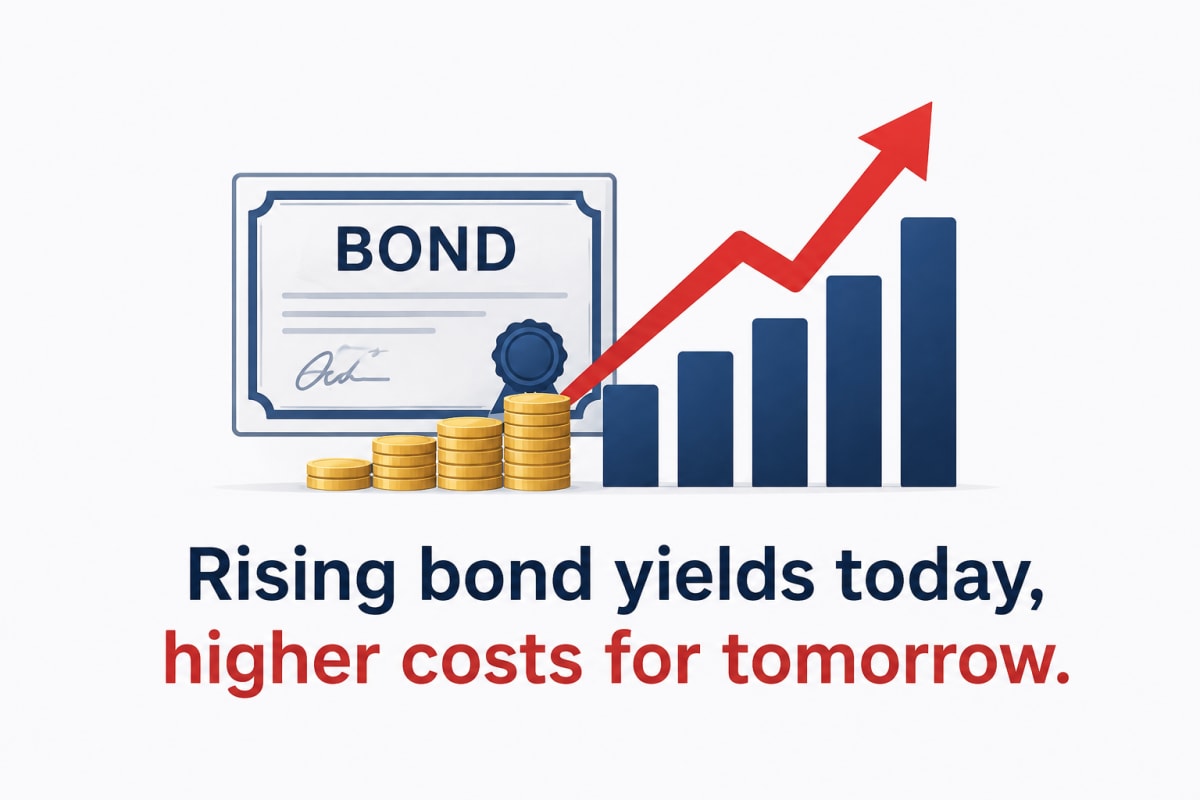
Rising bond yields have quietly become one of the more important economic stories of the year — and the latest movement is prompting analysts to urge everyday consumers, not just investors, to pay attention.
The Basics, Explained Simply
Governments borrow money by selling bonds to banks, foreign governments, and individual investors. In return, they promise to pay interest — known as the bond yield. The relationship between bond prices and yields is inverse: when bond prices drop, yields climb, because investors demand more compensation for the added risk of holding that debt.
Right now, bond prices are falling, which means yields — and by extension, the cost of government borrowing — are climbing. That single dynamic ripples outward in ways that touch nearly every corner of the economy.
Why This Affects Ordinary People
Higher yields on government debt tend to push up interest rates across the board — mortgages, auto loans, credit cards, and business financing all get more expensive when the benchmark cost of government borrowing rises. For households already stretched by everyday expenses, this can mean higher monthly payments on new loans and slower wage-adjusted purchasing power.
For the government itself, rising yields mean a growing share of the federal budget goes toward simply servicing existing debt, leaving less room for other spending priorities without additional borrowing or tax changes.
What's Driving the Shift
Several forces typically feed into this kind of yield movement: persistent inflation concerns, expectations around future interest rate policy, and investor anxiety about long-term fiscal sustainability. When investors grow uncertain about a government's ability to manage its debt load, they demand higher yields as a risk premium — a dynamic some economists believe is now playing out.
What to Watch Next
Markets will be closely tracking upcoming inflation data and any signals from central bank policymakers, since both directly influence yield expectations. A sustained rise in yields, if it continues, could act as a drag on economic growth by making borrowing costlier across the private sector — a slow-moving but consequential signal that's easy to overlook amid louder daily headlines.
Alexander Wright
Alexander Wright is the Senior Editorial Lead at Prime World Media. Dedicated to delivering precise, high-impact investigative journalism and executive-level business insights from around the globe.