He Quit a £5K/Month Coaching Career to Build an App. Four Years Later, Strava Came Knocking.
Written By
Alexander Wright
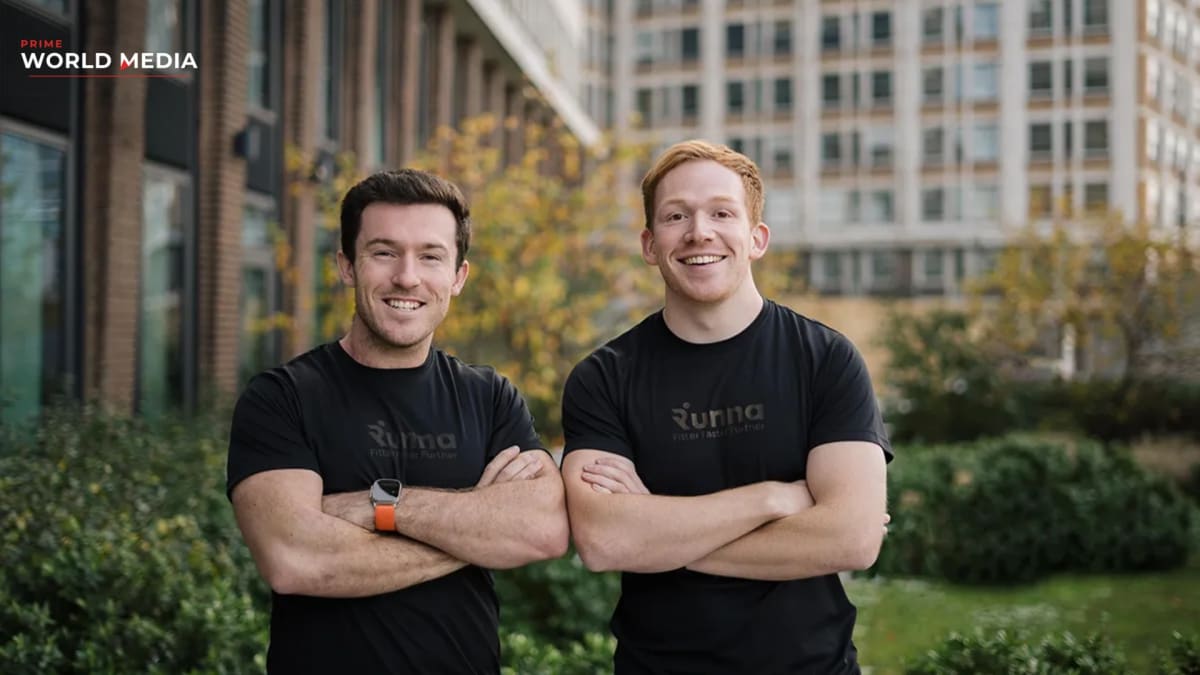
This is the story of Ben Parker , running coach, Ironman athlete, and co-founder of Runna, the UK startup that went from a PDF website to one of the world's biggest running apps in under four years.
Before the App, There Was a Man in Richmond Park
Ben Parker never planned to build a startup. He planned to run.
After graduating from university, Ben did exactly what he loved: he became a personal trainer, running coach, and Ironman athlete. By his mid-twenties, he was coaching clients in Richmond Park in London, earning £5,000 a month, training for marathons, competing in triathlons, and, by his own description, genuinely happy. He had found work that didn't feel like work.
"I was 24 doing in-person running coaching in Richmond Park in London," Ben later said. "I was doing marathons and Iron Mans. I was happy, healthy and the fastest runner I've ever been."
He had up to 40 online coaching clients at a time. Each one paid well above what a Runna subscription would cost one day. Each one got a personalised plan, adapted weekly based on their progress, goals, and feedback. Ben was good at this, methodical, data-driven, deeply invested in every runner he worked with.
The problem was simple: he could only help 40 people at a time.
And there were 150 million runners worldwide.
The Friend Who Saw the Gap
Dom Maskell was Ben's best friend from university. Where Ben was the coach, Dom was the engineer. He graduated with top honours in Electronic Engineering from one of the best technical universities in the country. Dom had been one of Ben's clients. He knew exactly what a personalised coaching relationship felt like, and he also knew exactly what it would take to replicate it with software.
One evening, Dom pitched Ben a simple idea: What if we automated what you do?
Not replaced it, automated it. Take every question Ben asked a new client over the phone. Take every decision he made about training loads, pace targets, rest days, and race preparation. Put it into a structured engine. Output a plan that was genuinely personalised, not a generic template, but something that felt like Ben had spent an hour on it.
Ben listened. He was interested, but sceptical. He threw all of that away, the stable income, the lifestyle, the early mornings in Richmond Park, and said yes.
Not immediately. But eventually, inevitably, yes.
"I threw all of that away to start Runna for the same reason I keep doing Iron Mans," Ben would later say. "Because I want to prove I can do hard things and I always want to improve and do better."
Nine Months of Evenings and Weekends
What followed was unglamorous.
No office. No funding. No team. Just Ben and Dom, working evenings after their day jobs, staring at laptops, trying to build something they had never built before.
Monday evenings became Monday and Thursday evenings. Thursday evenings became every single evening of the week. For nine straight months, Ben and Dom spent their nights and weekends building what would eventually become Runna, the personalised running coaching app that would go on to serve hundreds of thousands of runners across 180 countries.
The first version was, in Dom's own words, "minimal" in the most literal sense. It was not an app. It was not even particularly elegant software. It was an engine that took a runner's inputs, their goals, their current fitness, their schedule, their weekly mileage, and output a personalised training plan as a PDF.
That was it, a PDF.
But the PDF was good. Really good. It was the kind of plan that previously cost runners hundreds of pounds a month to get from a coach. Ben and Dom sold it online. They sold over 1,000 plans. And something became clear: people were hungry for this. Not just any training plan, but one that felt like it had been written for them.
They had found something real.
The First Backers: Crowdfunding, Athletes, and an Olympian
With early validation in hand, Ben and Dom made their first big move: a crowdfunding campaign in January 2022. They raised £485,000 from hundreds of early supporters, many of them the very runners who had already bought their PDF plans. These weren't passive investors. They were believers. Future users. The kind of early community that most startups spend years trying to build.
Around the same time, ultra athlete and endurance influencer Joshua Patterson joined the team. His investment wasn't just financial; his involvement brought visibility, credibility, and a community of serious endurance athletes who were exactly Runna's target audience.
Then came the moment that changed everything: British Olympian Steph Davis invested in Runna and joined the coaching team.
Steph Davis, one of the fastest and most decorated distance runners in the country, brought her expertise directly into the product. Every training plan in Runna, every session structure, every pacing strategy was reviewed, improved, and validated by an actual Olympian. For a runner signing up to Runna, this meant something profound: you weren't just getting a personalised plan. You were training with the same frameworks that world-class athletes used.
Ben reflected on this later: "She acts as a role model and inspiration to our runners, allowing people to train with an Olympian, learn all of her tips and tricks at a fraction of the cost of a conventional running coach."
This wasn't a celebrity endorsement slapped onto a mediocre product. It was structural, woven into Runna's coaching engine from the ground up.
Officially Launching: March 2022
The Runna app was released in March 2022. It is not a PDF document. It is not a concept. It is a real running coach app with tailored workouts, audio coaching, and live coaching, available on your Apple Watch and Garmin.
The growth was immediate. Within months, Runna had thousands of paying subscribers across more than 150 countries. The product resonated not just in the UK but globally; runners in the US, Australia, Europe, and beyond found that Ben's coaching philosophy, scaled through Dom's engineering, worked.
The key differentiator was always personalisation. Where other running apps offered generic plans, "12-week marathon programme, 4 days a week", Runna asked runners who they actually were. What was their current weekly mileage? Had they done structured interval training before? What days could they train? What was their goal race, and how much time did they have? The engine then built a plan that genuinely reflected their individual starting point and trajectory.
At its core, Runna was doing what Ben had always done. It was just doing it for 10,000 people instead of 40.
The Seed Round: Real Money, Real Momentum
Following the crowdfunding success, Ben and Dom secured a £2.25 million seed round led by Eka Ventures, a London-based early-stage fund with a strong track record in health and wellness technology.
The capital did exactly what early-stage funding should do: it let them hire. Their first critical hire was Walter Holohan, who would later become Runna's CTO. Walter was actually the ex-colleague Ben and Dom had paid out of pocket, before raising any institutional money, to help deploy their original engine to the cloud. His presence transformed what had been a two-person operation into something that could actually scale.
They also brought on Katie Goble, who built out Runna's marketing, partnerships, and growth functions. Brand by brand, race by race, Runna began to build a presence in the running world that went far beyond app stores.
The product is quickly evolving, with features such as smart treadmill controls, real-time Apple Watch coaching capabilities, Garmin and Fitbit connections, COROS support, strength training alongside running plans, mobility/pilates, nutrition, injuries, etc. Runna has moved beyond being a simple app, and new features make it a full system (ecosystem) for serious runners.
Series A: JamJar and £5 Million
By 2023, Runna's momentum was undeniable. Subscribers were measured in the hundreds of thousands. The app was available in over 180 countries. Reviews were extraordinary. Runna had become consistently one of the top-rated fitness apps on both iOS and Android.
In September 2023, the company raised a £5 million Series A round led by JamJar Investments, the venture fund backed by the founders of Innocent Drinks. This beloved British smoothie brand had itself become one of the most successful UK startup exits of all time. The symbolism was not lost on anyone in the British startup world. JamJar backed companies with genuine consumer love, real community, and products that felt as good as they performed. Runna qualified on all counts.
Series A funding enabled Runna to grow from an early-stage startup into a company with almost 150 employees. This helped improve the development of AI and algorithms and expedited the work of the personalisation engine, which was at the core of the product. The funds helped Runna collaborate with major races worldwide and get its name out at marathons, half-marathons, and 5Ks across the UK and beyond.
Apple named Runna as its last nominee for the coveted award of App of the Year in 2024. It was truly an honour for a company that was initially a PDF site founded by two friends.
The Pivot Moment: When Doubt Crept In
No founder story is complete without the hard parts.
Ben has spoken openly about the psychological weight of the leap he made. Leaving £5,000 a month in coaching income, stable, fulfilling, deeply meaningful work, to build something with no guarantee of success was not a clean or comfortable decision. The kind of doubt that visits founders at 2 am is different from ordinary doubt. It is the doubt of someone who knows exactly what they gave up, measured in real money and real joy.
Building the product was one challenge. Building it while maintaining the discipline of a competitive Ironman athlete, requiring 10 to 20 hours of training per week, was another. Ben was never willing to let Runna consume him entirely. He believed, and built Runna to reflect, that the whole point of running was a healthier, happier life. Burning himself into the ground building a running app would have been the ultimate irony.
"I haven't smiled every single day at Runna," he admitted in one interview. "But on the whole it's fun, it's worth it, and we're all in it together."
He drew a deliberate line between ambition and martyrdom. He trained. He rested. He protected his relationships. And in doing so, he modelled without meaning to exactly the kind of relationship with running that Runna was trying to help millions of people find.
The Acquisition: Strava Calls
On April 17, 2025, Strava, the world's largest fitness social network with over 150 million athletes across 185 countries, announced its acquisition of Runna.
It was the moment that proved what Ben and Dom had believed for four years: that the gap between "tracking a run" and "being coached on how to train" was real, and enormous, and worth building for.
Strava had the community. Runna had the coaching. Together, they completed something neither had alone.
By the time of the acquisition, Runna was generating approximately $3.5 million per month in revenue, with an annualised run rate of around $40 million. The company had grown from two founders spending evenings on a laptop to nearly 150 staff. It had raised around £8 million in venture funding over its lifetime, modest by the standards of its exit.
Ben's reaction to the deal was characteristically grounded. "Our passion is to give every runner a training plan and access to amazing coaching," he said at the announcement. "This investment allows us to make even more improvements to everything we do at Runna, benefiting runners worldwide."
No boasting. No victory lap. Just the same quiet conviction that had driven every decision from the first Monday evening in front of a laptop.
Current Status: Runna Inside the World's Biggest Running Community
In today's world, Runna still works as an independent app under the Strava umbrella. From the very beginning, the conditions have been absolutely clear – Strava was supporting Runna's development but was not merging into it. The product itself, the team behind it, the coaching approach – nothing has changed.
The only thing that is new now is the audience's size. With 150 million customers of its own, Strava offered an incredible opportunity for Runna to reach not only "dedicated runners who found the app," but also "all serious runners around the world." Finally, the distinction between coaching and tracking has been eliminated through integration.
Features keep coming out. AI becomes more intelligent. Strength training, mobility, and injury prevention – all of them turned into first-class services in the application, not just bonuses. Runna grew from offering marathon training plans to providing a full range of running experiences, from "couch to 5K" to ultramarathons. And all of them are based on Ben's idea of personalised coaching for everyone.
What Ben Parker's Story Teaches Every Founder
The Runna story is not a story about technology. It is a story about a person who understood one thing deeply: what it felt like to run well, to train smartly, to get better, and refused to accept that only 40 people at a time could benefit from it.
He started with his own expertise, not with a market map. Ben didn't research the running app space and identify a gap. He lived the gap. He was the product before the product existed.
He built slowly and validated before fundraising. Nine months of evenings. 1,000 PDF plans. Real money from real people before a single investor was approached.
He brought in a co-founder who completed him. Ben was the coach. Dom was the engineer. Neither could have built Runna alone. The co-founder dynamic, best friends, complementary skills, genuine mutual respect, is the foundation on which everything else is built.
He maintained his identity through the build. Ben didn't give up his training, competing, and coaching just because he wanted to develop an app for runners. His genuineness showed through both in the app itself and in the Runna culture that he created.
He solved a human problem with technology, not the other way around. Runna was never about the app. It was about the runner on the other end of the app, getting fitter, faster, and more confident. The technology was always in service of that human goal.
Final Thought: From Richmond Park to 150 Million Runners
Ben Parker used to train 40 people at once in a park in south-west London. Now, via Runna, he is part of a network that reaches 150 million athletes worldwide.
He left behind a successful, satisfying job to devote nine months to creating something that may or may not succeed. He did this not for financial gain or for an exit, but because the issue at hand was real and his mission was worthy.
While not all runners will know his name, many, many runners have benefited from his philosophy in one way or another: that personalised coaching must be available to all runners, not just the lucky 40 who make it onto the coaches' rosters.
That is what a great startup accomplishes. It takes something scarce and makes it abundant, without compromising its quality.
Ben Parker accomplished that.
Runna accomplished that.
And runners run faster as a result.
Alexander Wright
Alexander Wright is the Senior Editorial Lead at Prime World Media. Dedicated to delivering precise, high-impact investigative journalism and executive-level business insights from around the globe.