Hearing Aid Technology in 2026 Is Nothing Like What You Remember
The last time most people thought seriously about hearing aids, they were thinking about something beige, bulky, and embarrassing — a device that whistled at inconvenient moments and required constant battery changes. A device associated with age, with limitation, with reluctance.
That product no longer exists.
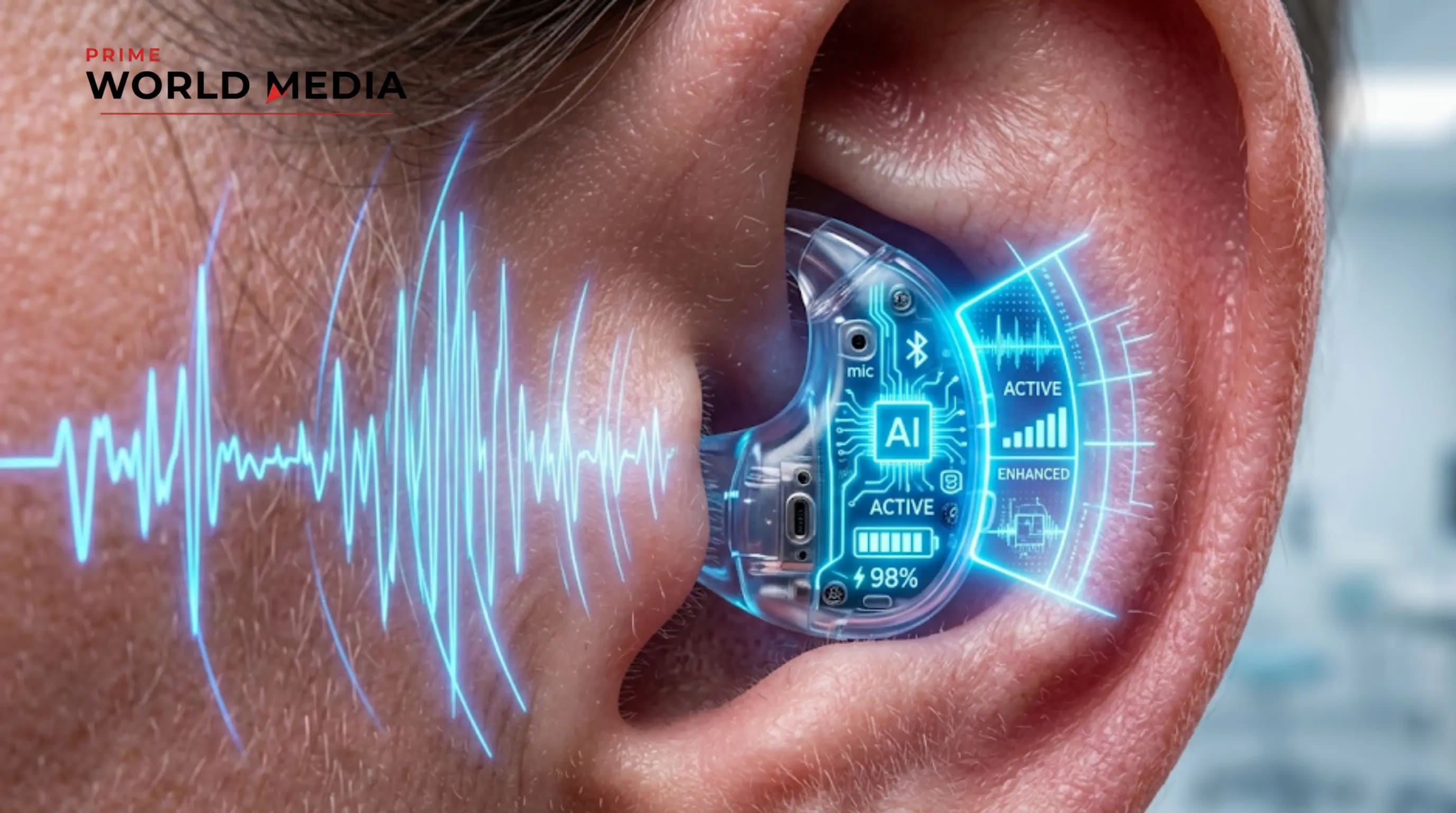
What replaced it is something genuinely different. Hearing aids in 2026 are AI-powered devices that learn how you specifically hear and adapt to your environment in real time. They stream audio directly from your phone, your television, and increasingly from public venues like airports and theatres. They monitor your health, detect falls, track your sleep, and send alerts to emergency contacts with GPS location if something goes wrong. The smallest models weigh one gram and sit entirely inside the ear canal — invisible from any angle, to anyone, at any distance.
The Consumer Electronics Show in Las Vegas in January 2026 featured more hearing technology companies than any previous year. The FDA has cleared over-the-counter hearing aids that cost under $400. Smart glasses with integrated hearing assistance are now commercially available. And the gap between what a hearing aid can do and what a dedicated medical device could do is closing at a pace that has audiologists reconsidering everything they thought they knew about the category.
Here is a complete guide to hearing aid technology in 2026 — what is new, what actually works, what it costs, and how to choose the right device for your specific situation.
AI-Powered Hearing Aids — What Artificial Intelligence Actually Does Inside Your Ear
The phrase "AI hearing aid" gets used loosely enough that it has nearly lost meaning. Every manufacturer claims AI. The technology behind those claims varies enormously. Here is what is actually happening inside the better devices.
Modern hearing aids now use advanced artificial intelligence to improve speech clarity in real-world environments. Instead of relying on preset programs, AI-driven devices continuously analyse sound and adjust automatically — especially in noisy settings like restaurants, meetings, and crowds. TechCrunch
The key word is continuously. Earlier generations of hearing aids required the wearer to manually select a program — restaurant mode, outdoor mode, music mode. The AI in 2026 devices eliminates that selection process entirely. The device identifies the acoustic environment you are in, compares it against a learned model of your personal hearing preferences, and adjusts every parameter of its sound processing automatically — within milliseconds, without any input from you.
AI technology allows hearing aids to become smarter over time, making them more comfortable and effective for everyday use. AI-powered hearing aids are capable of learning from a user's listening habits and automatically adjusting sound settings based on the environment. Tech Startups
The practical result for the wearer is significant. Speech is clearer. The effort required to follow a conversation in a noisy room decreases measurably. The fatigue that hearing aid users experience from sustained listening — a real and under-discussed phenomenon — is reduced because the device is doing more of the work that was previously being done unconsciously by the brain.
Deep Neural Network processing represents one of the top hearing aid features of 2026 — the same underlying technology that powers voice recognition and language models is now being applied to the specific problem of separating speech from background noise in real time. Tech Startups
For people who have been managing hearing loss with older technology and found it frustrating — particularly in restaurants, crowded offices, or social gatherings — the difference that current AI processing makes is not incremental. People who have tried AI hearing aids after wearing traditional models consistently describe the experience as genuinely surprising.
Auracast — The Technology That Could Change Public Spaces Forever
This is the development that most hearing aid wearers have not heard about yet, but almost certainly will within the next twelve months.
Auracast technology is expected to revolutionise the way hearing aids interact with the world around them. This innovative wireless audio streaming technology will allow wearers to seamlessly connect their hearing aids to public sound systems — such as those in theatres, airports, or sports venues — delivering personalised sound directly to their devices. With Auracast, hearing aid wearers will no longer need special receivers or additional equipment to enhance their listening experience in large public spaces. Tech Startups
The practical implication is significant. Today, a person wearing hearing aids in a cinema, a lecture hall, a place of worship, or a busy airport terminal either struggles with the ambient sound or relies on an assistive listening loop system — technology that requires special equipment, is often poorly maintained, and is available in only a fraction of public venues.
Auracast changes that model entirely. A venue installs a Bluetooth LE Audio broadcast transmitter. Every compatible hearing aid — and every compatible pair of earbuds, for that matter — can receive that broadcast directly. No special receivers. No loops. No asking staff for equipment that may or may not be available.
At CES 2026, there was significant emphasis on how hearing-related accessibility is moving quickly into the mainstream. Technology that helps people hear better need not be confined to those with clinical hearing loss — it is useful for everyone. CES 2026 was described as the first show to truly showcase accessibility and move it toward the mainstream. Crescendo AI
How much of a difference Auracast makes in practice will depend above all else on how widely it gets adopted. The technology itself is promising, but it only works if public venues actually install the compatible systems. That will happen gradually rather than overnight, so the real-world benefits may take a little time to fully materialise. Tech Startups
The trajectory is clear. Auracast is coming. The hearing aid models being purchased today that include Auracast compatibility will benefit from a public infrastructure that will be significantly larger in two years than it is right now.
Invisible Hearing Aids — How Small Can They Actually Get?
Size reduction in hearing aids has been progressing steadily for years, but 2026 brought a landmark moment.
At CES 2026, Ceretone showcased its Core One Pro — an invisible-in-canal hearing aid weighing just one gram. The device features four listening modes including a tinnitus masking setting, adjusted using a screen integrated into its charging case, eliminating the need for a smartphone app entirely. Neuralbuddies
One gram. Sitting entirely within the ear canal. With four distinct listening modes, tinnitus support, and an interface that requires no phone. The engineering involved in achieving that combination of capability and size represents a meaningful step forward from where the category was even eighteen months ago.
Phonak introduced the world's first hearing aid with a dedicated AI chip — the Audéo Sphere — which the company says processes speech faster and filters noise automatically. Phonak is consistently ranked as one of the best prescription hearing aid brands available and is the world's largest hearing aid manufacturer. Thehomedecores
Oticon introduced encapsulation technology with its new Zeal hearing aid, making it extremely durable and achieving an IP68 rating for water and dust resistance. Despite its tiny size — small enough to fit entirely in the ear — the Zeal performs remarkably similarly to a receiver-in-canal hearing aid, with full wireless connectivity and rechargeable batteries. This represents a significant advancement in hearing aid design. Tech Startups
For many people considering hearing aids for the first time, the size concern — the worry about visibility, about what wearing a hearing aid says about you — has been the primary barrier to seeking treatment. The honest answer in 2026 is that the visibility concern is largely resolved. The best invisible-in-canal devices are genuinely undetectable in normal social interaction. That barrier no longer needs to stop anyone from seeking treatment.
Hearing Aids as Health Monitors — Fall Detection, Heart Rate and Sleep Tracking
The most unexpected development in hearing aid technology over the past three years is the extent to which these devices have become genuine health platforms — not as a secondary feature, but as a primary value proposition for a growing segment of users.
Starkey created the world's first hearing aid with fall detection — the Evolv AI. The device uses built-in sensors to automatically detect falls. When a fall is detected, it sends an alert to three contacts entered in the app, along with the wearer's GPS location to help those contacts locate them in case of an emergency. Falls are the leading cause of injury for adults aged 65 and older, making this feature genuinely significant for that demographic and their families. Thehomedecores
Hearing aids incorporate sensors and processors that monitor health, track activity, and detect falls — capabilities that seemed like science fiction just a few years ago. Hearing aids with health monitoring features in 2026 include sensors that track physical activity, monitor heart rate, and measure body temperature. Because hearing aids are worn consistently throughout waking hours in a stable position near major blood vessels, they are ideally positioned to collect accurate health data. MarketingProfs
Building on the success of features like heart rate sensors, 2026 is bringing even more advanced monitoring — hearing aids tracking additional health metrics like stress levels, physical activity, and sleep patterns. This integration will not only optimise hearing aid performance but also provide valuable health insights for wearers, offering a comprehensive approach to wellbeing. Tech Startups
For older adults living independently, and for the family members responsible for their care, this dimension of hearing aid technology has changed the calculus around adoption. A hearing aid that also monitors heart rate, detects falls, and sends GPS-linked emergency alerts to family contacts is not just a hearing device. It is a safety system. The argument for wearing it every day becomes significantly more compelling when it is framed that way.
Over-the-Counter Hearing Aids — What Changed After FDA Approval
One of the most important structural changes in the hearing aid market over the past two years has been the expansion of over-the-counter availability — and what it means for the millions of people with mild to moderate hearing loss who previously could not justify the cost of prescription devices.
At CES 2026, multiple companies unveiled a new generation of over-the-counter hearing aids, smart glasses with integrated hearing assistance, and other AI-powered audio technologies. EssilorLuxottica showcased its Nuance Audio glasses, which function as an OTC hearing aid for consumers with mild-to-moderate hearing loss and use beamforming technology to enhance conversation clarity in noisy environments. EssilorLuxottica has received FDA clearance for this device. Neuralbuddies
Cearvol presented its Lyra smart hearing glasses featuring an open-ear design powered by the NeuroFlow AI 2.0 platform for real-time environmental analysis, providing approximately 24% improvement in speech enhancement and up to 20 dB of noise reduction. Neuralbuddies
Audien's commitment to upgrading its technology while keeping prices low is reflected in its newest model, the Atom X. Sound quality was the first most important factor and price was the second most important factor when buying hearing aids, according to survey data. Audien hearing aids are available below $700, with mid-priced models featuring rechargeable batteries, Bluetooth streaming, and the ability to take calls — features usually seen in more expensive OTC models. The Ion Pro model features a competitive 48-hour battery life. Thehomedecores
The OTC category has moved significantly beyond its early iterations. The best OTC devices available in 2026 are not compromised versions of prescription technology. For mild to moderate hearing loss specifically, they offer genuine capability at a price point that makes hearing care accessible to people who would previously have gone without treatment rather than pay several thousand dollars for a prescription device.
Best Hearing Aid Brands in 2026 — Who Actually Makes the Best Devices
The hearing aid market is dominated by a small number of large manufacturers, each with genuine strengths in specific areas.
Phonak, owned by the Sonova Group, is the world's largest hearing aid manufacturer and consistently earns top rankings for prescription devices. The brand introduced the first hearing aid with a dedicated AI chip — the Audéo Sphere — and its AutoSense OS system for automatic environment detection is widely regarded as among the most accurate available. For people with moderate to severe hearing loss who want the most capable prescription technology, Phonak is consistently the starting point for comparison.
Starkey earned the highest Features score in prescription hearing aid testing — 9.4 out of 10 — and is the choice for hearing aids prioritising health monitoring and safety features. Its Evolv AI model with fall detection, GPS alerts, heart rate monitoring, and activity tracking represents the most comprehensive health platform currently available in a hearing aid form factor. Thehomedecores
Oticon's Zeal represents the leading option for those prioritising invisible design combined with full AI processing capability. Its IP68 water and dust resistance rating combined with complete-in-canal sizing and wireless connectivity makes it the most capable discreet hearing aid currently available from a major manufacturer.
Auracast broadcast audio support, remote audiologist care, Deep Neural Network processing, custom embedded receiver ear moulds, and advanced durability technologies represent the features that genuinely deliver real-world value in 2026 — according to audiologists who test devices in clinical settings rather than laboratory conditions. Tech Startups
How Much Do Hearing Aids Cost in 2026 — US and UK Price Guide
The cost of hearing aids in 2026 spans an enormous range depending on technology level, whether a prescription or OTC device is appropriate, and the country of purchase.
In the United States, prescription hearing aids from major brands typically cost between $2,000 and $8,000 per pair including professional fitting, follow-up appointments, and warranty. Over-the-counter devices for mild to moderate hearing loss range from $200 to $1,500 per pair, with the quality of OTC options now sufficient that many audiologists recommend them as a genuinely appropriate first step.
In the United Kingdom, National Health Service hearing aids remain available at no cost to qualifying patients, though NHS models lag behind current consumer technology by two to three generations in most cases. Private hearing aids in the UK from brands like Phonak, Oticon, Starkey, and Signia typically range from £1,500 to £5,000 per pair privately. Over-the-counter options are increasingly available through online retailers and pharmacy chains, typically ranging from £200 to £800.
Across Europe more broadly, prescription devices are partially or fully covered under various national health systems, with France, Germany, and the Netherlands providing some of the most comprehensive public coverage for hearing aids in the world.
The Verdict — Is It Worth Upgrading to 2026 Hearing Aid Technology?
The landscape of hearing aids in 2026 reflects remarkable progress in addressing the real-world challenges people with hearing loss face daily. From AI-powered sound processing that creates truly personalised listening experiences to health monitoring features that position hearing aids as comprehensive wellness devices, today's technologies offer unprecedented opportunities to hear better and live more fully. What is new in hearing aids for 2026 is not just incremental improvement — it represents transformative innovation that makes these devices more effective, comfortable, and integrated into modern life than ever before. MarketingProfs
For anyone wearing hearing aids that are three or more years old, the answer is almost certainly yes — the difference between current AI processing and what was available even in 2022 is significant enough that most users who try a current-generation device describe the experience as meaningfully better.
For anyone who has been putting off getting hearing aids because of cost, size concerns, or the stigma associated with them — all three of those barriers are substantially lower in 2026 than they were at any previous point. OTC devices start under $400. The best invisible-in-canal devices are genuinely undetectable. And the category's association with age and limitation is being actively dismantled by a new generation of technology that is being marketed — accurately — as smart wearable health technology rather than medical equipment.
Hearing loss affects over 1.5 billion people globally. The majority of them are not getting treatment. The devices available in 2026 do not deserve to be on the same mental shelf as the devices that drove that reluctance. The technology has moved far enough that the decision deserves to be revisited from scratch.
Who Should Be Looking at This Right Now
Adults over 55 in the US and UK who have noticed changes in their hearing in social situations — particularly in restaurants or group conversations — should consider a hearing screening this year. The OTC category now means that an initial step does not require a large financial commitment or a medical referral.
Family members responsible for the care of older parents or relatives should look specifically at Starkey's fall detection and GPS alert capabilities. The safety case for hearing aid adoption is now genuinely compelling independent of the hearing benefit.
Working professionals who spend significant time in meetings, on calls, or in noisy environments and find themselves consistently straining to follow conversations should consider whether an AI-powered hearing device — including OTC options — would reduce that daily cognitive load.
Anyone who tried hearing aids previously and found them unsatisfactory should try the current generation before writing off the category. The devices have changed enough that a previous negative experience is not a reliable guide to what a current fitting would deliver.