Nepal-Tibet Flood Death Toll Tops 900 as Nearly 5,000 Remain Missing, With Dozens Still Trapped in Tunnels
Written By
Sam Mishara
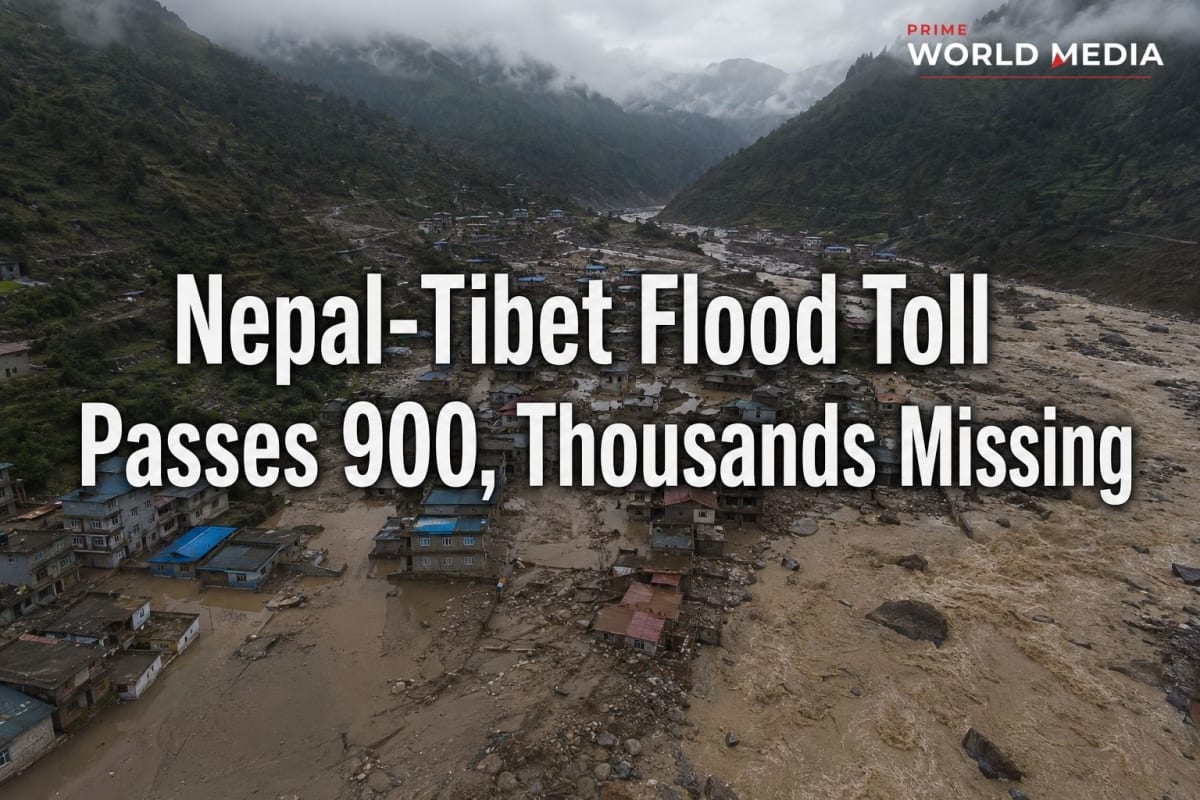
Nepal-Tibet Flood Death Toll Tops 900 as Nearly 5,000 Remain Missing, With Dozens Still Trapped in Tunnels
This article summarizes official statements from Nepali, Chinese, and UN authorities on an active disaster response. Casualty and missing-person figures are being updated daily and may change as search efforts continue.
Key Takeaways
- The confirmed death toll from catastrophic flash flooding on the Nepal-Tibet border has surpassed 900, with Nepal's disaster authority reporting 903 to 955 confirmed deaths across different Monday updates, and China reporting at least 16 more.
- More than 4,200 to 4,700 people remain missing, according to varying same-day figures from Nepal's National Disaster Management Authority, including 592 foreign nationals.
- The disaster was triggered by a glacial collapse in the Rasuwa district on the Nepal-Tibet border around 8:40 a.m. local time on Wednesday, August 26, an event powerful enough to register as a magnitude 5.2 seismic event.
- At least 90 people remain trapped in multiple hydropower plant tunnels as of Monday, with foreign rescue teams assisting local crews in the search.
- The United Nations says roughly 65,000 people now require emergency water, sanitation, and hygiene support, with more than 22,000 children in need of protection services.
How the disaster unfolded
The flooding originated from a debris avalanche roughly 12 miles northeast of the Rasuwagadhi border post, beginning at a glacier perched on a cliff about 16,000 feet high, according to Nepali officials. The resulting wall of ice, water, and debris tore down the Trishuli River, an ABC News analysis of verified video and satellite imagery found the destruction extended at least 62 miles downriver into Nepal, burying buildings and destroying bridges and roadways along the way. The event was powerful enough that the U.S. Geological Survey registered it as a magnitude 5.2 seismic event — an indication of the sheer physical force involved, comparable to a moderate earthquake, despite having no tectonic origin.
Why the casualty figures keep shifting
Readers following this story closely may notice the reported numbers vary somewhat between outlets and even between updates from the same outlet within a single day — Nepal's death toll has been reported at figures ranging from 903 to 955, and missing-person counts have appeared anywhere from roughly 3,900 to 4,700 in different Monday updates. This isn't inconsistency so much as the nature of an active, fast-moving disaster response: officials have explained that missing-person counts can decline as more bodies are recovered and identified, as more survivors are found, and as families report that missing relatives have turned up safe — meaning both the death toll and missing count can shift meaningfully within the same day as new information arrives. Some previously unidentified remains are being interred in mass graves following DNA sampling, a process that itself takes time and affects how quickly official confirmed-death figures are updated.
On the Chinese side of the border, Tibetan authorities have reported a comparatively smaller toll — at least 16 confirmed deaths and 546 people missing, according to state media Xinhua, with more than a hundred of the missing reported to be Nepali nationals who were on the Tibetan side of the border at the time.
The ongoing search-and-rescue effort
Nepal's army spokesman, Brig. Gen. Raja Ram Basnet, said rescue teams were intensifying search efforts across hills, settlements, and river areas as of Monday, nearly a week after the disaster struck. A particularly urgent element of the operation involves at least 90 people believed trapped in multiple tunnels at hydropower plants in the affected region — infrastructure that would have been operating normally before the flood swept through. Foreign rescue teams have joined local crews assisting in that specific effort, working through what officials describe as difficult conditions of mud and debris nearly a week into the response.
Personal accounts have begun surfacing alongside the official casualty figures. One father, Maraval Nagappan, traveled to Nepal specifically to search for his son, Sathya Narayan, who had been leading a group of 49 Indian devotees returning from Mount Kailash — a sacred site in southwestern Tibet — when the flood struck. Nagappan visited rescue centers and morgues and traveled as far as 40 kilometers from where his son was believed to have been, without finding any sign of him, according to reporting on the search.
The international response
The U.S. State Department said it had activated $3.6 million in emergency humanitarian assistance, including up to three months of emergency food for as many as 10,000 flood-affected households. As of the most recent State Department update, 80 Americans remained unaccounted for in Nepal, while 13 U.S. citizens had reached safety, according to a department spokesperson who acknowledged that the remoteness of the affected region has made getting reliable information difficult.
The United Nations' own assessment, relayed by UN Spokesperson Stéphane Dujarric, put the scale of humanitarian need at roughly 65,000 people requiring emergency water, sanitation, and hygiene support, with more than 22,000 children identified as needing protection services. UN climate chief Simon Stiell connected the disaster to a broader pattern, saying a warming climate driven by fossil fuel use is making disasters like this one "more likely, frequent and severe," with vulnerable mountain communities often hit hardest — echoing warnings that scientists and local communities have raised for years about the specific risks facing fragile high-altitude environments like the Nepal-Tibet border region.
Frequently Asked Questions
What caused the Nepal-Tibet flooding? A glacial collapse and debris avalanche in the Rasuwa district along the Nepal-Tibet border on August 26 sent a wall of ice, water, and rock down the Trishuli River, an event registered as a magnitude 5.2 seismic event by the U.S. Geological Survey.
How many people are confirmed dead? As of the most recent Monday updates, Nepal's disaster authority had confirmed between 903 and 955 deaths, depending on the specific update cited, with China separately confirming at least 16 more on the Tibetan side.
Why do the missing-person numbers keep changing? Officials have said the count fluctuates as more bodies are recovered and identified, more survivors are located, and families report that previously missing relatives have been found safe — all of which can happen simultaneously during an active search effort.
What international aid has been provided? The U.S. has activated $3.6 million in emergency humanitarian assistance, including emergency food for up to 10,000 households, while the UN has identified roughly 65,000 people needing emergency water, sanitation, and hygiene support.
Sources & References
- Associated Press via NewsNation, "Rescue efforts intensify after Nepal-Tibet flooding as deaths climb past 900"
- ABC News, "Nepal-Tibet flood death toll surpasses 900, officials say, more than 4,400 missing"
- France 24, "Glacial flood death toll surpasses 900 in Nepal and Tibet"
- NBC News, "Nepal floods death toll tops 900 as number of missing nearly doubles to more than 4,200"
- UN News, "Nepal flooding deaths surpass 900 as needs climb"
Sam Mishara
Sam Mishara is a regular contributor and industry expert at Prime World Media, covering market innovations and leadership strategies.